
> You’ve decided to learn Chinese. You understand the challenges (from “Is Chinese Hard? A 2026 Reality Check”) and the fundamentals (from “Demystifying Chinese”), and you’re excited about the rewards (from “Why Learn Chinese?”). Now, the most important question is: What do I do first? > > The first month is critical for building habits and confidence. This step-by-step plan is designed to give you a solid foundation in pronunciation, basic communication, and character recognition, setting you up for long-term success. —
The 30-Day Roadmap: Week by Week

Week 1: Master the Basics (Pinyin & Pronunciation)
Your first week is all about sounding like a native from day one. Focus on Pinyin, the Romanization system that will be your guide to pronunciation.

- Daily Goal: 30-45 minutes of focused practice.
- Day 1-2: Learn Pinyin Initials and Finals
- Action: Use free online resources like Pinyin.info or the app HelloChinese to learn the 23 initials (consonants) and 24 finals (vowels). Pay special attention to sounds that don’t exist in English, like
zh,ch,sh,r, andü. - Tip: Practice in front of a mirror to watch your mouth shape.
- Action: Use free online resources like Pinyin.info or the app HelloChinese to learn the 23 initials (consonants) and 24 finals (vowels). Pay special attention to sounds that don’t exist in English, like
- Day 3-4: Conquer the Four Tones
- Action: This is your most important task this week. Use the free Forvo app to listen to native speakers, and practice the four tones with simple syllables like
ma,fa,da. - Resource: Watch YouTube tutorials by channels like Learn Chinese with Emma for clear explanations.
- Action: This is your most important task this week. Use the free Forvo app to listen to native speakers, and practice the four tones with simple syllables like
- Day 5-7: Combine Pinyin and Tones
- Action: Practice reading simple Pinyin words and sentences. Use flashcards on Anki (search for “Pinyin Tones” decks) to drill yourself.
- Example:
nǐ hǎo(你好 - hello),xièxie(谢谢 - thank you).
Week 2: Build a Survival Vocabulary
Now that you can pronounce words, it’s time to learn some useful ones. Focus on high-frequency, everyday words.
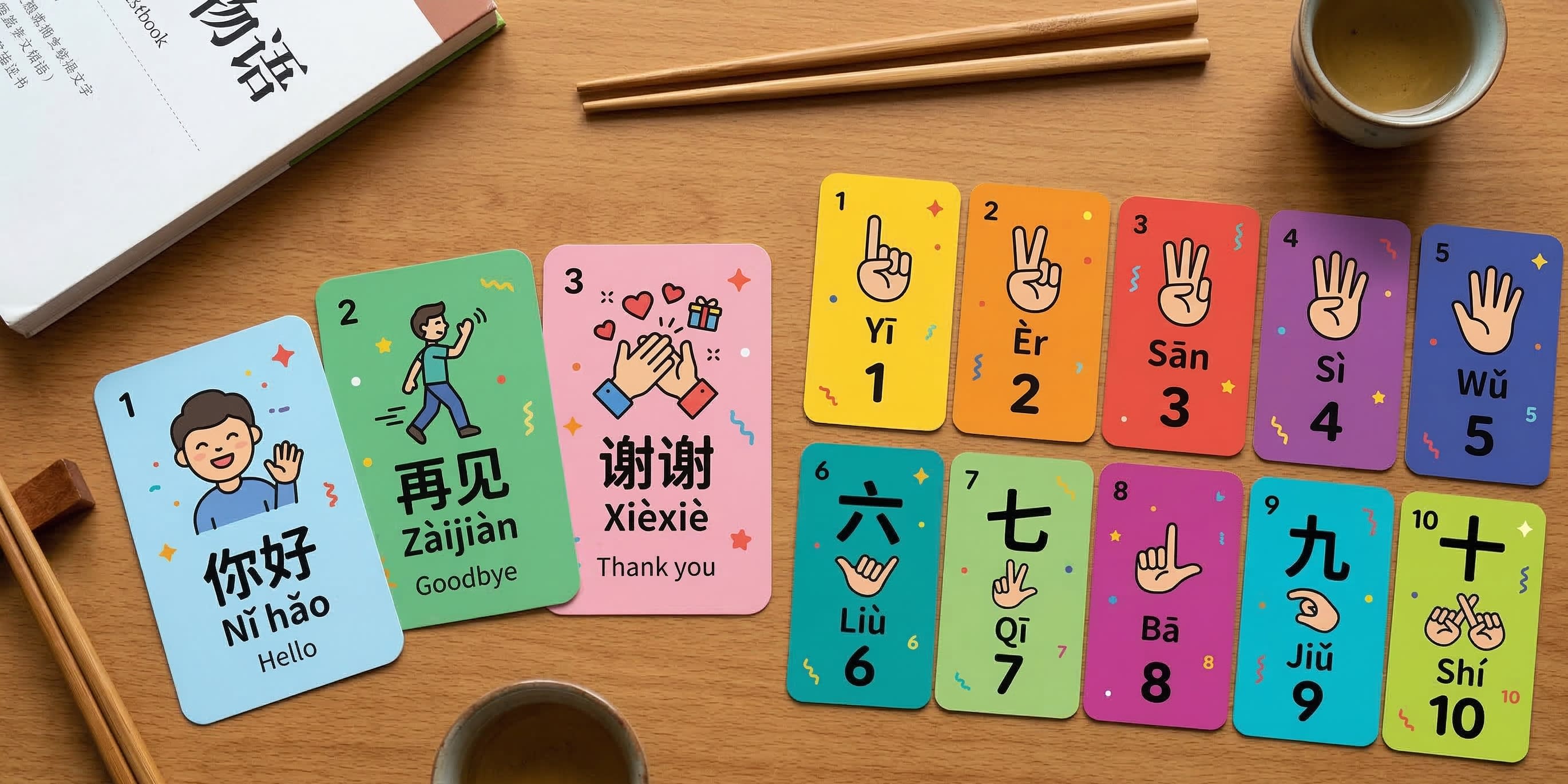
- Daily Goal: Learn 10 new words, review the previous day’s words.
- Focus Areas:
- Greetings & Polite Expressions:
nǐ hǎo,zài jiàn(再见 - goodbye),xièxie,bù kèqi(不客气 - you’re welcome),qǐngwèn(请问 - excuse me). - Numbers 1-10: Essential for counting and prices.
- Basic Personal Information:
wǒ(我 - I),nǐ(你 - you),wǒ de míngzi shì...(我的名字是… - my name is…). - Common Objects:
shū(书 - book),diànhuà(电话 - phone),bēizi(杯子 - cup).
- Greetings & Polite Expressions:
- Resource: Use the free version of Memrise or Duolingo to learn these words in a gamified way.
Week 3: Learn Simple Sentences & Grammar
This week, you’ll start putting words together to form sentences. The good news is, Chinese grammar is simple!

- Daily Goal: Learn 1-2 grammar points and practice with 5-10 sentences.
- Key Grammar Points to Learn:
- Subject + Verb + Object (SVO): Just like English!
Wǒ chī fàn(我吃饭 - I eat rice). - “To Be” with
shì:Wǒ shì měiguó rén(我是美国人 - I am American). - “To Have” with
yǒu:Wǒ yǒu yí gè diànhuà(我有一个电话 - I have a phone). - Questions with
ma: Simply addmato the end of a statement.Nǐ shì xuéshēng ma?(你是学生吗?- Are you a student?)
- Subject + Verb + Object (SVO): Just like English!
- Action: For each grammar point, write 5-10 sentences of your own. Use a free grammar checker like LangCorrect to post your sentences and get corrections from native speakers.
Week 4: Start Recognizing Characters & Immerse Yourself
The final week is about starting to read and building a habit of daily exposure.
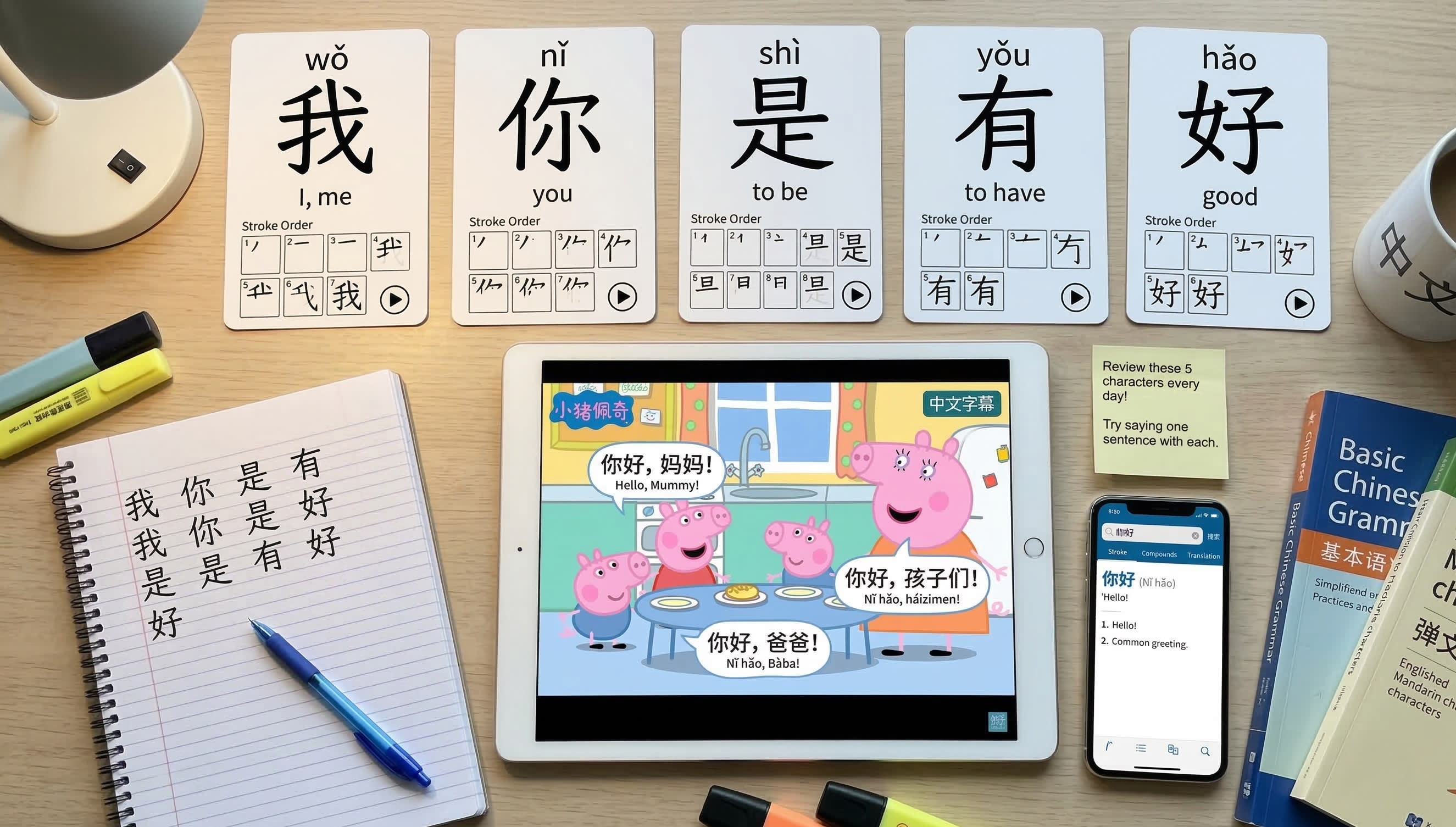
- Daily Goal: Learn 5 new characters, 15 minutes of listening practice.
- Character Learning:
- Action: Focus on the 10 most common characters you’ve already learned in words, like
我,你,是,有,好,人,一,二,三,天. - Resource: Use the free app Pleco (the ultimate Chinese dictionary) to look up characters and study their stroke order.
- Action: Focus on the 10 most common characters you’ve already learned in words, like
- Immersion:
- Action: Start your “ear training.” Watch a 15-minute clip from a Chinese show on Netflix with Chinese subtitles. Focus on listening for words you know.
- Resource: Try watching children’s shows like “Peppa Pig” in Chinese for simple, clear dialogue.
Beyond the First Month: Keeping the Momentum
- Consistency > Intensity: Even 15-20 minutes of daily practice is better than a 2-hour session once a week.
- Join a Community: Find a language exchange partner on HelloTalk or join a local Chinese language meetup.
- Set Small Goals: After the first month, set a new goal, like “learn to order food in a restaurant” or “have a 2-minute conversation about my hobbies.”
Conclusion: Your Journey Begins Now
This 30-day plan is your launchpad. By the end of the month, you’ll be able to:
- Pronounce Chinese words correctly.
- Greet people and introduce yourself.
- Ask and answer simple questions.
- Recognize the most common characters.
The hardest part is starting. Now you have no excuses. Your Chinese learning journey begins today.
Welcome to the wonderful world of Chinese!

