🦑 Introduction: The Undisputed King of Seafood Appetizers
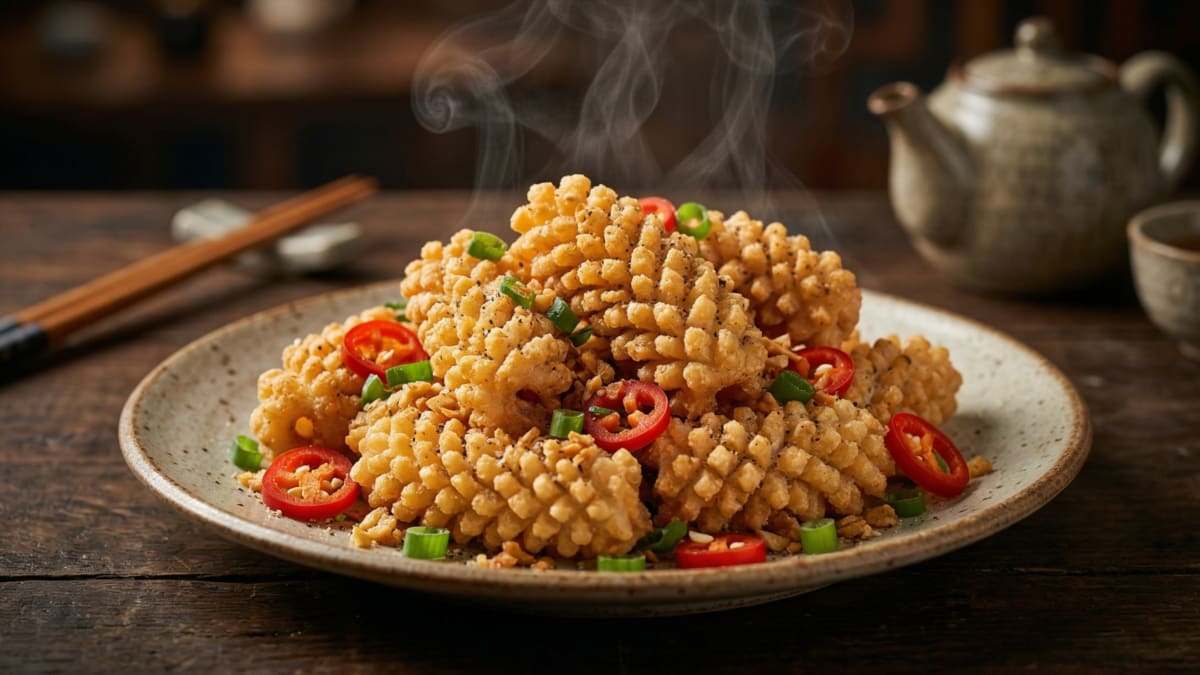
Whenever I step into a bustling Cantonese dim sum parlor or wander through the haze of a late-night Dai Pai Dong (open-air food stall) in Hong Kong, my eyes are always hunting for one specific dish: Salt and Pepper Squid (椒盐鱿鱼 - Jiāoyán Yóuyú).
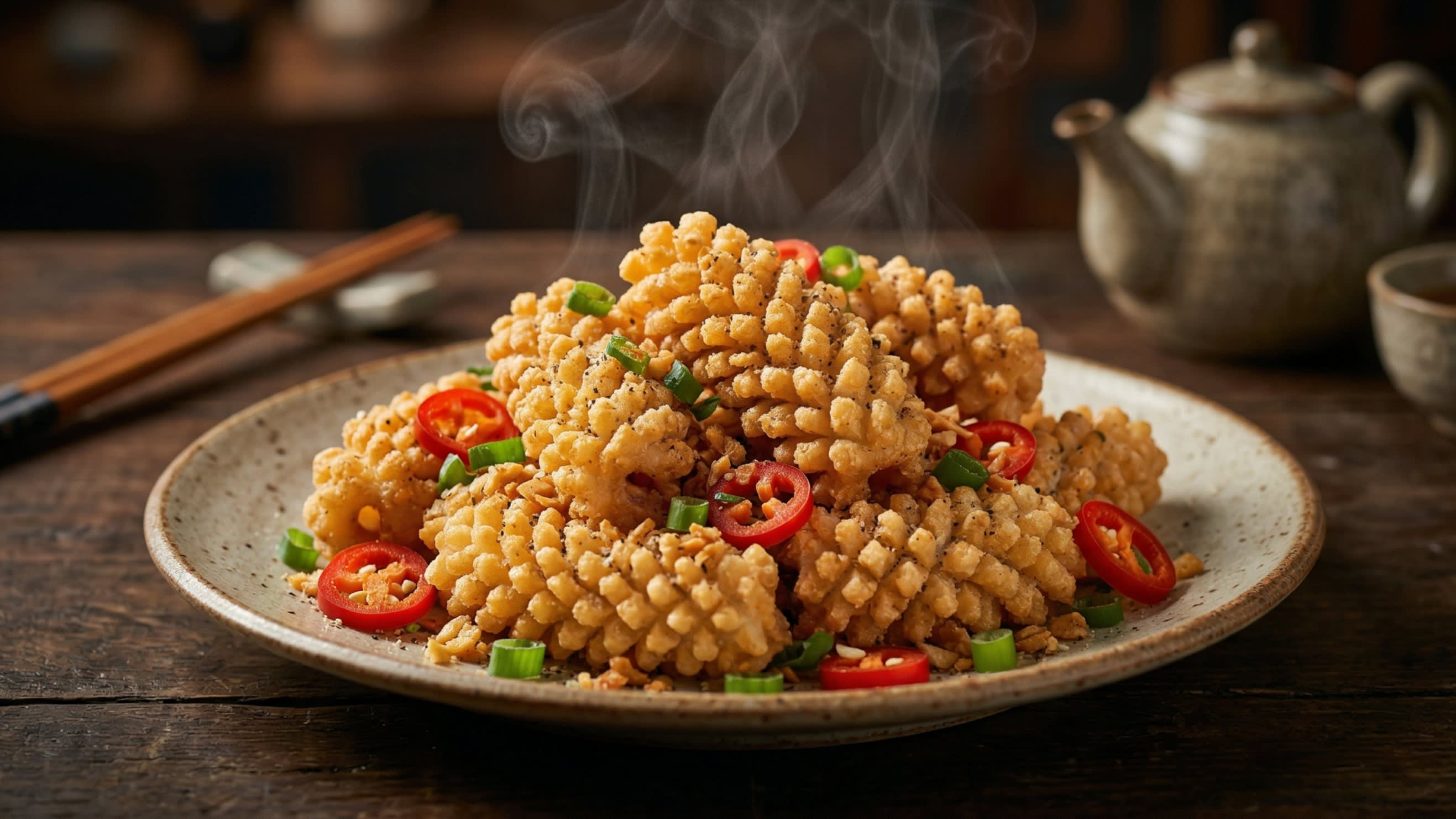
To me, this dish is the quintessential bar snack, representing the heartbeat of Cantonese street food. When done right, it is a sensory masterpiece. You get those beautiful, intricate curls of squid encased in a crust so shatteringly crisp it echoes when you bite into it, yet the interior remains miraculously tender and buttery. The whole affair is then aggressively wok-tossed with fried garlic, fresh fiery chilies, and that intoxicating, numbing-yet-savory roasted spice blend.
However, I remember my own early attempts at recreating this in my home kitchen. They were, frankly, disastrous. My batter was either soggy and pale, or it would slough off in the oil like a discarded coat. Even worse, the squid itself—which I’d sliced into uniform rings like a beginner—turned into a tough, unchewable rubber band that tasted like a spare tire.
After years of pestering local chefs and enduring many failed batches, I finally cracked the code. Today, I’m sharing the guarded secrets of the trade: from the legendary knife work that defies physics to the specific starch that ensures your crust stays crunchy long after the plate hits the table. If you love this, you might also want to try my Authentic Cantonese Char Siu (Chinese BBQ Pork) or master the Ultimate Salt and Pepper Shrimp for your next dinner party.
🔪 The Knife Skills Secret: “Maisui Huadao” (麦穗花刀)
In Western kitchens, squid is almost always sliced into simple horizontal rings. I’ve learned the hard way that this is a fatal error for high-heat Chinese stir-frying. Squid muscle fibers are dense; exposing them to high heat causes them to contract violently, resulting in that dreaded “rubber tire” texture.
To combat this, Chinese chefs use a technique known as Màisuì huādāo (麦穗花刀), or the “Wheat Ear” (pinecone) cut.
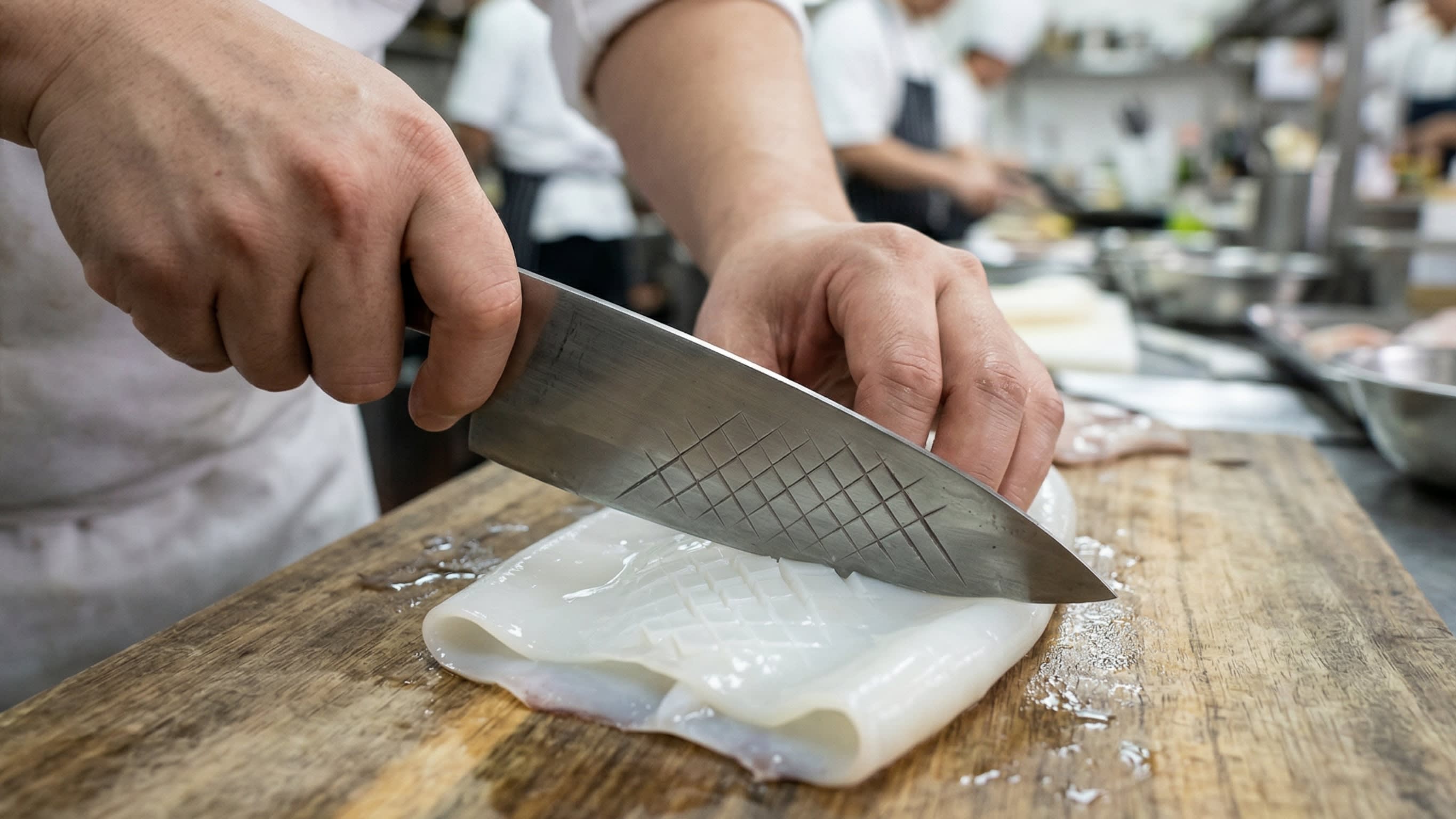
I take a flat, cleaned tube of squid and use a very sharp cleaver to score a tight, diagonal crosshatch pattern on the inside surface of the flesh. I am careful never to cut all the way through. This serves three vital roles:
- The Tenderizer: It physically severs the dense muscle fibers, making contraction impossible. The meat stays melt-in-your-mouth tender.
- The Adhesive: The deep grooves act like tiny pockets that “lock” the batter to the meat, ensuring that crunch never abandons the squid.
- The Visual Drama: When the scored squid hits the boiling oil, the heat forces it to roll backward instantly, blooming into that iconic, intricate pinecone shape. Because the surface area increases so dramatically, the pieces cook in under 60 seconds!
🧂 Decoding the Seasoning: What is “Jiao Yan”?
A common rookie mistake I see is thinking “salt and pepper” just means the stuff from your table shakers. It is anything but. In Chinese cuisine, Jiāoyán (椒盐), or “Sichuan Peppercorn Salt,” is a specific, fragrant dry rub that provides the dish’s signature addictive aroma.
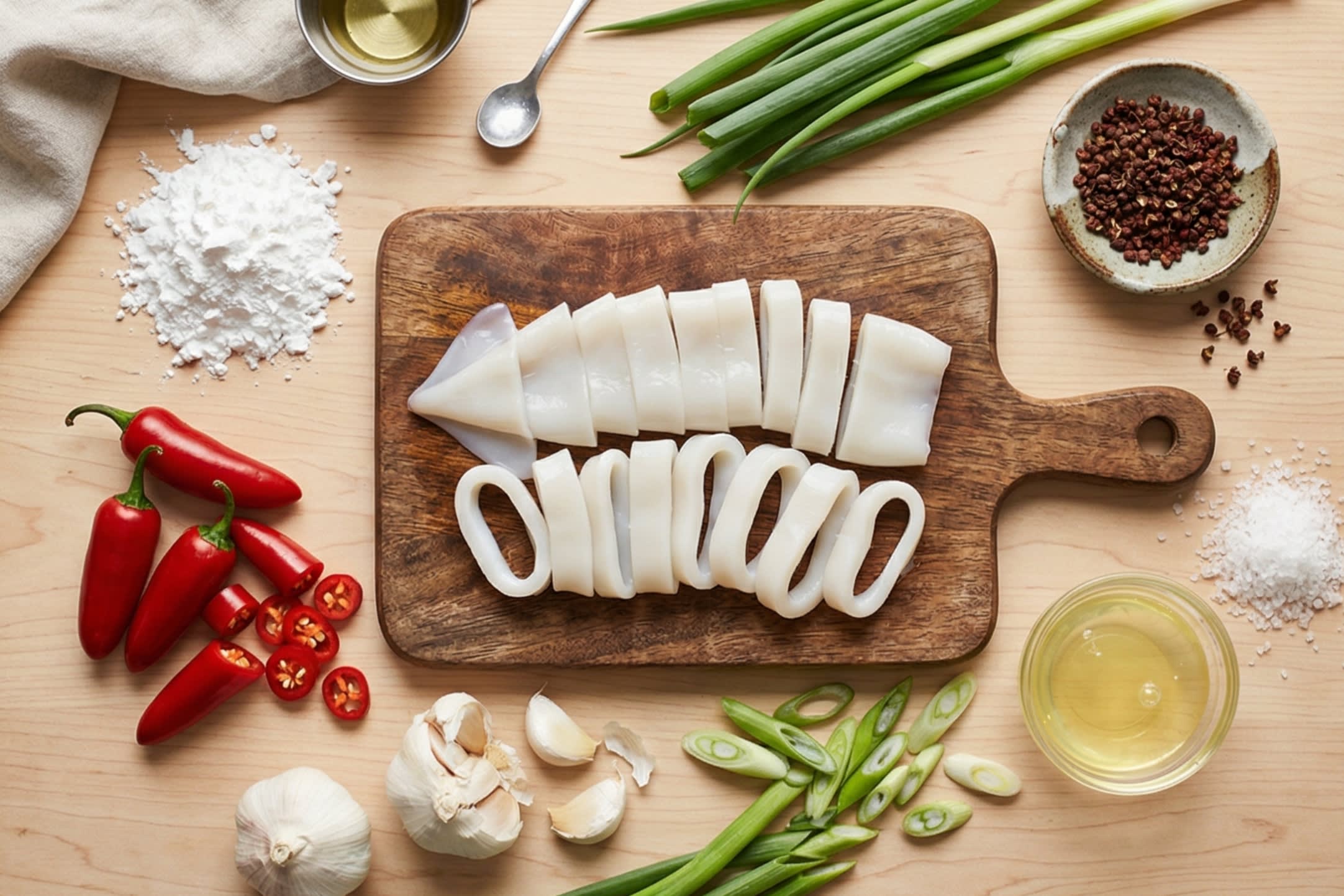
I make my own by toasting coarse sea salt and whole Sichuan Peppercorns (花椒 - Huājiāo) together in a dry wok over low heat. I wait until the salt turns a faint, golden yellow and the peppercorns release their citrusy, woodsy essential oils. Once I grind this into a fine powder—often with a pinch of white pepper and five-spice—the result is an explosive aromatic bomb that is the absolute soul of the dish.
🔬 The Indestructible Crust: Sweet Potato Starch
If your batter is always falling off or turning into a soft, gummy paste, the culprit is likely wheat flour. Wheat contains gluten, which drinks up moisture and becomes heavy when fried.
I exclusively use Sweet Potato Starch (红薯淀粉 - Hóngshǔ diànfěn). I prefer the coarse, granular version because when it hits the oil, those tiny craters expand into a microscopic, glass-like shell. This creates that authentic Wàisū lǐnèn (外酥里嫩 - crispy outside, tender inside) texture that stays crunchy even as the dish cools. If you can’t source it locally, a high-quality cornstarch is the only acceptable backup, though the crust will be slightly less craggy.
🛒 Ingredients List
The “Jiao Yan” Seasoning (椒盐):
- 1 tbsp Whole Sichuan Peppercorns (花椒)
- 1 tbsp Coarse Sea Salt
- 1/2 tsp White Pepper powder (白胡椒粉)
- 1/4 tsp Five-Spice Powder (五香粉)
The Squid & Marinade:
- 1 lb (450g) Cleaned Squid Tubes (鱿鱼 - Yóuyú)
- 1 tbsp Shaoxing Cooking Wine (绍兴酒)
- 1/2 tsp Salt
- 1 large Egg White (蛋清)
The Crust & Frying:
- 1 cup Coarse Sweet Potato Starch (红薯淀粉)
- 4 cups neutral Cooking Oil (peanut or vegetable oil)
The Aromatic Garnish:
- 4 cloves Garlic, finely minced (蒜末)
- 1-2 fresh Red Chilies, thinly sliced (红辣椒)
- 2 stalks Scallions, chopped (葱花)
🍳 Step-by-Step Instructions
1. Create the Authentic Jiao Yan: Heat a dry wok over medium-low heat. Toast your salt and Sichuan peppercorns for 3–5 minutes until the peppercorns are fragrant and the salt is slightly yellow. Once cool, grind them into a fine powder and whisk in the white pepper and five-spice.
2. The Pinecone Cut (麦穗花刀): Split the squid tube open to lay it flat. Identify the inner surface (it looks slightly different, sometimes slightly smoother or having a faint membrane). Score diagonal lines 1/8-inch apart, then rotate 90 degrees to score the opposite diagonal. Slice into rectangular bite-sized pieces.
3. Marinate and Dredge: Massage the squid with Shaoxing wine and salt. Stir in the egg white until sticky. Working in small batches, toss the squid in the sweet potato starch, ensuring the powder is pushed into the crosshatch grooves. Shake off the excess—we want a coat, not a mountain.
4. The Flash Fry: Heat your wok oil to 375°F (190°C). Drop the pieces in one by one. Watch them curl into pinecones instantly! Fry for 45–60 seconds, then remove with a spider strainer.
5. The Second Fry: Crank the heat to 400°F (200°C) and drop the squid back in for 20–30 seconds for maximum shatter-crispiness. Drain well.
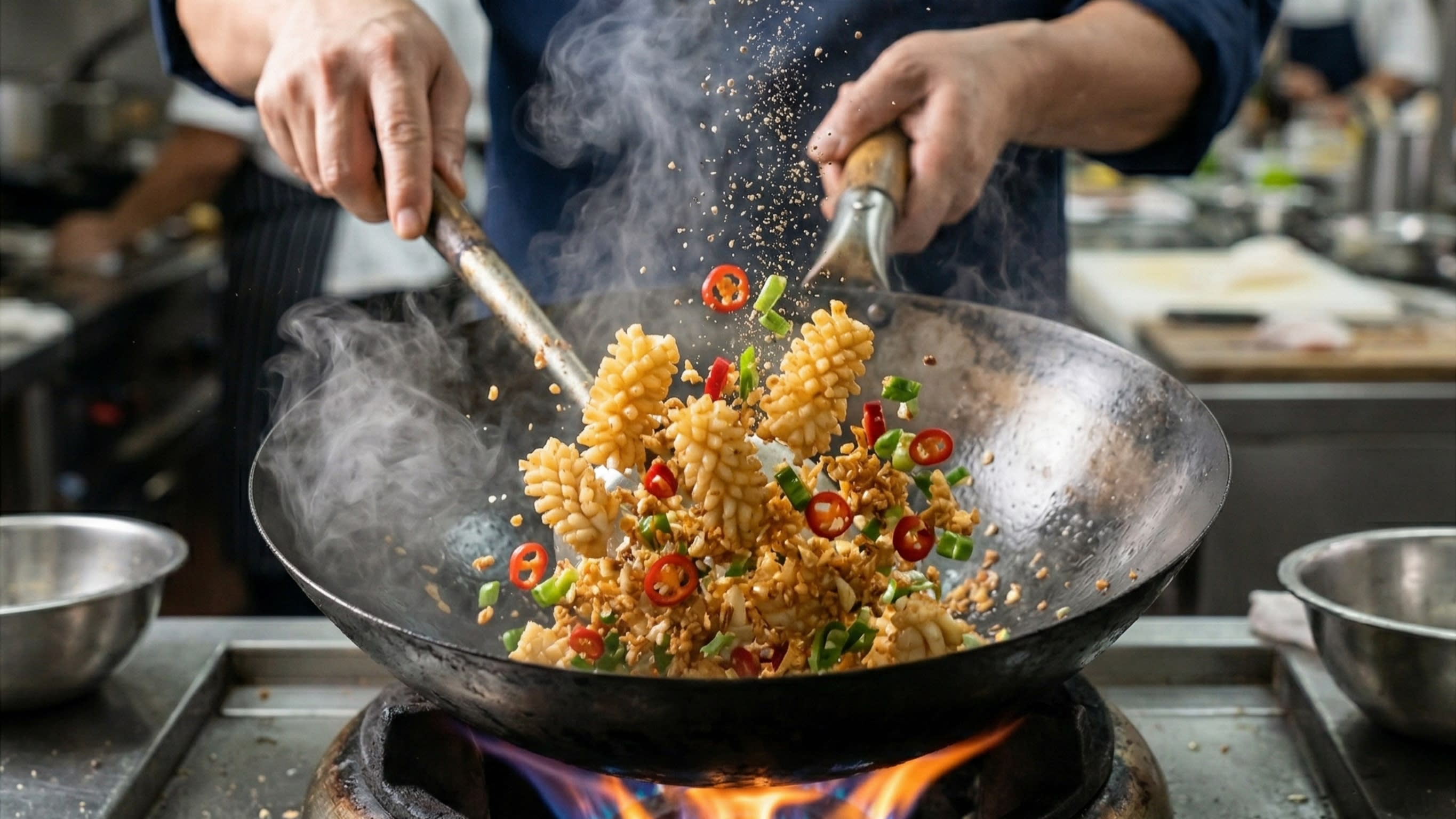
6. Final Toss: Pour out almost all the oil, leaving just a teaspoon. Sauté the garlic and chilies until fragrant. Turn off the heat completely! Add the squid and the Jiao Yan powder. Toss vigorously for 10 seconds to let the residual heat bond the spices to the crust. Serve immediately.
💡 Troubleshooting & Pro Tips
If you’re still not getting the perfect crunch, consider these expert tweaks:
| Issue | Root Cause |
|---|---|
| Rubberiness | Overcooking or failure to score the muscle fibers properly. |
| Soggy Batter | Using wheat flour or overcrowding the wok, which drops the oil temperature. |
| Batter Falls Off | Insufficient egg white binder or excess moisture before dredging. |
Remember, perfection takes practice. My first batch was a disaster, but now it’s a standard Saturday night treat. If you’re looking to round out your meal, this squid pairs beautifully with Authentic Egg Fried Rice or a simple, fresh Smashed Cucumber Salad. Enjoy the process!
🎥 Watch the Secret Knife Technique
Disclaimer: As an Amazon Associate, ChinaCurator earns from qualifying purchases.