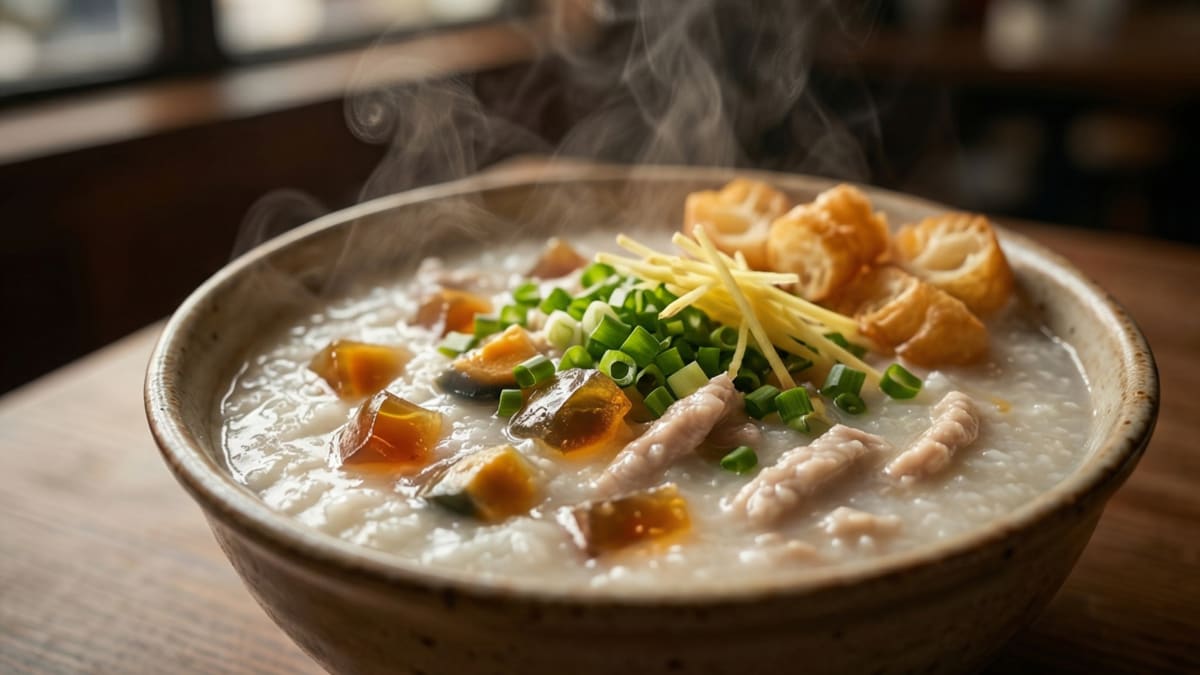
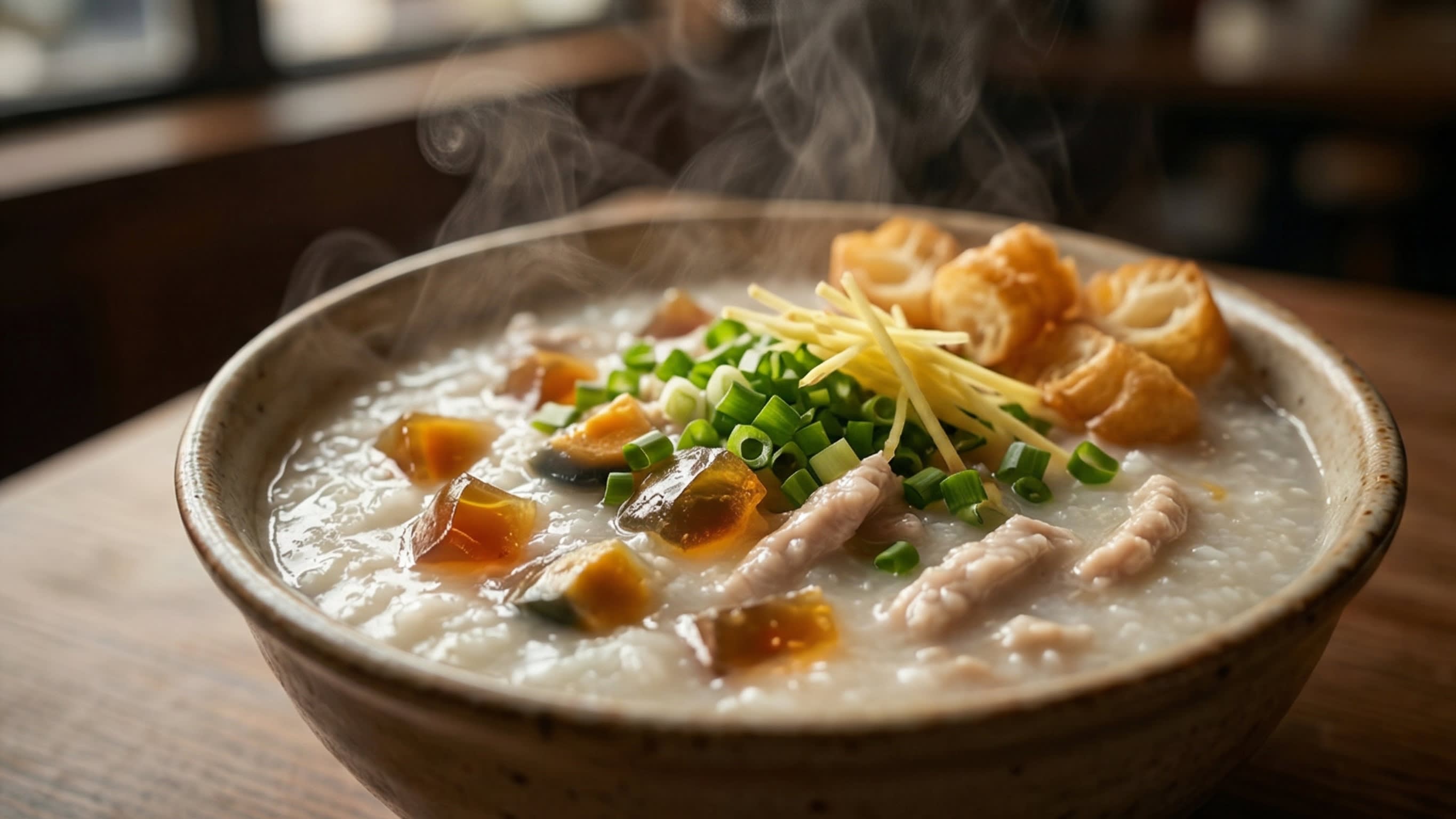
🥣 Introduction: The Ultimate Asian Comfort Food
In Western households, the universal remedy for a bad day or a cold morning is almost always a bowl of chicken noodle soup. But in the bustling, neon-lit streets of Guangzhou or the quiet morning markets of Hong Kong, true comfort speaks a different language: the language of Congee (粥 - Zhōu).
To the uninitiated, congee might look like simple rice porridge, but to those who grew up with it, it is a soulful, transformative experience. Among the vast family of porridges, the crown jewel is undoubtedly Century Egg and Pork Congee (皮蛋瘦肉粥 - Pídàn Shòuròu Zhōu). When crafted correctly, this dish reaches a state of Miánmì (绵密) — a texture so creamy and velvety that the rice grains seem to vanish into a thick, savory elixir. It’s a dish of contrasts: the bouncy, jelly-like texture of the century eggs, the tender, velvet-marinated pork, and the sharp, bright contrast of fresh ginger.
I still remember my grandmother’s kitchen, where the heavy clay pot would simmer for hours, the scent of rice and ginger filling the humid afternoon air. But you don’t need a grandmother with a lifetime of experience to achieve this. Today, I’m sharing the secret to reaching that restaurant-quality silkiness in a fraction of the time.
🥚 Demystifying the Century Egg (皮蛋)
The century egg often intimidates Western home cooks, primarily because of its alien appearance. You crack the speckled shell to find a dark, amber-hued jelly where the white used to be, and a creamy, dark grey-green yolk.
Let’s dismantle the myths:
- Time is a construct: It isn’t literally a hundred years old. It is cured in an alkaline mixture of clay, wood ash, salt, and quicklime.
- The “Ammonia” Note: Yes, it has a distinct alkaline scent when raw. But this is the beauty of Chinese cooking; that scent is neutralized by heat, leaving behind a deep, earthy umami that feels almost like a aged, nutty cheese.
- The Texture: It’s a culinary texture bomb. The white becomes a firm, bouncy jelly, while the yolk turns into a rich, creamy paste that thickens your porridge base beautifully.
🔬 The Culinary Science: The “Freezing” Hack for Silky Rice
Traditional Cantonese chefs will insist that a perfect congee requires three hours of constant stirring to break down the starch. I’m here to tell you that you can hack this process using simple physics.
When you wash your rice, coat it in a light layer of cooking oil and salt, and let it freeze, you are creating tiny ice crystals. When these frozen grains hit the boiling water, the sudden expansion of these ice crystals shatters the rice structure from within. It essentially “pre-digests” the grain, allowing it to blossom open instantly. This is the secret to that thick, milky broth that defines professional-grade congee.
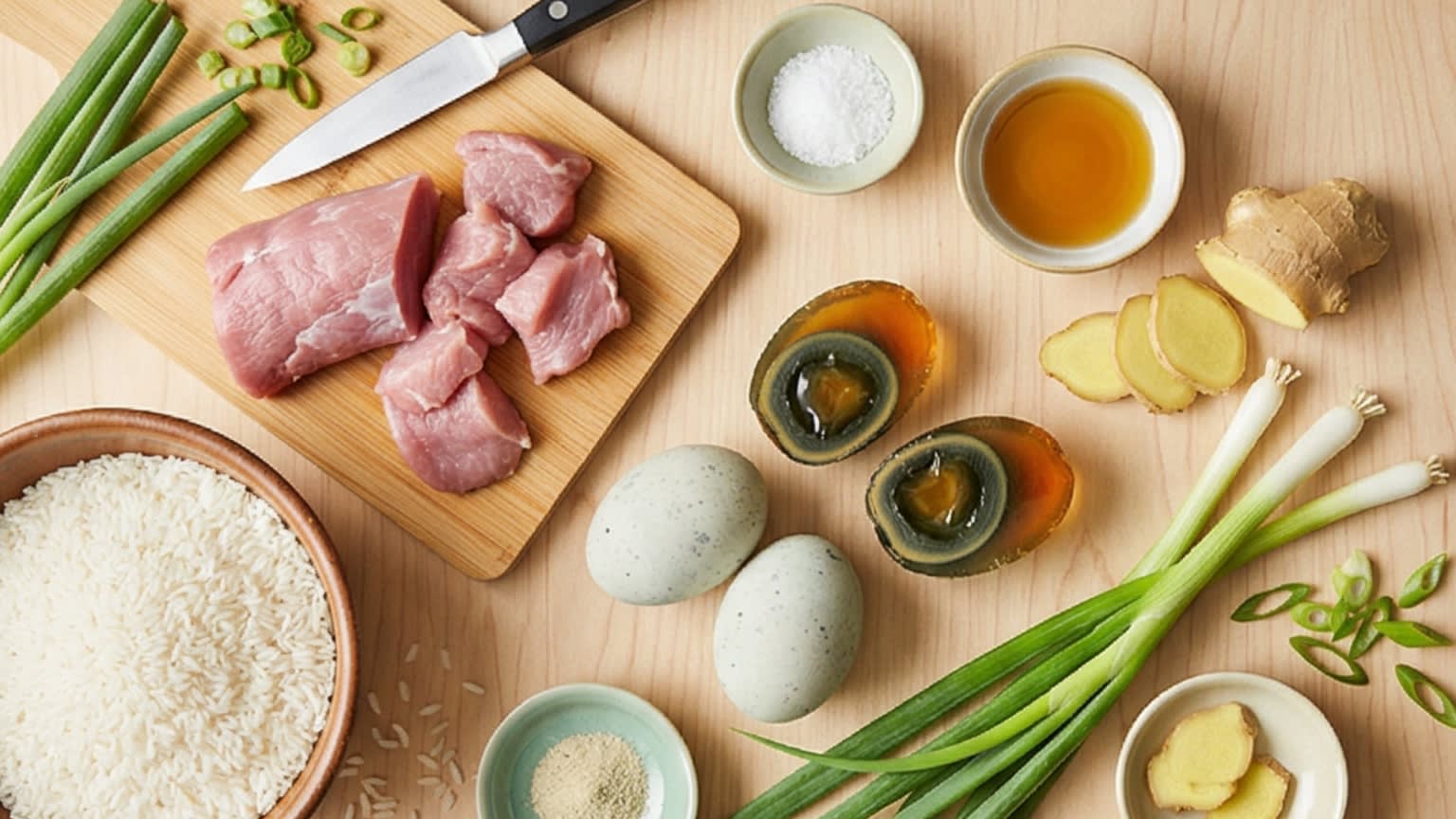
🛒 Ingredients List
The “Shattered” Rice Prep:
- 3/4 cup high-quality Jasmine Rice
- 1 tsp Peanut or Vegetable Oil
- 1/2 tsp Salt
- 8 to 9 cups Water or Chicken Broth
The Pork & Marinade:
- 1/2 lb (225g) Lean Pork Loin or Tenderloin (瘦肉 - Shòuròu)
- 1 tsp Light Soy Sauce
- 1 tsp Shaoxing Cooking Wine
- 1/2 tsp finely julienned fresh Ginger
- 1/2 tsp Cornstarch
- A pinch of White Pepper powder
The Star Ingredients & Garnish:
- 2 large Century Eggs, diced
- 2-inch piece of fresh Ginger, hair-thinly julienned
- 2 stalks Scallions, finely chopped
- Toasted Sesame Oil
🍳 Step-by-Step Instructions
- The Freeze: Wash your Jasmine rice thoroughly. Drain it well, toss it with oil and salt, and freeze for at least 2 hours. This is your foundation for success.
- The Velvet Marinade: Slice your pork tenderloin into paper-thin strips. Marinate with soy sauce, Shaoxing wine, ginger, cornstarch, and white pepper. The cornstarch is non-negotiable; it creates a protective barrier that keeps the meat tender even after being boiled.
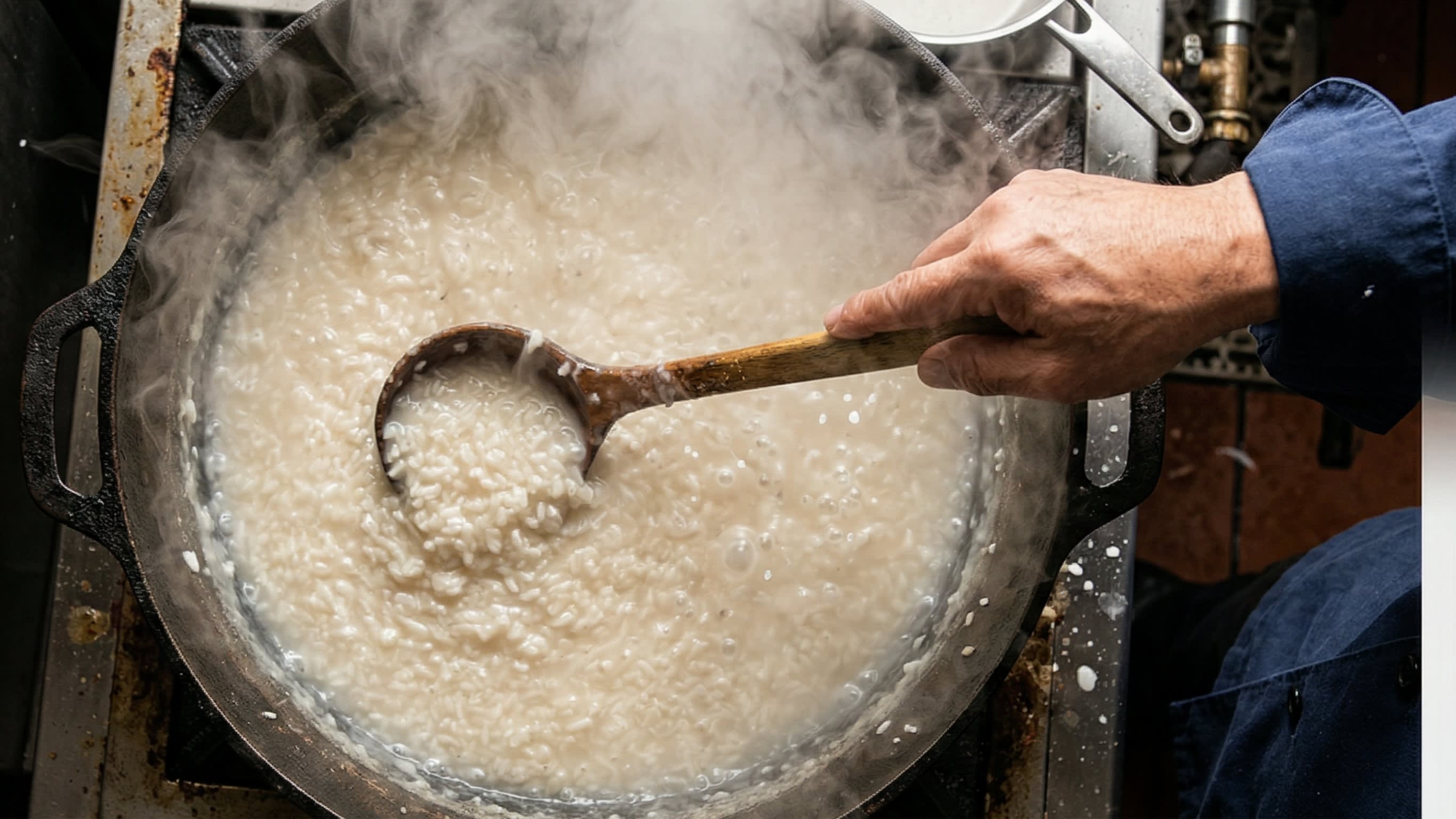
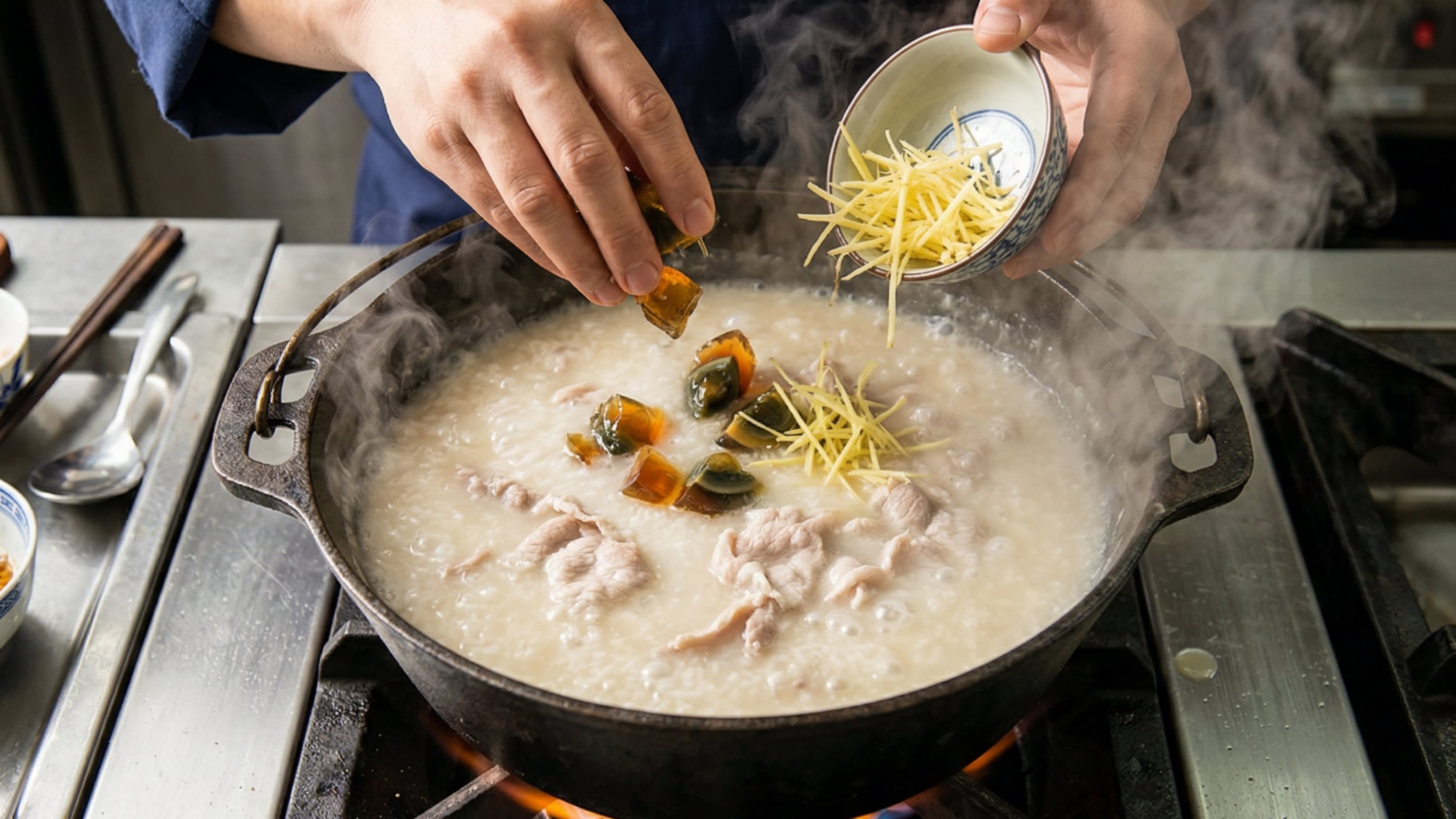
- The Boil: Bring your liquid to a rolling, aggressive boil in a heavy-bottomed Dutch oven. Drop in your frozen rice. It will look like a solid brick, but it will break apart as the starch begins to release.
- The Melt: Add half your diced century eggs now. They will melt into the broth, flavoring the porridge from the inside out. Simmer for 30 minutes, stirring occasionally.
- The Final Touch: Add the pork and boil for 2 minutes. Stir in the remaining eggs and fresh ginger off the heat.
Pro-Tips for the Perfect Bowl
| Tip | Reasoning |
|---|---|
| Constant Stirring | Congee starch is aggressive; it will burn the bottom of your pot if you neglect it. |
| Fresh Ginger | The heat of the julienned ginger acts as a palate cleanser against the rich, creamy umami. |
| Consistency | It should be slightly thinner than you want on the stove; it thickens rapidly as it cools. |
If you enjoyed this deep dive into Cantonese comfort food, you might also want to master the wok skills needed for The ULTIMATE Beef Chow Fun or perhaps try your hand at Authentic Chinese Jiaozi. Congee is more than just breakfast; it is a reminder that in China, the most complex flavors often come from the simplest ingredients treated with patience and care. Enjoy your bowl of warm, silky heaven!
Disclaimer: As an Amazon Associate, ChinaCurator earns from qualifying purchases.