🥚 Introduction: The Edible Art of Chinese Street Food
If you ever have the chance to step into a bustling 7-Eleven in Taiwan, or walk past a busy breakfast vendor on the streets of Shanghai in the crisp morning air, your senses will immediately be enveloped by a highly distinct, deeply comforting aroma. It is a warm, woody, and intensely savory fragrance of toasted spices, soy sauce, and rich tea leaves simmering away in a large slow cooker.
You have just discovered Tea Eggs (茶叶蛋 - Cháyè Dàn).
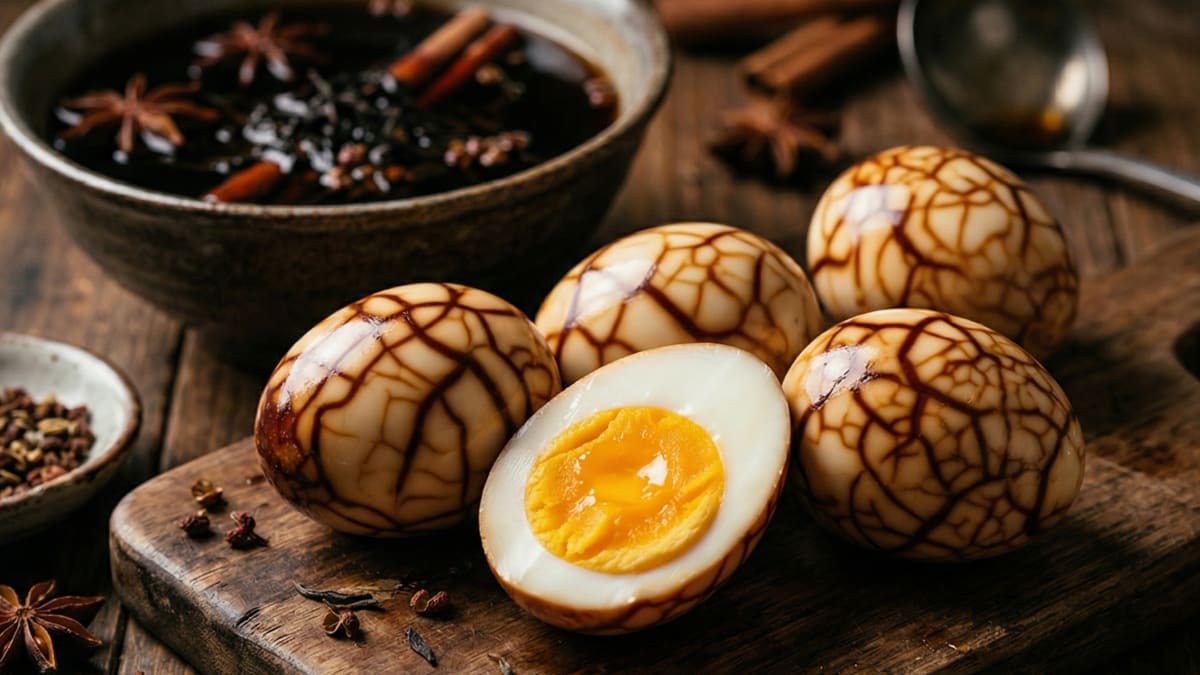
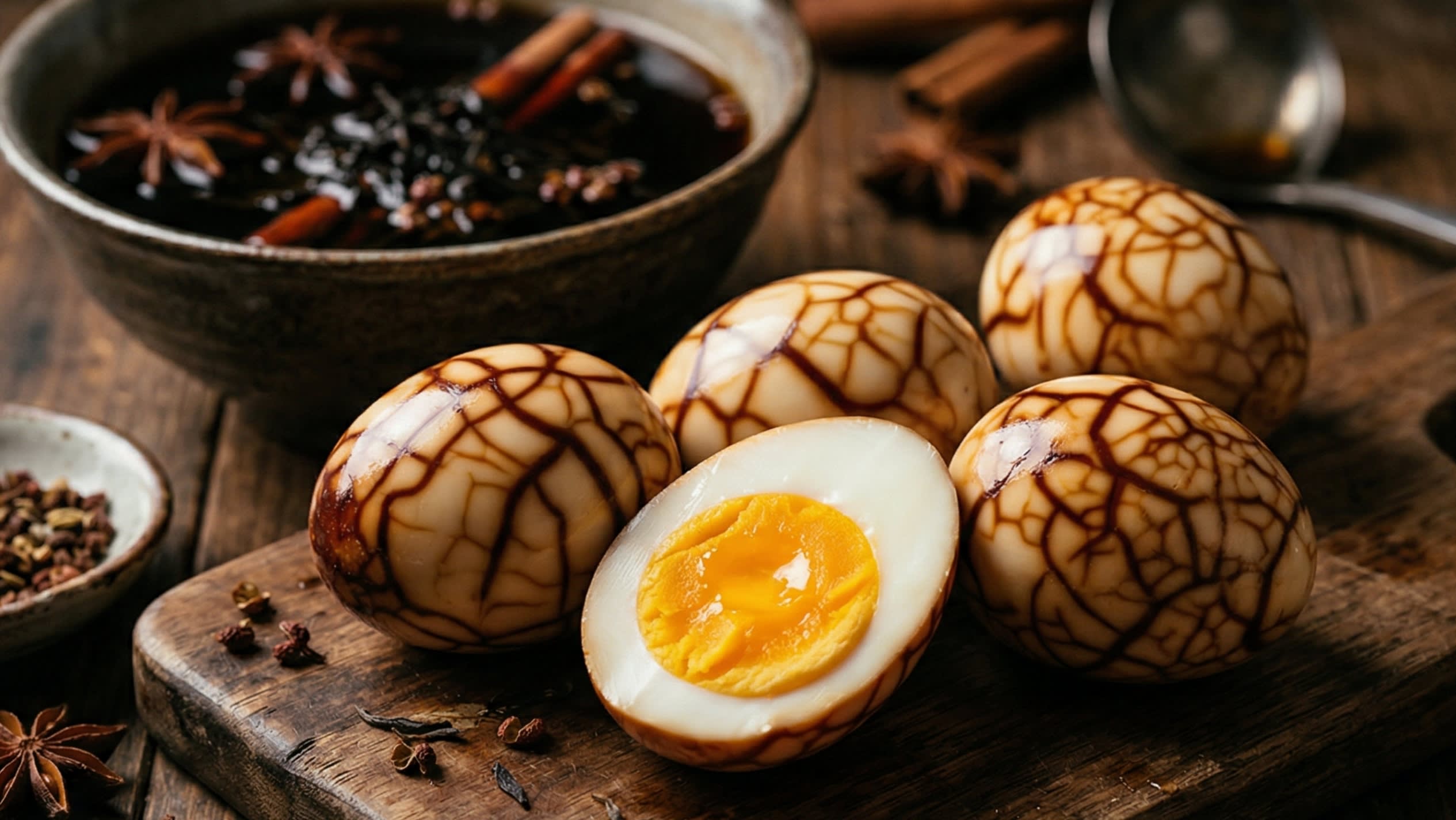
In Chinese culture, the Tea Egg is the ultimate ubiquitous comfort food, a cheap but deeply satisfying on-the-go snack, and an absolute staple for long train rides. But beyond its incredible flavor, it is internationally famous for its visual beauty. When you peel the shell off a perfectly executed Tea Egg, you are greeted by a breathtaking, intricate, dark brown spiderweb design that looks like polished marble (大理石纹 - Dàlíshí Wén).
However, when Western home cooks attempt to recreate these beautiful “Marbled Eggs,” the results are often tragic. You might peel the egg only to find it completely white, with no pattern at all. Worse, the egg white might be as tough and rubbery as a bouncy ball, with a chalky yolk surrounded by an unappetizing, sulfurous grey-green ring. And sometimes, the marinade tastes unbearably bitter and astringent.
Today, we are going to unlock the culinary science behind this edible art. We will explain the vital chemistry of choosing the right tea, teach you the physical “Art of the Crack” to guarantee a flawless web pattern, and reveal the restaurant secret of “osmosis steeping” that prevents rubbery eggs forever!
🍵 The Chemistry of the Brew: The “Black Tea” Rule
The most common and devastating mistake beginners make is reading the name “Tea Eggs” and immediately reaching into their pantry for delicate Green Tea.
Never use Green Tea for Tea Eggs! Green tea leaves are unoxidized. When you boil green tea for an extended period, it releases a massive amount of tannins, which will turn your marinade violently bitter and astringent. Furthermore, green tea will not give the eggs that beautiful, deep mahogany color.
Authentic Cha Ye Dan strictly requires Black Tea (红茶 - Hóngchá). (Note: In Chinese, black tea is literally translated as “Red Tea” due to the color of the brewed liquid). Because black tea is fully oxidized, it can withstand prolonged simmering without turning bitter. It provides a sweet, deep, woody, and earthy flavor profile that pairs flawlessly with savory soy sauce. It also imparts that rich, dark reddish-brown pigment necessary to stain the egg whites. Standard black tea bags (like Lipton or English Breakfast) work perfectly, but for a truly authentic touch, whole loose-leaf Pu’er (普洱) or Keemun black tea is magnificent.
🔨 The Physics of the Spiderweb: “Qiao Ke” (敲壳)
“Why didn’t my eggs get any patterns?” To get the iconic marbled spiderweb design, the dark, savory marinade must physically seep through the eggshell and stain the white underneath. This requires you to intentionally shatter the shell before simmering. In Chinese, this crucial step is called Qiāo ké (敲壳 - Cracking the shell).
The Art of the Crack: This is an exercise in gentle precision. You do not want to destroy the egg! After hard-boiling the eggs, you take the back of a metal spoon and gently tap the entire surface of the egg. The physics goal here is to fracture the hard, brittle calcium carbonate shell into a mosaic of hundreds of tiny cracks, but leave the thin, flexible inner membrane mostly intact. If you smash the egg too hard, the shell will fall off, and your egg will just turn entirely brown instead of marbled. You want a beautifully shattered, “crazed” surface all over.
⏱️ Steeping vs. Boiling: The Secret to Tender Eggs
Here is the ultimate restaurant secret that will change how you make Tea Eggs forever: Flavor comes from time, not temperature.
Many bad recipes will tell you to boil the cracked eggs in the tea marinade for 2 or 3 hours to force the flavor inside. Do not do this! Boiling an egg for hours causes the proteins to seize up, turning the egg white into tough rubber. The prolonged extreme heat also causes the iron in the yolk to react with sulfur in the white, creating that ugly, foul-smelling green ring around the yolk.
The Authentic Method (浸泡入味):
- You boil the eggs normally (about 7 to 8 minutes for a perfectly creamy, golden yolk).
- You crack the shells.
- You prepare the Master Stock (卤水 - Lǔshuǐ) and let it boil to extract the spices.
- You drop the cracked eggs into the hot stock and simmer them for only 10 minutes.
- Then, you turn off the heat entirely! You let the eggs steep in the liquid in the refrigerator overnight.
Through the magic of osmotic pressure, the savory, tea-infused liquid will slowly and gently penetrate the cracks and permeate the egg white over 12 to 24 hours. The result? An egg that is deeply flavored (入味 - Rùwèi) all the way to the yolk, but still incredibly tender, creamy, and visually flawless!
🛒 Ingredients List
The Eggs:
- 6 to 8 Large Chicken Eggs (older eggs are easier to peel than farm-fresh ones).
The Tea & Spices (The Flavor Engine):
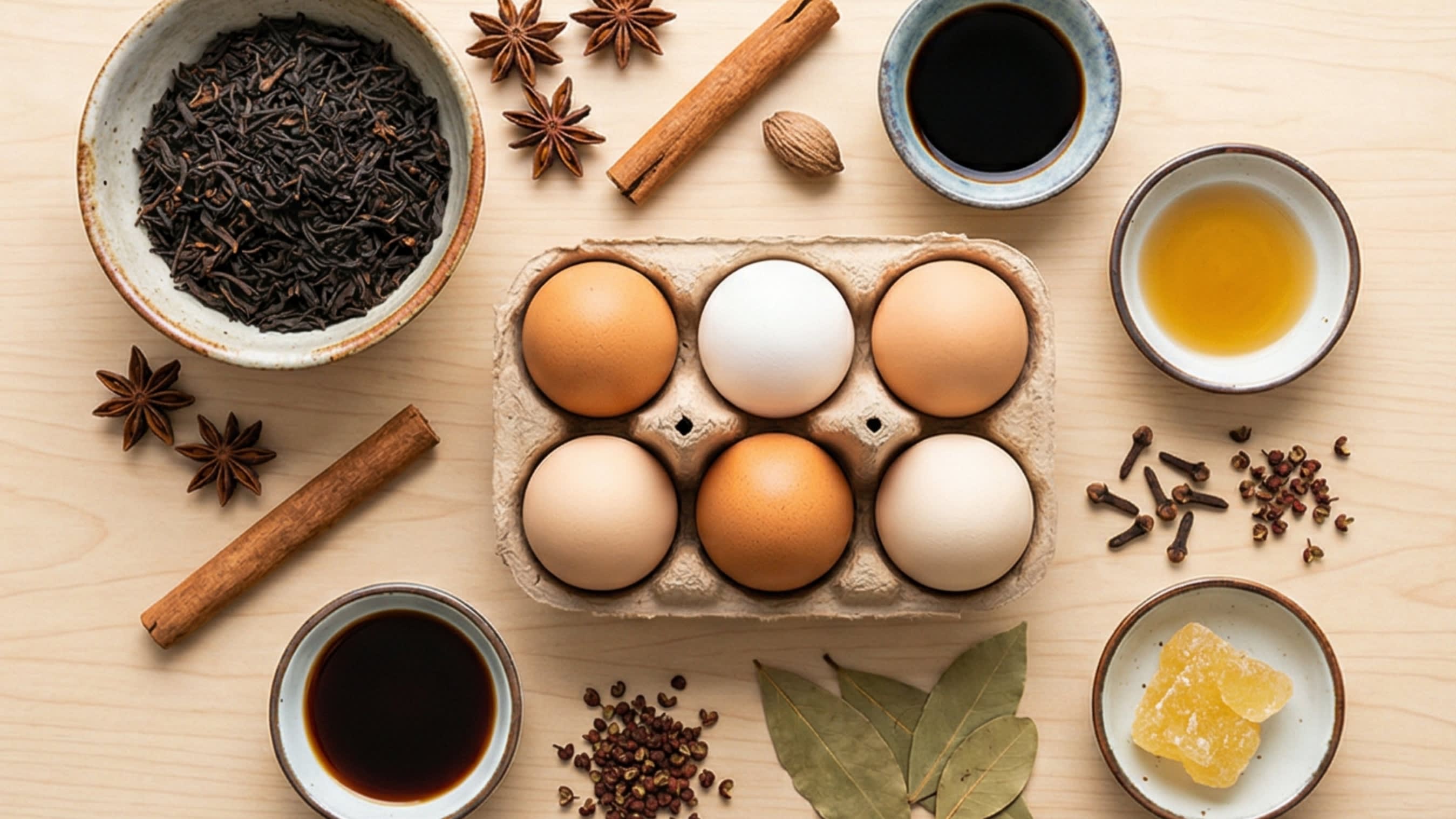
- 2 tbsp Loose-leaf Black Tea (红茶), OR 3 standard Black Tea bags (e.g., English Breakfast, Lipton, or Pu’er). Absolutely no green tea or fruity herbal teas!
- 2 whole Star Anise (八角)
- 1 Cinnamon Stick (桂皮)
- 3 whole Cloves (丁香)
- 1 tsp whole Sichuan Peppercorns (花椒)
- 2 Dried Bay Leaves (香叶)
The Savory Master Stock (卤水):
- 1/3 cup Light Soy Sauce (生抽)
- 2 tbsp Dark Soy Sauce (老抽) - Crucial for staining the dark spiderweb pattern!
- 1.5 tbsp Rock Sugar (冰糖) or regular granulated sugar. Balances the harshness of the soy sauce.
- 1 tsp Salt
- 4 cups Water
🍳 Step-by-Step Instructions
1. The Perfect Initial Boil: Bring a pot of water to a rolling boil. Carefully lower your eggs into the boiling water straight from the fridge. Boil them for exactly 8 minutes for a slightly jammy, golden center, or 10 minutes for a fully hard-boiled yolk. Immediately remove the eggs and plunge them into an ice-water bath for 5 minutes. This thermal shock stops the cooking process and shrinks the egg slightly from the shell, making peeling easier later.
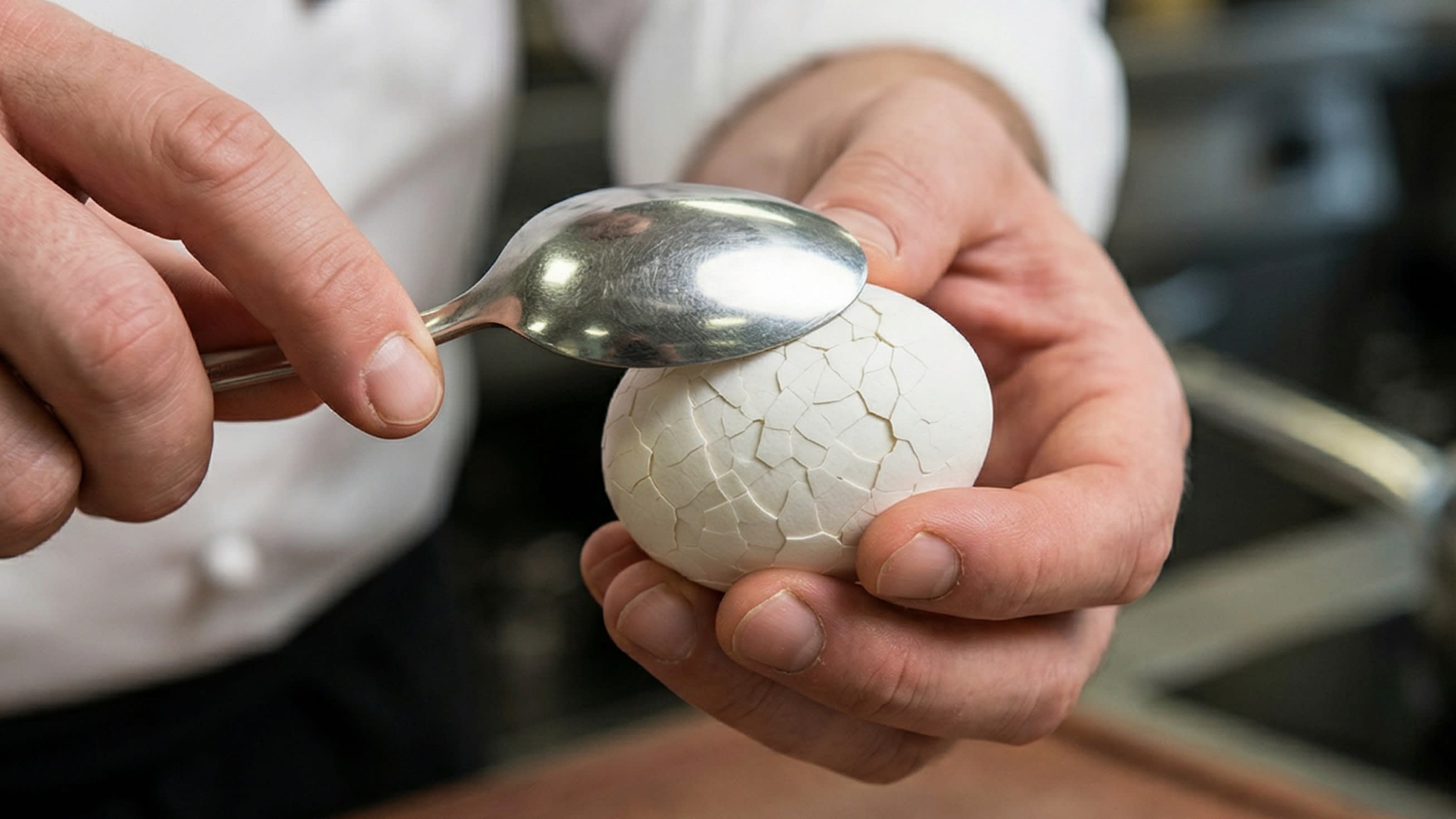
2. The Art of the Crack (敲壳): Remove the cold eggs from the ice bath. Take the back of a metal spoon and gently tap the entire surface of each egg. Tap the “equator” (the middle) first, then the top and bottom poles. You want a dense network of cracks all over the egg, but the shell must remain attached to the membrane.
3. Build the Master Stock (煮卤水): In a medium-sized pot, combine the 4 cups of water, black tea leaves (or bags), star anise, cinnamon stick, cloves, Sichuan peppercorns, bay leaves, light soy sauce, dark soy sauce, rock sugar, and salt. Bring this mixture to a lively boil, then lower the heat and let it simmer for 10 minutes so the spices and tea release their volatile essential oils. The kitchen will smell heavenly!
4. The Brief Simmer: Gently lower your beautifully cracked eggs into the simmering dark master stock. Ensure the eggs are completely submerged. Let them simmer on low heat for only 10 minutes.
5. The Long Steep (浸泡入味 - The Most Important Step!): After 10 minutes, turn off the heat completely. Let the pot cool to room temperature. Once cooled, transfer the eggs and all of the liquid/spices into an airtight container and place it in the refrigerator. Let the eggs steep in the cold marinade for at least 12 hours, ideally 24 hours. The longer they steep, the darker the pattern and the deeper the flavor!
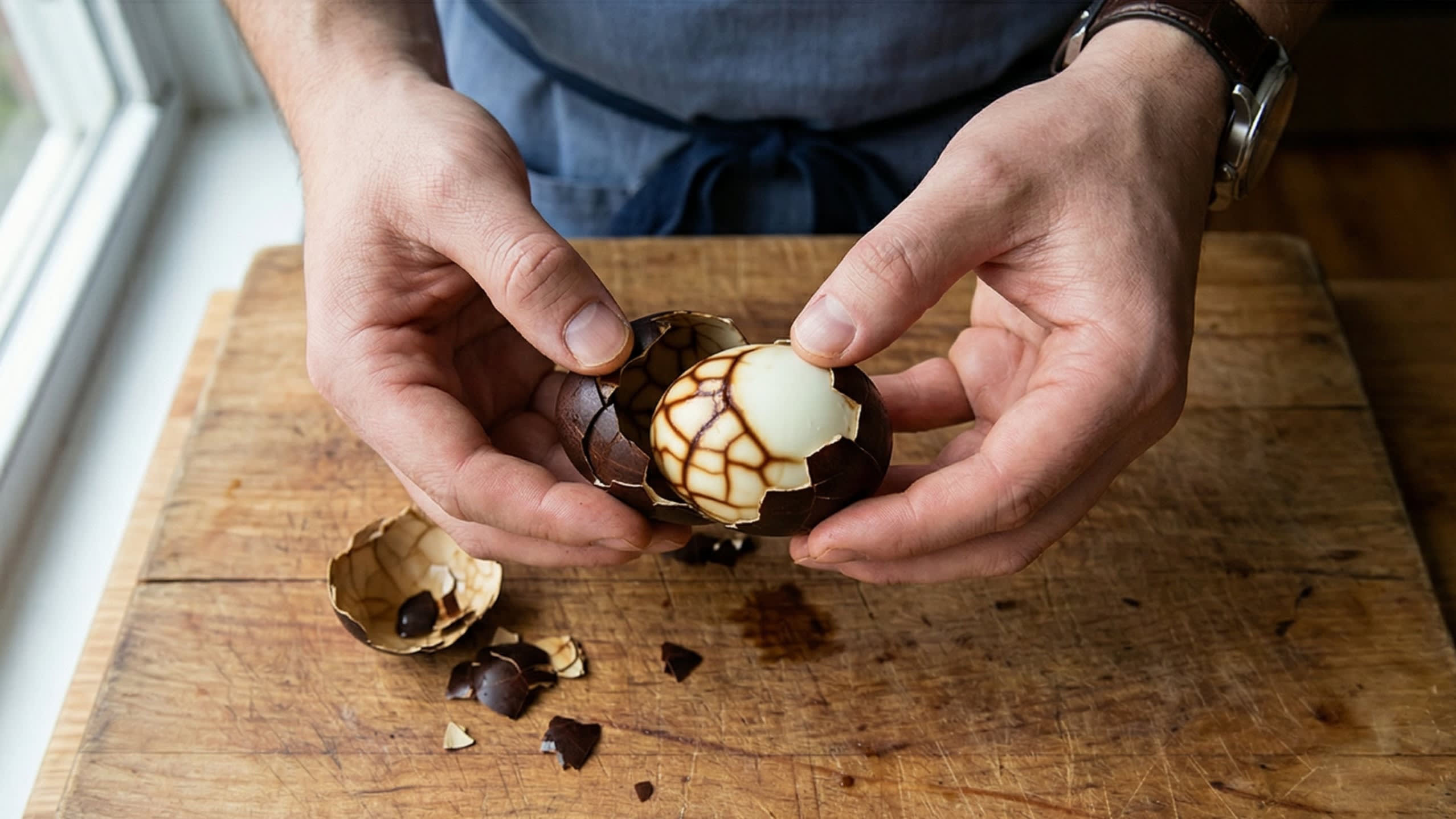
6. Peel and Reveal: The next day, take an egg from the dark marinade. Gently peel the shattered shell away. Marvel at the breathtaking, dark mahogany spiderweb pattern you have created! Tea eggs are traditionally eaten cold straight out of the fridge as a refreshing snack, or you can gently warm them up in the microwave or by dropping them into a hot bowl of noodle soup.
💡 Troubleshooting & Pro Tips
- My eggs have no pattern at all! You didn’t crack the shell thoroughly enough in Step 2, or you didn’t steep them long enough. Also, ensure you are using Dark Soy Sauce (老抽)! Light soy sauce provides flavor, but dark soy sauce is what physically stains the egg white with that dark brown color.
- The egg is completely brown all over, not marbled. You smashed the egg too aggressively, breaking the inner membrane and causing pieces of the shell to fall off during the simmer. The dark liquid just flooded the entire egg white. Be gentle with the spoon!
- How long do they last? If kept fully submerged in their liquid marinade in an airtight container in the refrigerator, these tea eggs will easily last for 5 to 7 days. In fact, they taste even better on day 3!
📦 Shop Authentic Asian Pantry Essentials
To capture the authentic, deep woody aroma and the stunning dark marbled coloring of a Taiwanese convenience store, upgrading your spices is highly recommended. (As an Amazon Associate, ChinaCurator earns from qualifying purchases.)
- Premium Loose Leaf Black Tea (Keemun or Pu'er) - The absolute soul of the marinade. Black tea provides a deep, sweet, robust flavor without the bitter astringency of green tea.
- Pearl River Bridge Dark Soy Sauce (老抽) - The mandatory ingredient for giving the eggs that highly appetizing, dark, dramatic spiderweb stain.
- Whole Star Anise (八角) - The signature spice of Chinese savory cooking, providing a warm, sweet, licorice-like aroma.
- Yellow Rock Sugar (老冰糖) - Provides a cleaner, glossier, and more authentic sweetness than standard white table sugar to balance the savory soy sauce.