🍜 Introduction: The Ultimate Sauce Delivery System
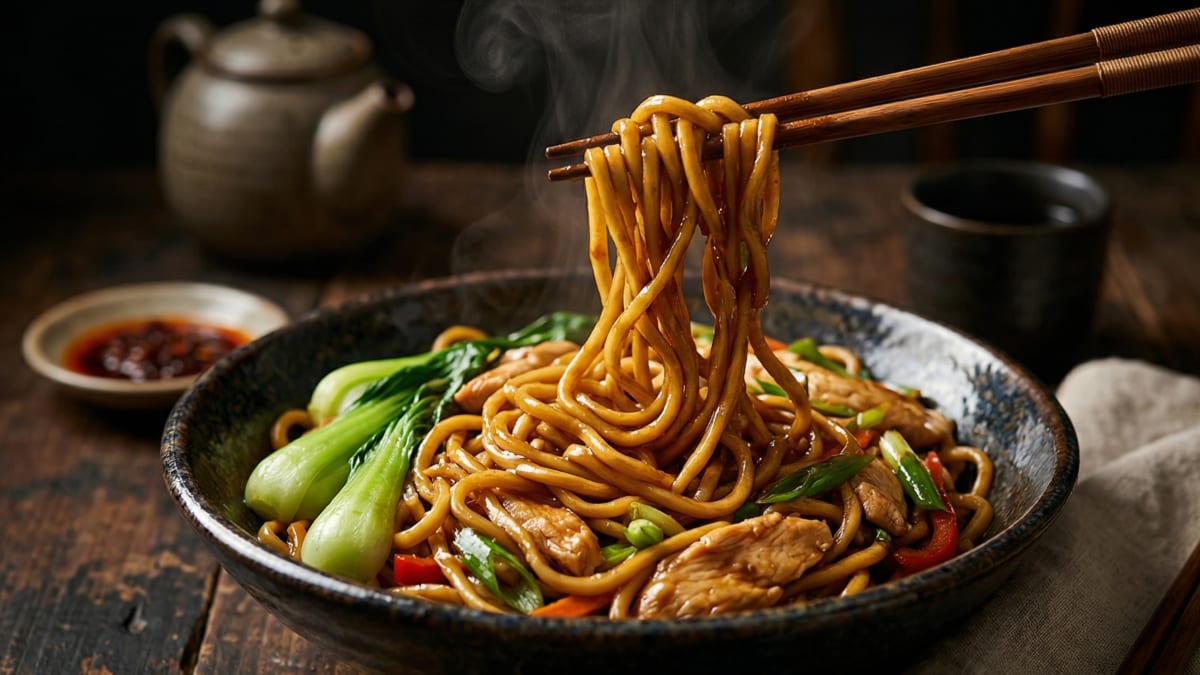
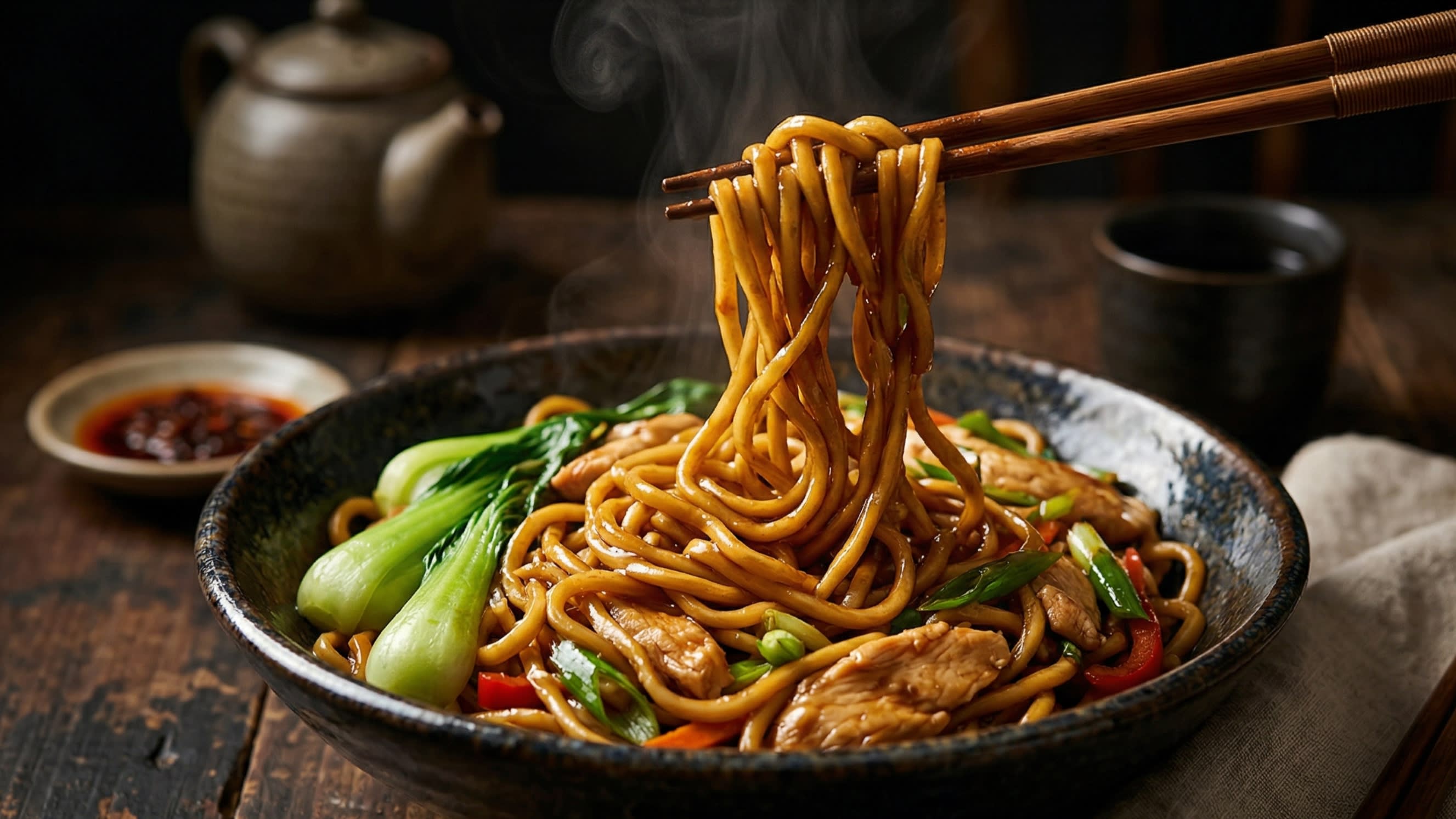
When the craving for Chinese takeout hits, there is one dish that almost everyone universally agrees upon: Lo Mein (捞面 - Lāomiàn). It is the ultimate comfort food—a mountain of thick, chewy egg noodles, vibrant crisp vegetables, and tender meat, all bound together by a deeply savory, slightly sweet, umami-rich brown sauce.
However, many home cooks struggle to recreate this magic in their own kitchens. Often, homemade attempts result in noodles that are either a mushy, broken mess, or a dry clump sitting in a puddle of watery soy sauce at the bottom of the plate.
To achieve true restaurant-quality Lo Mein, you have to shift your perspective. You must stop thinking of this dish as a “stir-fry” and start understanding the culinary philosophy behind its Chinese name. Today, we are going to dive deep into the science of the perfect noodle, decode the ultimate sauce matrix, and teach you how to make a slurp-worthy, authentic Lo Mein in just 15 minutes.
🔬 The Etymology: What Does “Lo Mein” Actually Mean?
To master this dish, you first need to understand the fundamental difference between Chow Mein (炒面) and Lo Mein (捞面).
In Chinese, the character Lāo (捞) literally means “to dredge,” “to scoop up from water,” or “to toss.” Unlike Chow Mein—where parboiled noodles are aggressively fried in hot oil to create a crispy, smoky exterior—Lo Mein noodles are fully boiled until perfectly soft and chewy. They are then drained and gently tossed in a wok with a rich, heavily reduced sauce just long enough to heat through.
In Chow Mein, the noodle is the star, and the sauce is an accent. In Lo Mein, the noodle is a sponge, and the sauce is the superstar. The entire purpose of the thick Lo Mein noodle is to act as a delivery system for that incredible, velvety glaze.
🧬 The Secret to the Noodle: “Jindao” and Alkaline Water
Have you ever wondered why the noodles at your local Chinese restaurant are so incredibly bouncy, springy, and never turn into mush, even when drowning in sauce?
The secret lies in an Asian culinary concept known as Jìndào (劲道), which translates roughly to “chewy,” “springy,” or “al dente.” To achieve a Jindao texture, Chinese noodle makers use a magical ingredient called Jiǎnshuǐ (碱水), or alkaline water (lye water).
Adding alkaline water to wheat dough changes its pH level. This chemical reaction does two things: it turns the noodles a beautiful, natural yellow color (even without eggs!), and it tightens the gluten structure to an extreme degree. This prevents the starches from dissolving into the boiling water, resulting in a firm, rubber-band-like snap when you bite into them.
What should you buy? When you go to an Asian supermarket, skip the dried Italian pasta aisle. Look in the refrigerated section for packages labeled “Fresh Egg Noodles,” “Lo Mein Noodles,” or “Pancit Canton.” They should look distinctly yellow and thick. (Pro Tip: If you absolutely cannot find Asian alkaline noodles, the best Western substitute is actually thick Linguine pasta boiled with a teaspoon of baking soda in the water to artificially recreate that alkaline chew!)
🍯 The Ultimate Sauce Matrix: “Guazhi” (挂汁)
The hallmark of a perfect Lo Mein is a culinary technique Chinese chefs call Guàzhī (挂汁)—meaning “hanging the sauce.” The sauce must be thick and sticky enough to cling desperately to every single strand of the noodle, rather than sliding off and creating a soup at the bottom of your bowl.
To achieve Guazhi, we rely on the thickening power of a cornstarch slurry, combined with the extreme heat of the wok, to reduce a mixture of three essential Asian sauces:
- Oyster Sauce (蚝油 - Háoyóu): This provides the thick body and the massive umami base.
- Dark Soy Sauce (老抽 - Lǎochōu): This is purely for that deep, dark, appetizing mahogany color.
- Light Soy Sauce (生抽 - Shēngchōu): This provides the actual saltiness and savory flavor.
🛒 Ingredients List
The Noodles & Protein:
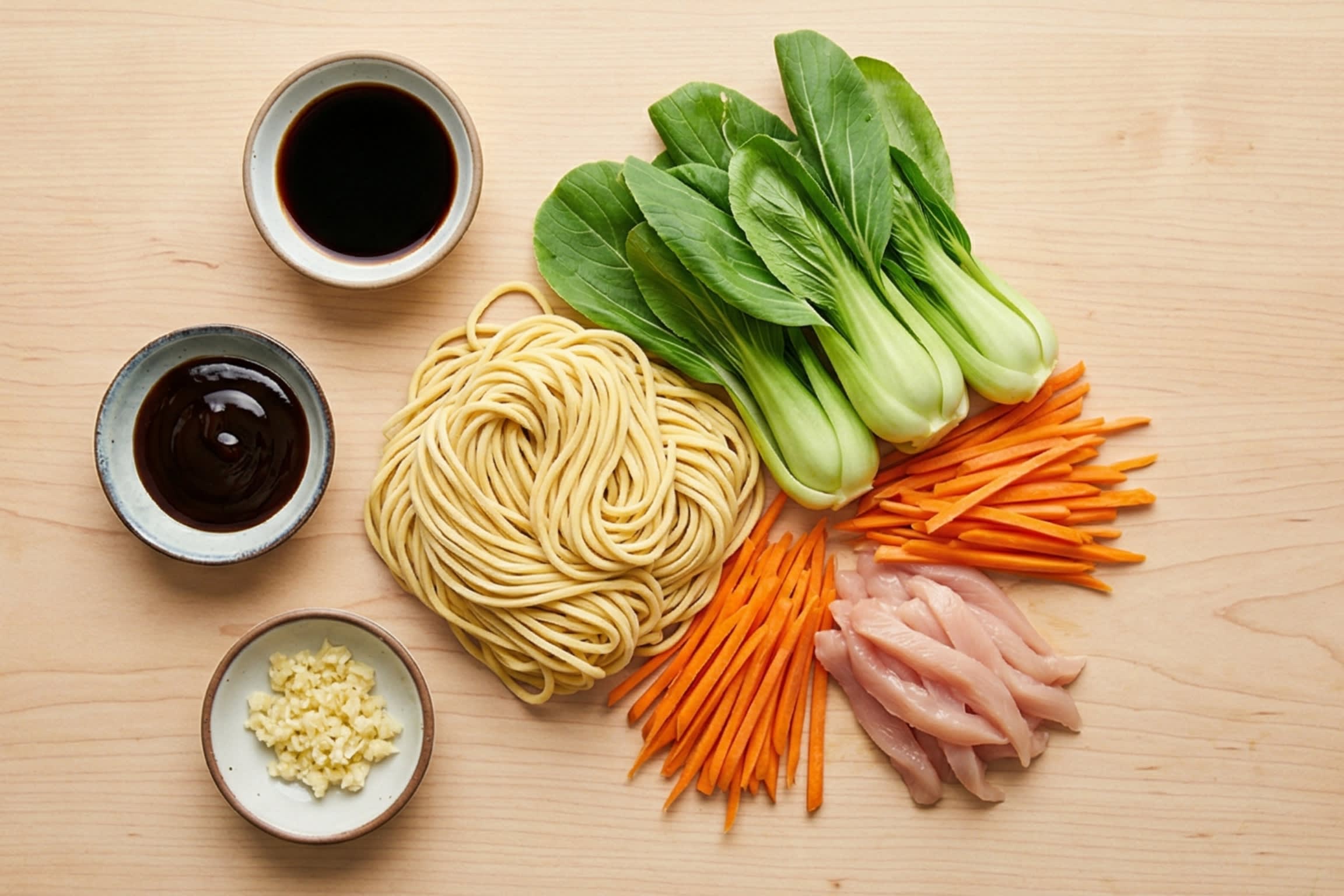
- 250g (about 9 oz) Fresh Thick Egg Noodles / Lo Mein Noodles (碱水面)
- 150g (about 5 oz) Chicken breast or thigh, sliced into thin bite-sized strips
- 2 tbsp high-heat cooking oil (peanut, vegetable, or canola oil)
The Chicken Marinade:
- 1 tsp light soy sauce
- 1 tsp cornstarch
- 1 tsp Shaoxing cooking wine (or dry sherry)
- 1 tsp cooking oil (to seal the moisture)
The Vegetables:
- 2 cups Baby Bok Choy (小白菜 - Xiǎobáicài), washed and chopped into bite-sized pieces
- 1/2 cup Carrots, julienned (cut into thin matchsticks)
- 3 cloves Garlic, finely minced (蒜末)
- 2 stalks Scallions / Green onions, cut into 2-inch sections
The “Guazhi” Lo Mein Sauce:
- 2 tbsp Oyster Sauce (蚝油)
- 1.5 tbsp Light Soy Sauce (生抽)
- 1 tsp Dark Soy Sauce (老抽)
- 1 tsp Sugar (to balance the intense savory notes)
- 1/2 tsp Sesame Oil (芝麻油)
- 1/4 tsp White Pepper powder (白胡椒粉)
- 1/4 cup Chicken broth or water
- 1 tsp Cornstarch (玉米淀粉) - The secret to making the sauce stick!
🍳 Step-by-Step Instructions
1. Marinate the Chicken (Velveting): In a small bowl, combine the sliced chicken with the light soy sauce, cornstarch, and Shaoxing wine. Massage the marinade into the meat until fully absorbed. Finally, stir in the cooking oil to coat the chicken—this prevents it from sticking to the wok. Let it sit for 10 minutes.
2. Whisk the Magic Sauce: In a separate bowl, whisk together all the ingredients for the “Guazhi” Lo Mein Sauce (oyster sauce, soy sauces, sugar, sesame oil, white pepper, chicken broth, and cornstarch). Make sure the sugar and cornstarch are completely dissolved. Set this near your stove.
3. Boil the Noodles: Bring a large pot of water to a rolling boil. Drop in your fresh egg noodles. Because they are fresh, they cook incredibly fast—usually in just 2 to 3 minutes. You want them cooked through but still retaining a chewy bite (Jindao). Drain them immediately and rinse them under cold water to stop the cooking process and wash away excess starch. Toss them with a few drops of sesame oil so they don’t clump together.
4. Sear the Chicken: Heat your wok or a large skillet over high heat until smoking. Add 1 tablespoon of cooking oil. Add the marinated chicken strips in a single layer. Let them sear undisturbed for 30 seconds to develop flavor, then quickly stir-fry until fully cooked (about 2 minutes). Remove the chicken from the wok and set aside.
5. Stir-Fry the Aromatics and Veggies: Wipe the wok clean if necessary, and return it to medium-high heat. Add the remaining 1 tablespoon of oil. Toss in the minced garlic and the scallions. Stir for 10 seconds until highly fragrant. Add the julienned carrots and the chopped Baby Bok Choy (小白菜). Stir-fry for about 1 minute until the bok choy leaves are just wilted but the stems remain crisp.
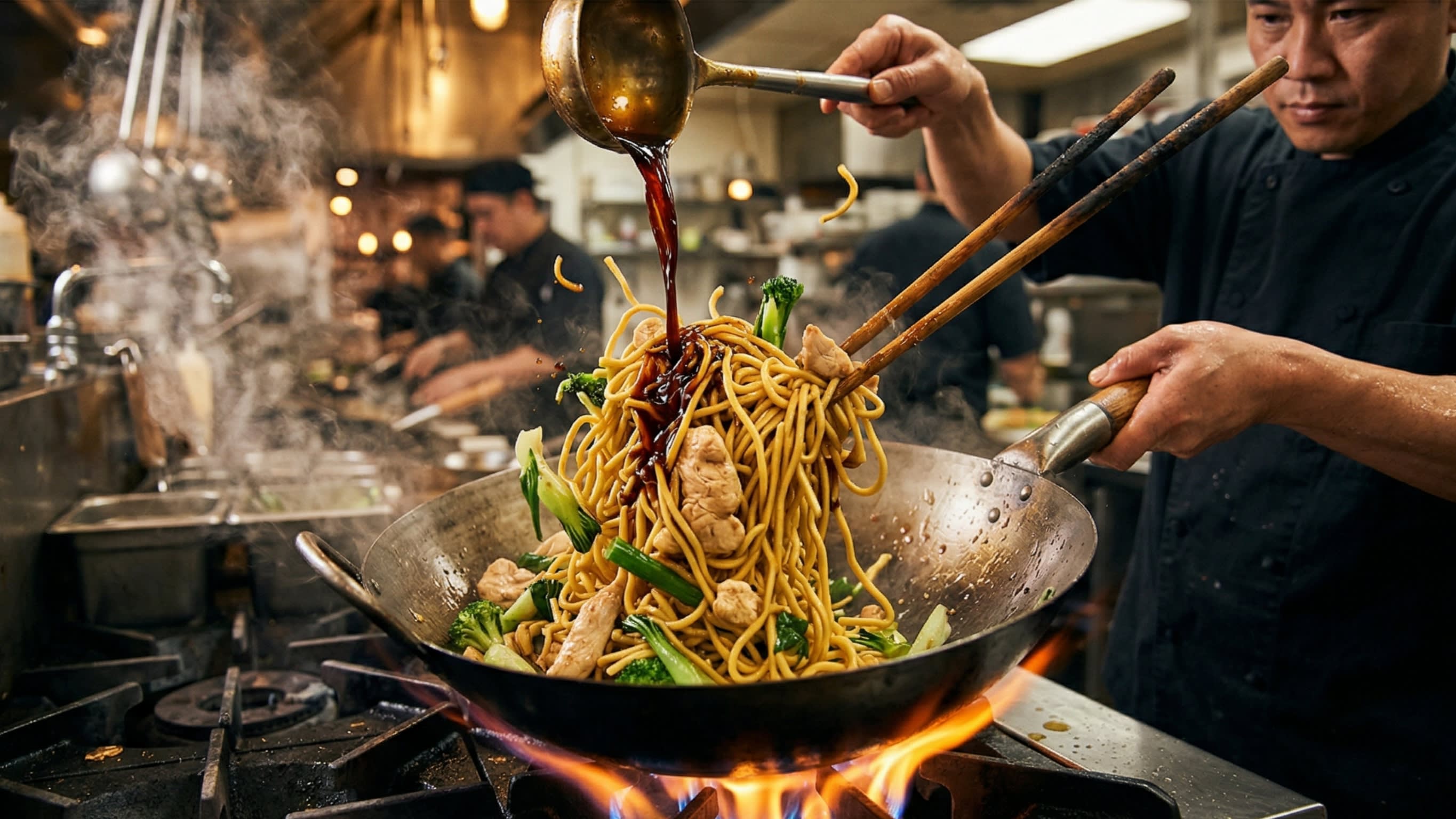
6. The “Lo” (The Tossing): Add the cooked chicken and your boiled noodles back into the wok. Give your prepared sauce bowl a quick stir (because cornstarch settles quickly) and pour it evenly all over the noodles.
7. Hang the Sauce (挂汁): Turn the heat up to high. Put down your spatula and grab a pair of long cooking chopsticks or kitchen tongs. Aggressively lift and toss the noodles, mixing them with the vegetables, meat, and sauce. As the wok heats up, the cornstarch in the sauce will activate. Within 30 to 45 seconds, you will see the sauce transform from a watery liquid into a thick, glossy, sticky glaze that perfectly coats every single noodle.
8. Serve Immediately: As soon as the sauce thickens and there is no liquid left pooling at the bottom of the wok, turn off the heat. Plate your masterpiece and serve steaming hot. Get ready to slurp!
💡 Troubleshooting & Pro Tips
- My noodles turned into a giant, sticky clump before I put them in the wok! This happens when you drain boiled noodles and let them sit too long while hot. The surface starches act like glue. Always rinse boiled noodles with cold water immediately to wash off that surface starch, and toss them with a few drops of oil.
- The sauce is watery and pooled at the bottom of my plate. You didn’t let the sauce reduce enough in the wok, or you forgot the cornstarch! The cornstarch is mandatory for the Guazhi (sauce-hanging) effect. Make sure the wok is on high heat during the final tossing stage to activate the thickener.
- Can I use other vegetables or meats? Absolutely. Lo Mein is the ultimate fridge-clearing dish. You can use thinly sliced beef flank (velveted the exact same way), peeled shrimp, or keep it entirely vegetarian with sliced shiitake mushrooms, snow peas, and bell peppers.
📦 Shop Authentic Kitchen Essentials
To achieve that legendary restaurant-quality flavor and glossy texture, these traditional sauces are an absolute must. (As an Amazon Associate, ChinaCurator earns from qualifying purchases.)
- Lee Kum Kee Premium Oyster Sauce (蚝油) - The absolute heart and soul of a thick, savory Lo Mein sauce.
- Pearl River Bridge Dark Soy Sauce (老抽) - The secret ingredient that gives Chinese takeout noodles their appetizing, dark mahogany color.
- Kadoya 100% Pure Toasted Sesame Oil (芝麻油) - Adds a massive punch of roasted, nutty aroma at the very end.