
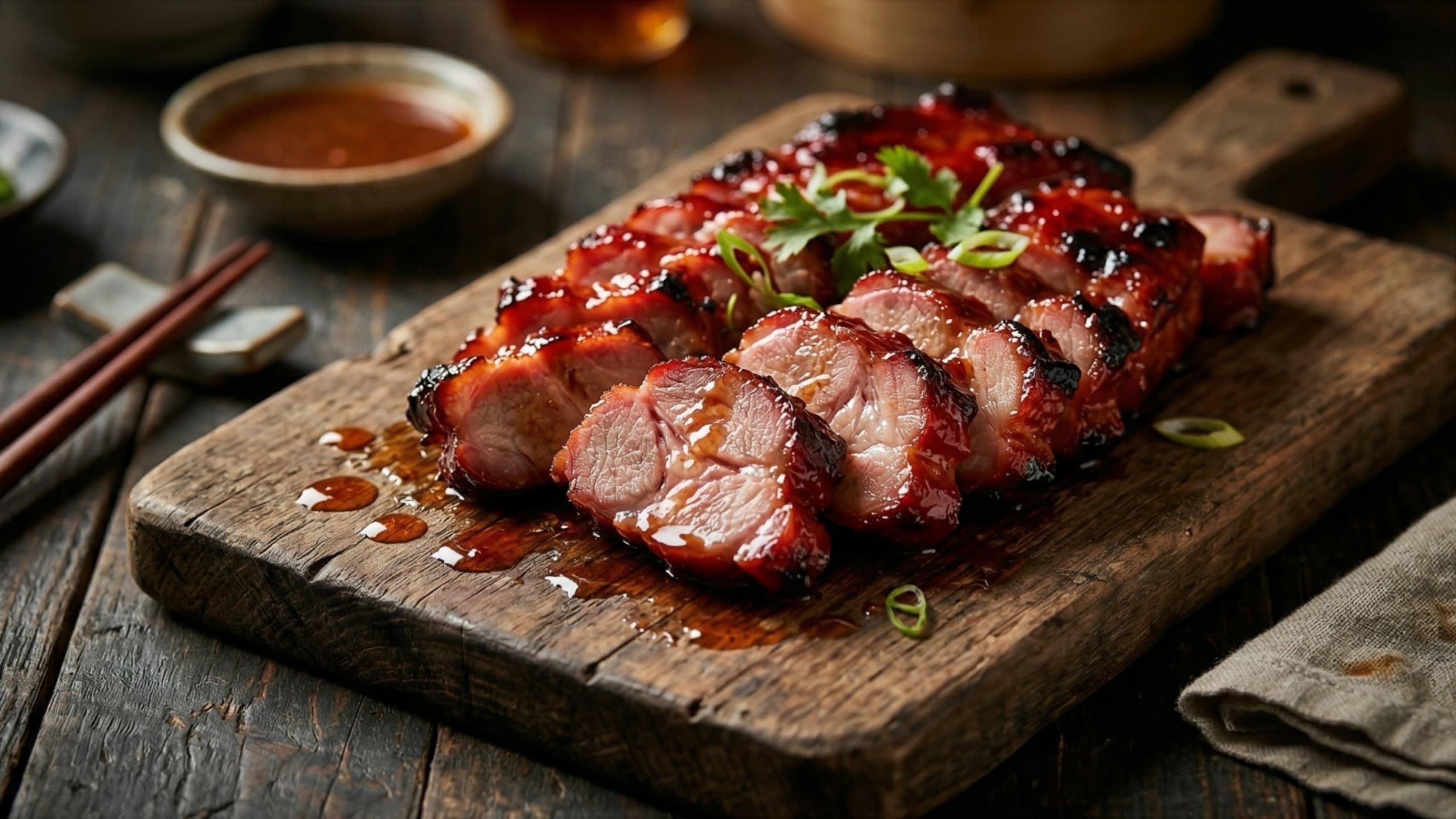
🥩 Introduction: The Crown Jewel of Cantonese BBQ
Walk through the bustling streets of Guangzhou, Hong Kong, or any vibrant Chinatown across the world, and your eyes will inevitably be drawn to the glowing display windows of a Shāowèi (烧味 - Cantonese Roasted Meats) shop. Hanging proudly alongside crispy roasted ducks and golden soy sauce chickens are gleaming, ruby-red strips of roasted pork, dripping with a thick, sweet glaze.
This is Char Siu (叉烧 - Chāshāo), the absolute crown jewel of Chinese BBQ.
The name “Char Siu” literally translates to “Fork Roasted.” Historically, long strips of seasoned pork were skewered with long, special roasting forks and placed over an open fire or hung inside massive, blazing hot cylindrical brick ovens. The intense heat would sear the outside, while the dripping pork fat would hit the fire below, sending plumes of aromatic smoke back up to flavor the meat.
When made perfectly, Char Siu is a revelation. The exterior is sticky, sweet, and beautifully caramelized with slightly charred, crispy edges (煳焦边 - Hújiāobiān). The interior is savory, complex, incredibly tender, and packed with umami.
Many Western home cooks try to replicate this iconic dish using generic grocery store “BBQ sauces” and red food coloring, only to end up with dry, artificially sweet, and tough meat. Today, we are going to throw away the food coloring and the shortcuts. We will dive deep into the culinary science of authentic Cantonese roasting so you can make restaurant-quality Char Siu in your standard home oven.
🔬 The Three Pillars of Perfect Char Siu
To achieve that legendary melt-in-your-mouth texture and complex flavor profile, you must understand the three non-negotiable rules of traditional Chinese BBQ.
1. The Cut of Meat: Do Not Use Pork Loin!
The biggest mistake beginners make is buying lean pork loin or pork chops. Because Char Siu is roasted at a high temperature, lean cuts will instantly dry out and turn into leather.
You must buy Pork Butt or Pork Shoulder, known in Chinese butcher shops as Méihuāròu (梅花肉). This cut is named “Plum Blossom Meat” because the intricate, beautiful marbling of intramuscular fat resembles delicate flower petals. As the meat roasts, this rich fat slowly melts, basting the pork from the inside out and guaranteeing a juicy, tender bite. Alternatively, if you love a richer, fattier texture, you can use strips of Pork Belly (五花肉 - Wǔhuāròu).
2. The Color: The Magic of Fermented Bean Curd
How do authentic restaurants get that beautiful, deep ruby-red color without using artificial red food dye? The secret lies in an ancient Chinese ingredient: Fermented Red Bean Curd (南乳 - Nánrǔ).
These are cubes of tofu that have been fermented with red yeast rice, salt, and rice wine. They have a texture similar to soft blue cheese and a flavor that is incredibly pungent, earthy, and savory. Mashing just one or two cubes of Nam Ru into your marinade not only provides that iconic red hue but also acts as an incredible tenderizer and umami-booster. Without it, your Char Siu will simply taste like sweet soy sauce pork.
3. The Glaze: Maltose vs. Honey
In the final 10 minutes of roasting, the pork must be heavily brushed with a thick syrup to create that legendary sticky, glossy crust. While many modern recipes suggest honey, traditional Cantonese chefs swear by Maltose (麦芽糖 - Màiyátáng).
Maltose is a super-thick, incredibly viscous amber syrup. Unlike honey, which can easily burn and turn bitter under the broiler, maltose can withstand higher temperatures. It creates an unbelievable, glass-like candy coating on the pork that honey simply cannot replicate.
🍚 Pop Culture Phenomenon: “Sorrowful Rice” (黯然销魂饭)
Before we start cooking, it is impossible to talk about Char Siu without mentioning its massive pop-culture status in China. In Stephen Chow’s legendary 1996 comedy film The God of Cookery (食神), the ultimate winning dish is a seemingly humble bowl of Char Siu served over rice with a perfect sunny-side-up egg and some blanched bok choy.
The dish was named “Sorrowful Rice” (黯然销魂饭 - Ànrán Xiāohún Fàn), implying that the Char Siu was so incredibly delicious that it would bring tears of joy and sorrow to anyone who ate it. Today, if you visit Hong Kong Cha Chaan Tengs (local diners), you will still see “Sorrowful Rice” proudly listed on the menu!
🛒 Ingredients List
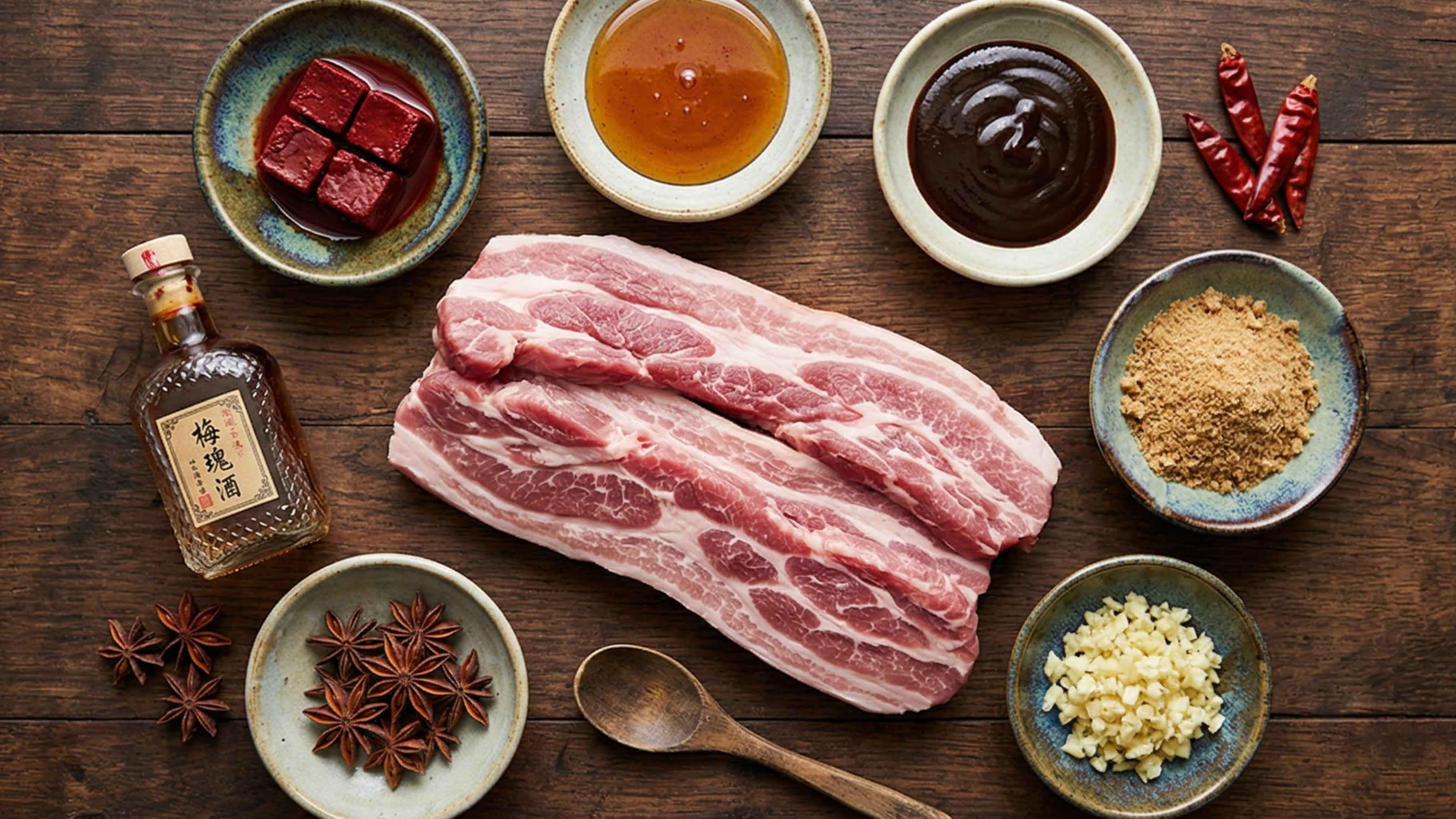
The Meat:
- 1 kg (about 2.2 lbs) Boneless Pork Shoulder / Pork Butt (梅花肉 - Méihuāròu)
- Cut the pork along the grain into long, thick strips (about 2 inches wide and 1.5 inches thick).
The Authentic Marinade:
- 2 cubes Fermented Red Bean Curd (南乳 - Nánrǔ), plus 1 tbsp of the red liquid from the jar
- 3 tbsp Hoisin Sauce (海鲜酱) - The sweet and savory base.
- 1 tbsp Light Soy Sauce (生抽)
- 1 tbsp Dark Soy Sauce (老抽) - For depth of color.
- 2 tbsp Brown Sugar
- 1 tbsp Oyster Sauce (蚝油)
- 1 tbsp Chinese Rose Wine (玫瑰露酒 - Méiguīlù Jiǔ) - This highly aromatic liquor is a secret weapon in Cantonese roasting. If you can’t find it, substitute with Shaoxing wine or dry sherry.
- 1 tsp Five-Spice Powder (五香粉)
- 3 cloves Garlic, finely minced (蒜末)
- 1 tsp grated Ginger (姜末)
The Glaze:
- 3 tbsp Maltose (麦芽糖) or Honey
- 1 tbsp Hot Water (to help dissolve the sticky maltose)
- 1 tbsp of the leftover pork marinade
🍳 Step-by-Step Instructions
1. The 24-Hour Marinade (Do Not Skip!): In a large mixing bowl, add the fermented red bean curd and smash it into a paste with a fork. Add all the remaining marinade ingredients (hoisin, soy sauces, brown sugar, oyster sauce, rose wine, five-spice, garlic, and ginger). Whisk until the sugar is completely dissolved. Place your thick pork strips into a large ziplock bag or a container. Pour the marinade over the meat, ensuring every inch is coated. Squeeze out the air, seal it, and place it in the refrigerator for at least 24 hours (up to 48 hours). The longer it sits, the more tender and flavorful the meat will become.
2. Prepare the Oven and Pan: When you are ready to roast, take the pork out of the fridge and let it sit at room temperature for 30 minutes. Preheat your oven to 400°F (200°C). Line a large, deep baking tray completely with heavy-duty aluminum foil (Char Siu drippings will burn like crazy and destroy your pans if you don’t!). Place a wire roasting rack on top of the foil. Pour exactly 1 cup of water into the bottom of the foil-lined tray. Chef’s Secret: This water bath prevents the dripping sugars from burning and smoking out your kitchen, and it creates a slightly humid oven environment that keeps the pork incredibly juicy!
3. The First Roast: Shake the excess marinade off the pork strips (reserve the leftover marinade!) and place the pork on the wire rack, leaving space between each piece for hot air to circulate. Roast on the middle rack of the oven for 20 minutes.
4. Prepare the Glaze: While the pork is roasting, take 1 tablespoon of the leftover raw marinade and put it in a small saucepan. Boil it for 2 minutes to make it safe to eat. Mix it with the 3 tablespoons of Maltose (or honey) and 1 tablespoon of hot water. Stir until you have a smooth, thick, sticky syrup.
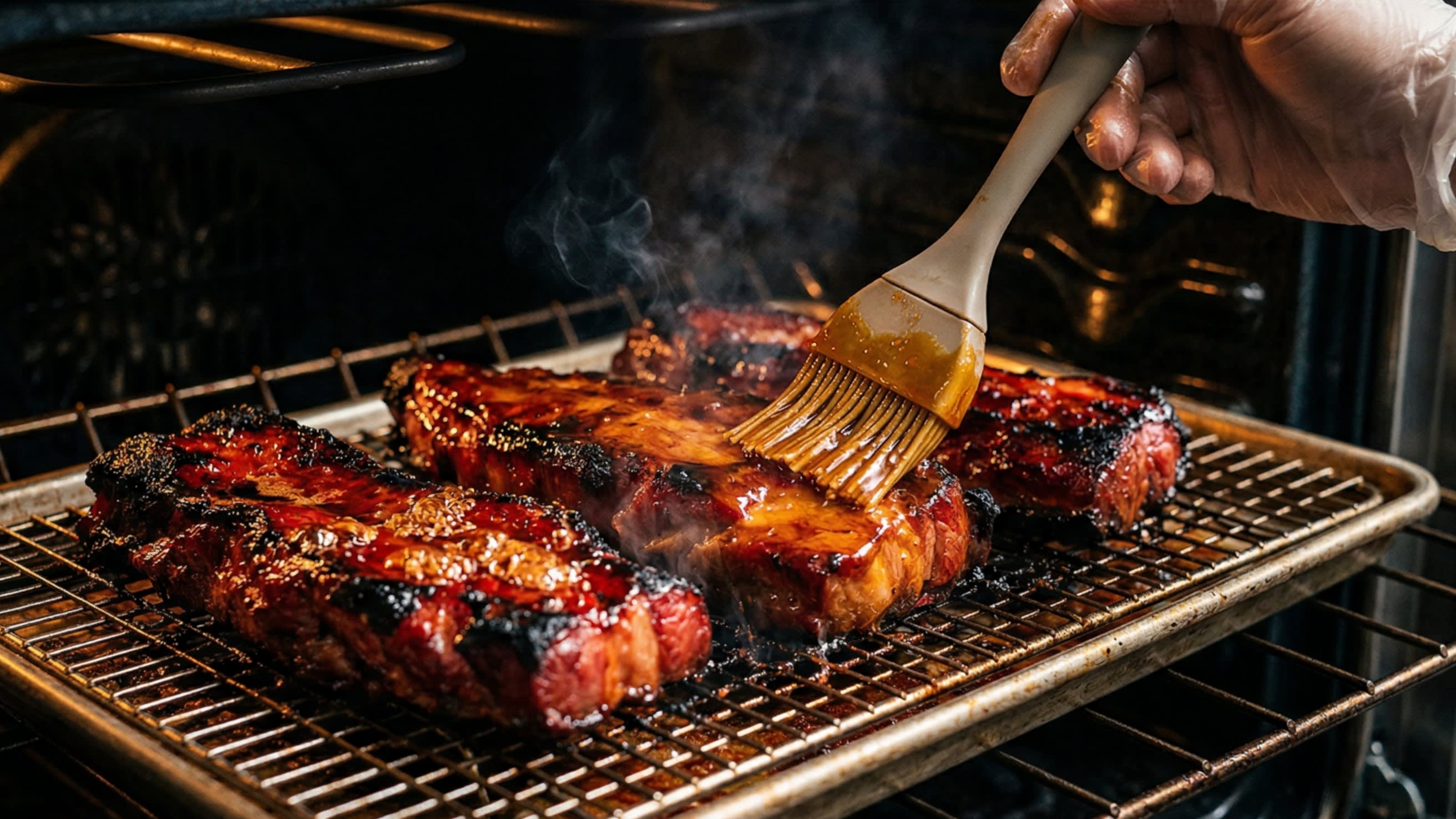
5. The Flip and Baste: After 20 minutes, pull the tray out. The pork should be shrinking and starting to brown. Flip the pork strips over. Use a silicone brush to generously paint the meat with your maltose glaze. Put it back in the oven for another 15 minutes.
6. The Caramelization (The Charring): Pull the tray out again. Flip the pork one last time, and brush it heavily with the remaining glaze. Now, turn your oven to BROIL (High). Watch the pork like a hawk! Broil for 3 to 5 minutes until the sugars bubble furiously and the edges of the pork become beautifully charred and blackened. This char is the absolute essence of BBQ!
7. Rest and Slice: Remove the Char Siu from the oven. Do not cut it immediately! Let the meat rest on a cutting board for at least 10 minutes. This allows the boiling juices to redistribute inside the meat. If you cut it too soon, all the moisture will run out, leaving you with dry pork. After resting, slice it against the grain into 1/2-inch thick pieces.
8. Serve the “Sorrowful Rice”: Serve the warm, glossy slices immediately over a bowl of steamed Jasmine rice, accompanied by a sunny-side-up egg and some blanched Asian greens. Drizzle any juices from the cutting board over the rice. Prepare to be amazed.
💡 Troubleshooting Common Mistakes
- Why is my Char Siu tough and dry? You either used the wrong cut of meat (lean pork loin instead of marbled pork shoulder), or you did not let it rest before slicing. Also, ensure your oven isn’t running too hot—every oven is different, so use a meat thermometer; the internal temperature should reach 160°F (71°C) before you start broiling.
- Why isn’t it as red as the restaurant version? If you used the authentic Fermented Red Bean Curd (Nam Ru), your pork will have a beautiful, natural, dark mahogany-red hue. If you want that bright, glowing neon red seen in some takeouts, you can add a few drops of red food coloring to the marinade, but traditionalists prefer the natural, darker roast color.
- My kitchen is full of smoke! You forgot to put the water in the bottom of the roasting pan! The high sugar content in Hoisin and Maltose will instantly burn and smoke when it drips onto hot metal. Keep an eye on the water level and add a little more if it evaporates completely during the roast.
📦 Shop Authentic BBQ Ingredients
To replicate the exact flavor of a Cantonese BBQ shop, these traditional pantry staples are absolutely essential. (As an Amazon Associate, ChinaCurator earns from qualifying purchases.)
- Fermented Red Bean Curd (南乳) - The absolute secret to the authentic flavor and the natural red color.
- Pure Maltose Syrup (麦芽糖) - Creates that thick, glass-like, sticky candy coating on the pork that honey cannot achieve.
- Lee Kum Kee Hoisin Sauce (海鲜酱) - The rich, sweet, and complex base for the entire marinade.
- Chinese Rose Wine (玫瑰露酒) - A highly aromatic cooking wine that gives Cantonese roasted meats their signature fragrance.