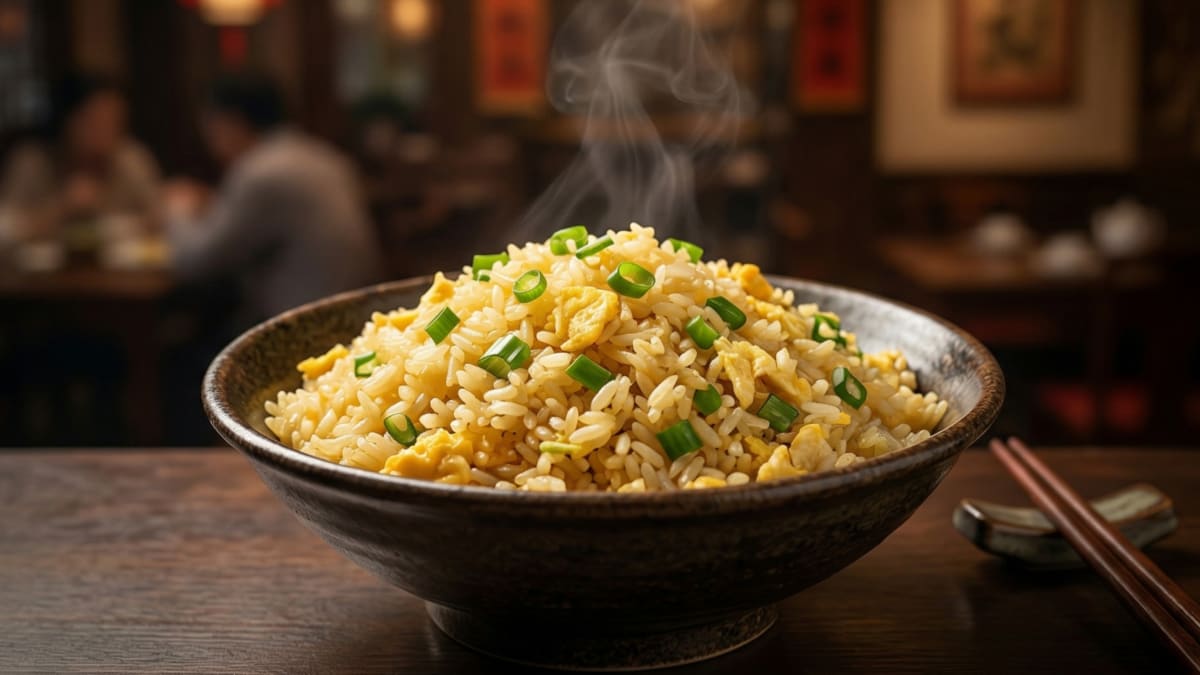
🍚 Introduction: The True Test of a Chef
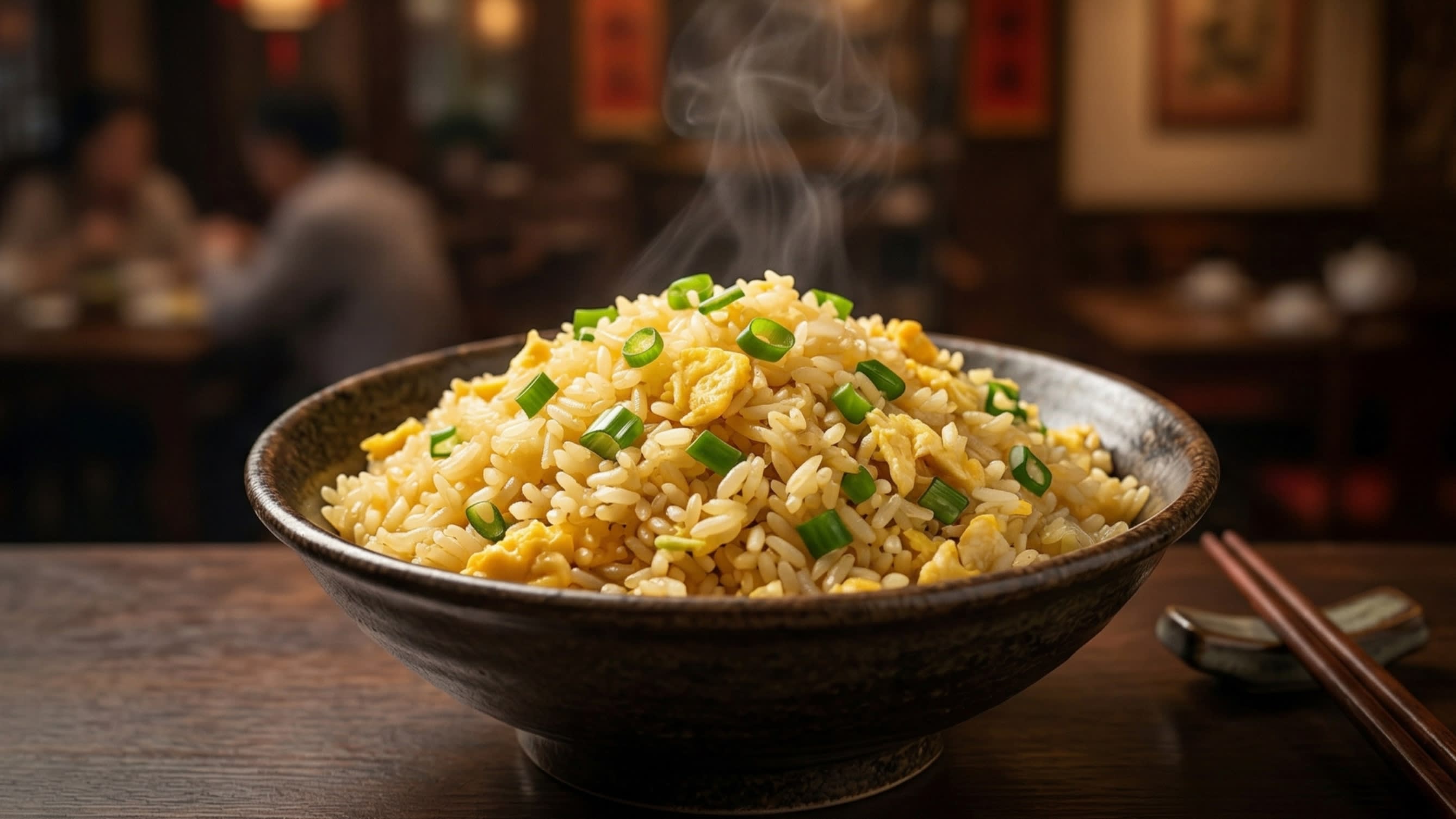
In the culinary world of China, there is a famous saying: “The ultimate test of a chef’s skill is not a complex banquet dish, but a simple bowl of Egg Fried Rice.” Egg Fried Rice (蛋炒饭 - Dànchǎofàn) is the most universal comfort food in Chinese culture. Whether it is served at a bustling midnight street food stall in Chengdu or a Michelin-starred Cantonese restaurant in Hong Kong, the hallmarks of perfect fried rice are always the same. The rice must be Lìlì fēnmíng (粒粒分明)—meaning every single grain must be distinct, separate, and chewy, never mushy or clumped together.
In the West, many takeout restaurants mask poorly cooked fried rice by drowning it in heavy, dark soy sauce or dumping in frozen peas and carrots. But true, authentic Chinese egg fried rice is an exercise in minimalism. It relies purely on the magical alchemy of rice, eggs, scallions, oil, and intense heat.
Today, we are going to debunk the myths, explain the exact science behind the perfect texture, and teach you how to make the ultimate 15-minute Egg Fried Rice at home.
🔬 The Science of Perfect Fried Rice
If your homemade fried rice always turns out wet, sticky, and mushy, you are likely breaking one of the fundamental rules of Chinese cooking. To get that legendary restaurant texture, you must understand three crucial concepts.
1. The Golden Rule: Leftover Rice (隔夜饭)
You absolutely cannot use freshly cooked, hot rice to make fried rice. When rice is freshly steamed, it is packed with surface moisture. If it hits a hot wok, it will instantly turn into a giant, sticky porridge.
You must use Géyèfàn (隔夜饭), which translates to “overnight rice.” When cooked rice sits in the refrigerator uncovered overnight, a chemical process called starch retrogradation occurs. The starch molecules crystallize, and the dry air of the fridge sucks out the surface moisture. The grains become firm, dry, and slightly hard. This is exactly what you want! When these dry grains hit the hot oil, they fry instead of steam, resulting in that beautiful, chewy, separated texture.
2. The Art of “Gold Wrapping Silver” (金包银)
In traditional Chinese culinary arts, there are two schools of thought on how to incorporate the egg.
- Silver Wrapping Gold (银包金): The eggs are scrambled first, removed, and then added back to the fried rice at the end. You get distinct pieces of fluffy yellow egg mixed with the white rice.
- Gold Wrapping Silver (金包银 - Jīnbāoyín): This is the ultimate chef’s technique. You mix raw egg yolks directly into the cold, leftover rice before cooking. You massage the yolks into the rice until every single grain is coated in a thin layer of egg yolk. When fried, the egg cooks onto the individual grains, keeping them separated and turning the entire bowl a glorious, shimmering gold. We will use a hybrid of these techniques in our recipe below!
3. Conditioning the Wok (润锅 - Rùnguō)
To prevent the rice from sticking and burning, you must practice Rùnguō (润锅). This means heating your carbon steel wok until it is smoking hot, swirling a generous amount of cold oil around the entire surface to create a non-stick patina, and then pouring the excess oil out before adding your fresh cooking oil. This temperature differential prevents the starches from gluing themselves to the metal.
🛒 Ingredients List
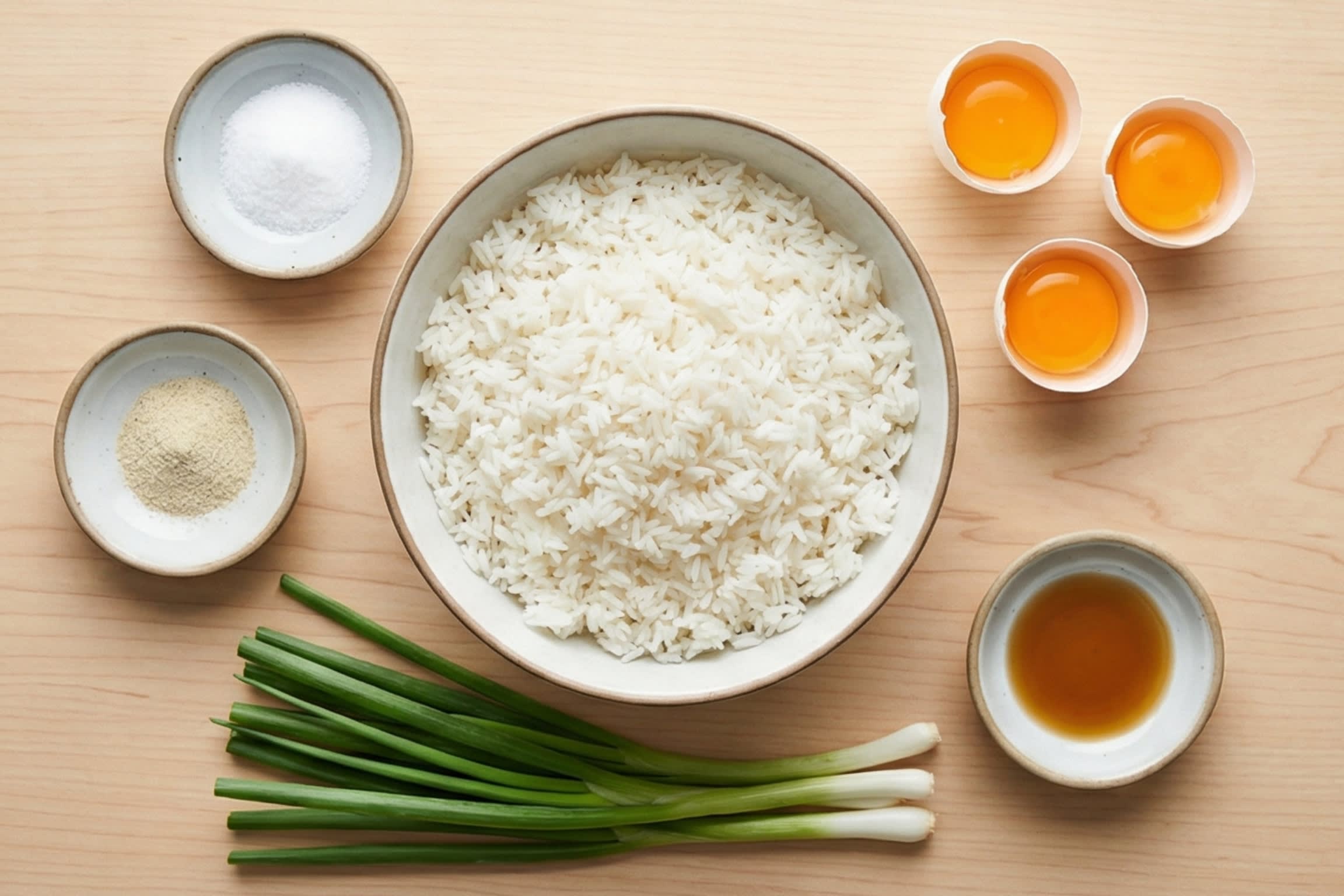
Because this dish is so beautifully simple, the quality of your ingredients is paramount. Use Jasmine rice for the best floral aroma and optimal starch content.
The Core Ingredients:
- 3 cups Cold, Day-old Jasmine Rice (隔夜饭) - Must be refrigerated overnight!
- 3 large Eggs (鸡蛋)
- 3 stalks of Scallions / Green Onions (葱花 - Cōnghuā), finely chopped. Separate the white parts from the green parts!
- 3 tbsp high-heat cooking oil (peanut, vegetable, or canola oil)
The Seasonings:
- 1/2 tsp Salt (盐)
- 1/4 tsp White Pepper powder (白胡椒粉) - Crucial for authentic Chinese flavor!
- 1 tbsp Light Soy Sauce (生抽 - Shēngchōu) - Do not use dark soy sauce, or your rice will turn black!
- A few drops of Toasted Sesame Oil (芝麻油)
🍳 Step-by-Step Instructions
1. Prepare the Rice (The Secret Massage): Take your cold, leftover rice out of the fridge. It will likely be clumped together. Wet your hands slightly with cold water and physically crumble the rice with your fingers until every grain is separated. Do not put clumped rice into the wok! 2. Separate the Eggs: Crack two of the eggs into a small bowl and beat them thoroughly. For the third egg, separate the yolk from the white. Put the yolk into your bowl of cold rice. Put the leftover egg white into the bowl with the other two beaten eggs. Massage the single raw yolk into your cold rice until the grains take on a pale yellow hue. (This is the “Gold Wrapping Silver” trick to ensure separation!)
3. Scramble the Eggs: Heat your wok over high heat until smoking. Add 1.5 tablespoons of oil. Pour in the beaten egg mixture. It should puff up instantly. Quickly scramble it for 10 seconds until it is just set but still soft. Remove the eggs from the wok and set them aside on a plate.
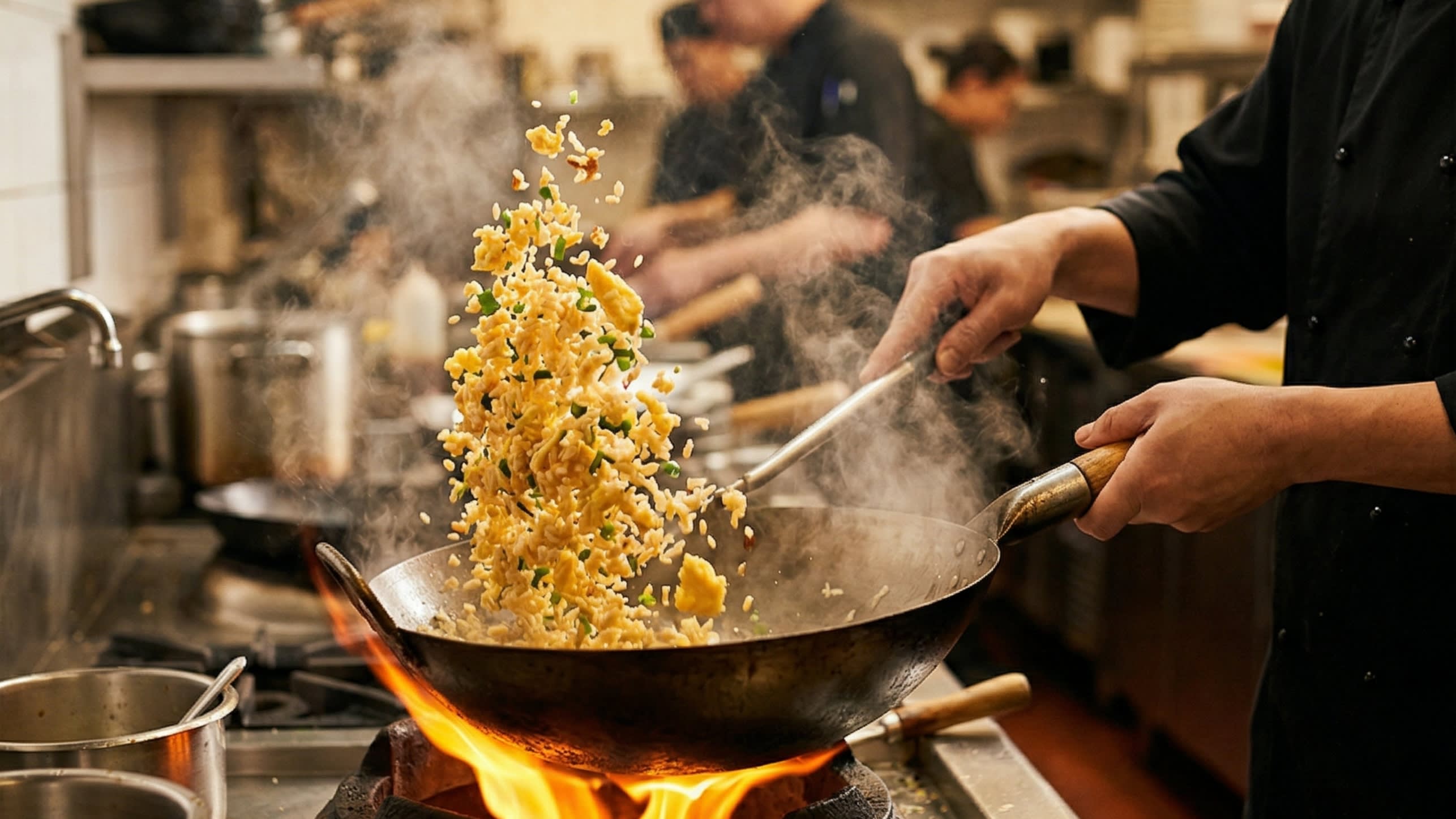
4. Fry the Aromatics: Wipe the wok clean if necessary. Place it back over high heat until it smokes. Add the remaining 1.5 tablespoons of oil. Toss in the white parts of your chopped scallions. Stir-fry for 10 seconds until the kitchen smells incredible.
5. The Rice Toss: Add your separated, yolk-coated cold rice into the wok. Now, the workout begins. Use the back of your spatula to press the rice flat against the hot metal, then aggressively toss it. You want to hear the rice grains “jumping” and popping against the hot steel. Stir-fry continuously for about 3 to 4 minutes over high heat until the rice is piping hot, dry, and chewy.
6. Season and Sear: Sprinkle the salt and white pepper evenly over the rice. Now, for the most important flavor technique: Do not pour the soy sauce directly onto the rice! Instead, pour the 1 tablespoon of light soy sauce directly onto the hot edges of the wok. This immediately vaporizes the soy sauce, searing it and infusing the rice with that legendary smoky Wok Hei (锅气) flavor without making the rice soggy.
7. The Final Reunion: Add the cooked scrambled eggs back into the wok. Use your spatula to chop the egg into smaller pieces, mixing it thoroughly with the rice.
8. Garnish and Serve: Turn off the heat. Immediately toss in the green parts of your scallions (葱花) and a few drops of toasted sesame oil. The residual heat of the rice will lightly cook the scallions, releasing their fresh aroma. Plate up and serve immediately while it is steaming hot!
💡 Pro Tips and Variations
- I forgot to cook rice yesterday. Can I make this? If you are in a rush and must use fresh rice, spread the freshly cooked rice in a thin layer on a large baking sheet. Put it in the freezer for 20 to 30 minutes. The extreme cold will rapidly dry out the surface moisture, mimicking the “overnight” effect.
- Why did my rice stick to the pan? You didn’t get the pan hot enough before adding the oil, or you used a stainless steel pan instead of a seasoned carbon steel wok or non-stick skillet. Heat is your best friend when making fried rice.
- Customizing Your Fried Rice: This classic Egg Fried Rice is the ultimate blank canvas. You can easily upgrade it into Yangzhou Fried Rice (扬州炒饭) by adding diced char siu (Chinese BBQ pork), small peeled shrimp, and a handful of diced carrots and peas during step 5.
📦 Shop Authentic Kitchen Essentials
To achieve that legendary restaurant-quality flavor and texture, having the right traditional sauces and tools is an absolute must. (As an Amazon Associate, ChinaCurator earns from qualifying purchases.)
- Authentic Carbon Steel Wok - The absolute necessity for achieving the high heat required for distinct, non-mushy rice grains.
- Pearl River Bridge Light Soy Sauce (生抽) - The perfect, complex salty flavor base. Never use dark soy sauce for basic egg fried rice!
- Premium White Pepper Powder (白胡椒粉) - The earthy, warming spice that defines authentic Chinese wok cooking.