🍜 Introduction: The King of Chinese Takeout
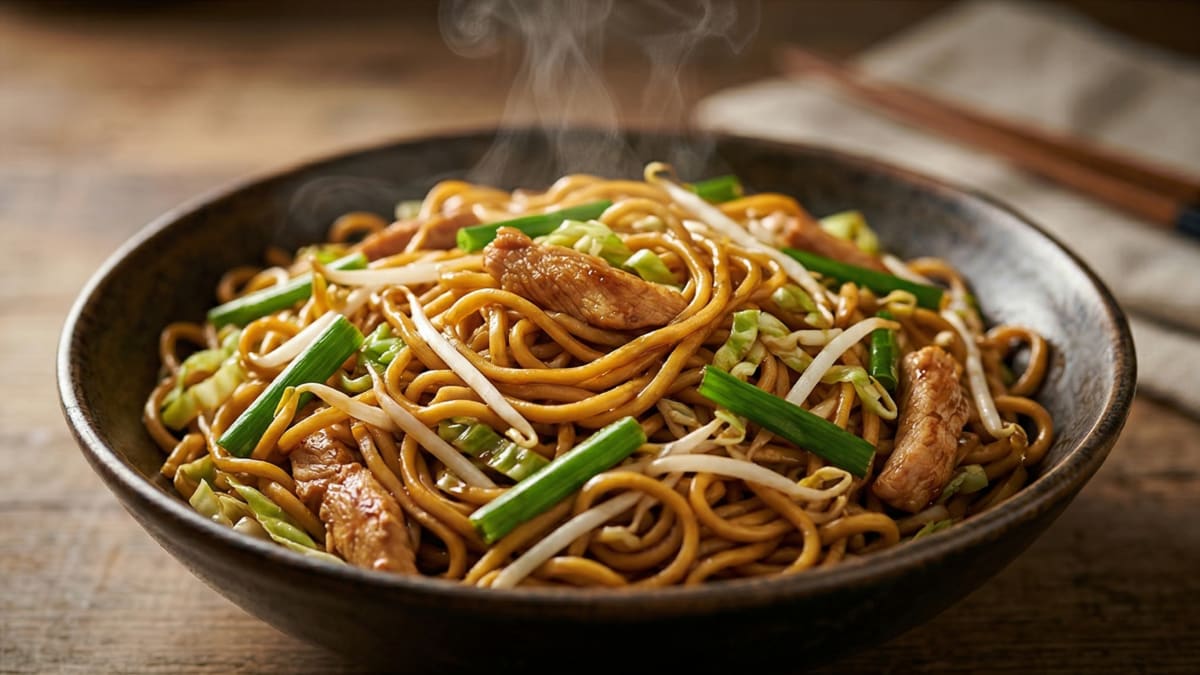
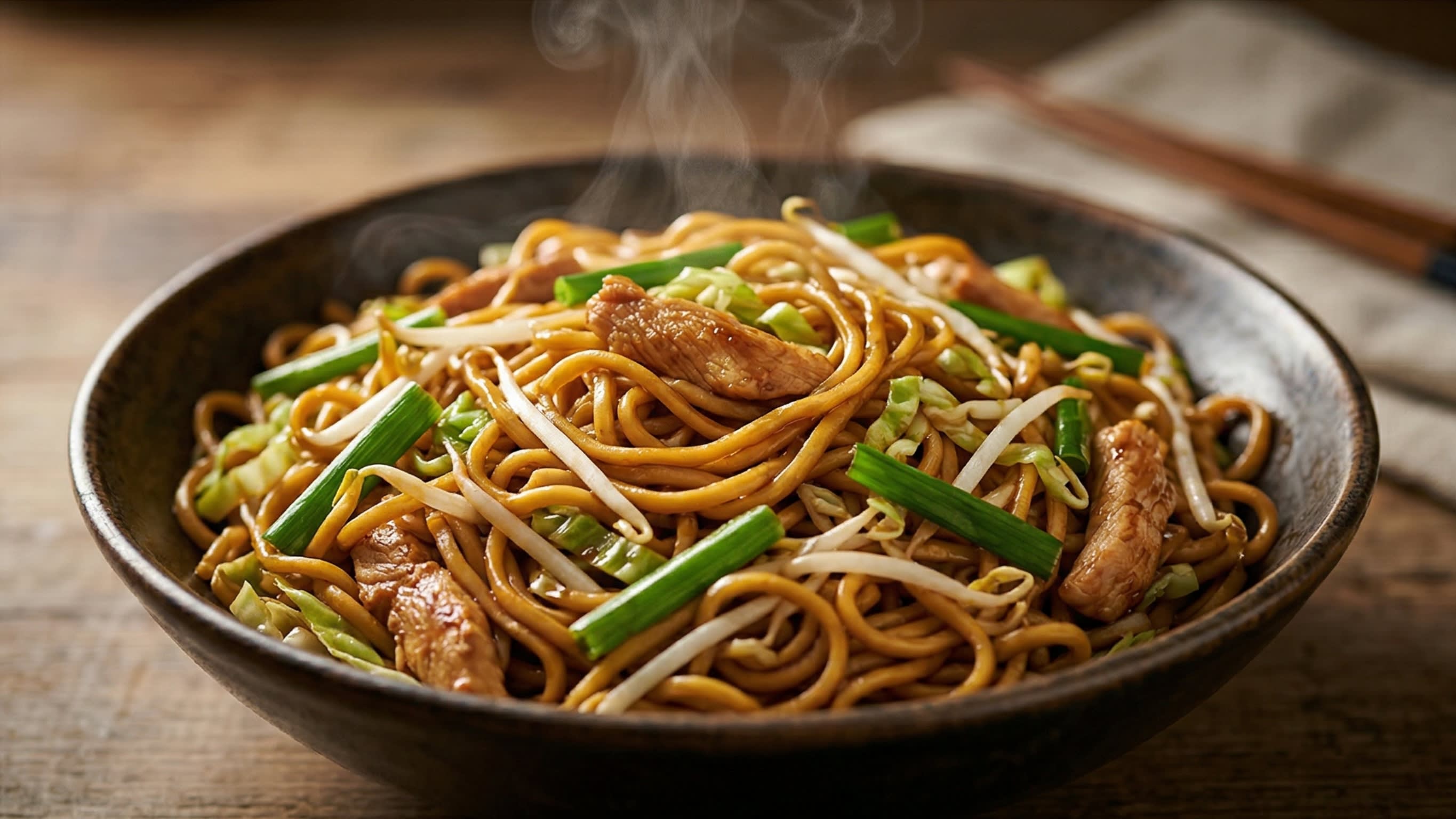
If there is one dish that universally represents Chinese takeout across the globe, it is Chow Mein (炒面 - Chǎomiàn). Walk down the bustling streets of Guangzhou, visit a midnight food stall in Beijing, or open a classic white takeout box in New York City, and you will find these iconic, savory, stir-fried noodles.
The beauty of Chow Mein lies in its magnificent texture and deeply savory flavor. When cooked correctly, the noodles are springy, slightly chewy, and beautifully caramelized. They are tossed with a minimal but essential amount of crisp vegetables and a deeply savory sauce that coats every single strand without pooling at the bottom of the plate.
However, making authentic restaurant-quality Chow Mein at home is a challenge for many Western home cooks. Too often, homemade stir-fried noodles end up as a soggy, mushy, broken mess sticking to the bottom of the pan.
Today, we are going to fix that. We will decode the greatest mysteries of Chinese noodle cooking, teach you the exact techniques used by street vendors, and help you master the ultimate 15-minute Chow Mein.
🆚 The Great Debate: Chow Mein vs. Lo Mein
Before we start cooking, we must address the single most frequently googled question about Chinese noodles in the Western world: What is the difference between Chow Mein and Lo Mein?
While they both use similar ingredients, the cooking techniques and the final textures are entirely different.
- Chow Mein (炒面 - Chǎomiàn): The word Chǎo literally means “to stir-fry.” In Chow Mein, the noodles are parboiled, drained, and then vigorously fried in a hot wok with oil. The goal is to slightly sear the noodles, giving them a crisp, chewy exterior and a smoky flavor. The sauce is added sparingly, just enough to glaze the noodles.
- Lo Mein (捞面 - Lāomiàn): The word Lāo means “to toss” or “to mix.” For Lo Mein, the noodles are fully boiled until soft, placed in a bowl, and then heavily drenched in a rich, thick sauce and tossed together. Lo Mein is all about the sauce, while Chow Mein is all about the texture of the noodle itself.
If you love a chewy, slightly crispy noodle with a deep roasted flavor, Chow Mein is your champion.
🔬 The Secret to Restaurant Noodles: “Wok Hei” and “Duan Sheng”
To elevate your homemade noodles from “good” to “authentic Chinese restaurant quality,” you must master two fundamental concepts of Chinese culinary science.
1. Wok Hei (锅气) - The Breath of the Wok
Wok Hei (锅气 - Guōqì) is the holy grail of Chinese stir-frying. It refers to the complex, smoky, slightly caramelized flavor that food acquires when it is tossed in a seasoned carbon steel wok over an incredibly high, roaring flame. It is the taste of the fire itself. While you may not have a commercial jet-engine burner in your home kitchen, you can simulate Wok Hei by doing two things: making sure your pan is smoking hot before the noodles go in, and not overcrowding the pan. If you try to cook noodles for four people at once in a standard home skillet, the temperature will drop, the vegetables will release water, and your noodles will steam and turn to mush. Always cook in small batches!
2. Duan Sheng (断生) - The Perfect Noodle Prep
If your noodles break apart in the pan, you boiled them for too long. In Chinese kitchens, noodles destined for the wok are only boiled to Duànshēng (断生), which roughly translates to “just breaking the rawness.” You must boil the noodles until they are barely cooked—al dente, with a firm bite left in the center. They will finish cooking later in the wok as they absorb the savory sauce.
🛒 Ingredients List
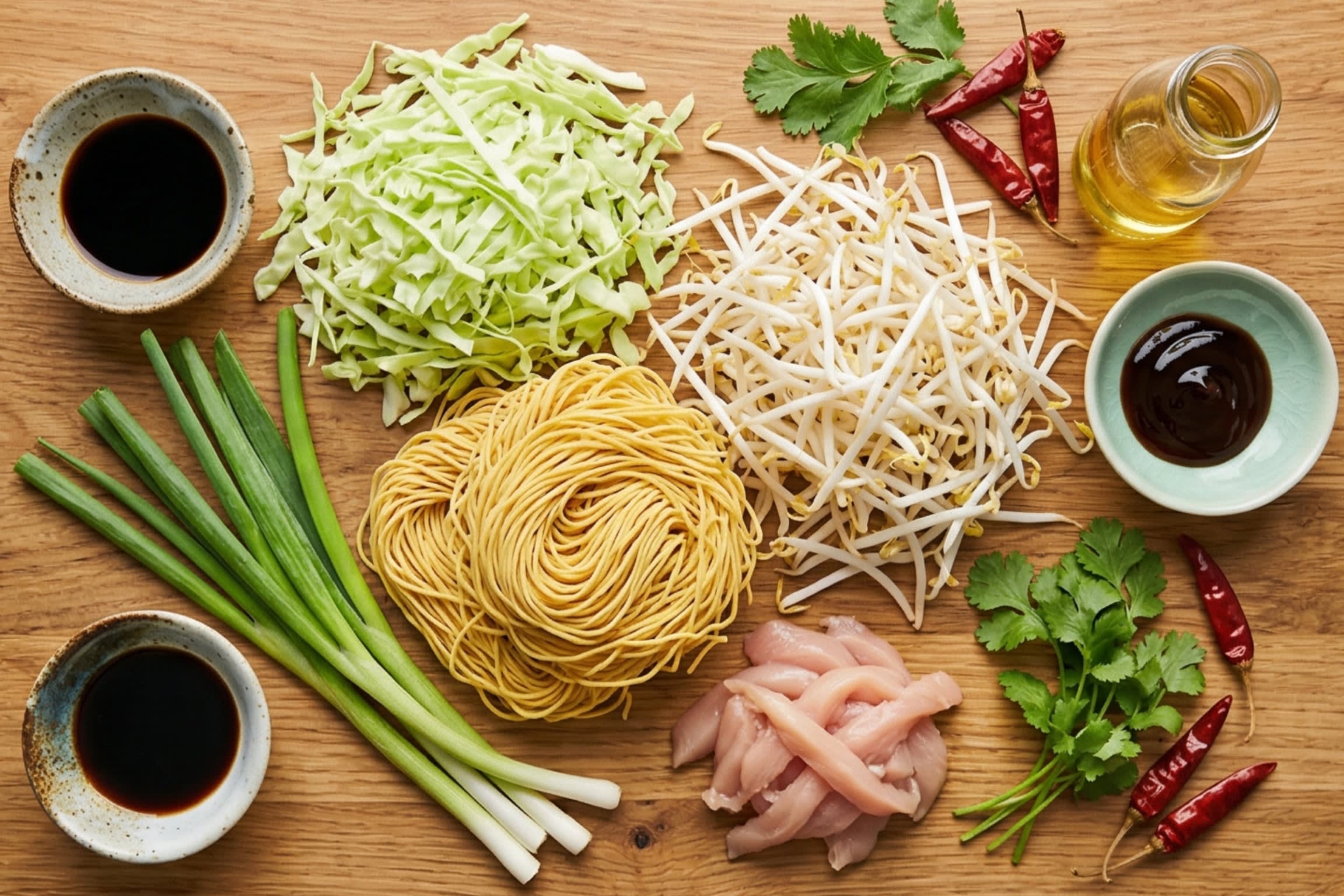
The traditional vegetable trio for authentic Chow Mein provides a crucial contrast in textures: the crunch of the cabbage, the snap of the bean sprouts, and the aromatic bite of the scallions.
The Noodles & Protein:
- 200g (about 7 oz) Fresh Chinese Egg Noodles (黄面/鸡蛋面) or dried Chow Mein noodles. Do not use Italian pasta!
- 100g (about 3.5 oz) Chicken breast or thigh, sliced into thin strips
- 3 tbsp high-heat cooking oil (peanut, vegetable, or canola oil)
The Chicken Marinade:
- 1 tsp light soy sauce
- 1/2 tsp cornstarch
- 1/2 tsp Shaoxing cooking wine
The Classic Veggie Trio:
- 1.5 cups Green Cabbage (卷心菜 - Juǎnxīncài), finely shredded
- 1 cup fresh Mung Bean Sprouts (绿豆芽 - Lǜdòuyá), rinsed and drained completely dry
- 3 stalks of Scallions / Green onions. Cut them into long 2-inch sections (葱段 - Cōngduàn), separating the thicker white parts from the green parts.
The Ultimate Chow Mein Sauce:
- 1.5 tbsp Light Soy Sauce (生抽 - Shēngchōu) - For the salty, savory base.
- 1 tsp Dark Soy Sauce (老抽 - Lǎochōu) - For that beautiful, dark caramel restaurant color.
- 1 tbsp Oyster Sauce (蚝油 - Háoyóu) - Provides a massive punch of umami.
- 1/2 tsp Sugar (糖) - To balance the saltiness.
- 1/4 tsp White Pepper powder (白胡椒粉)
- 1 tsp Toasted Sesame Oil (芝麻油)
🍳 Step-by-Step Instructions
1. Marinate the Chicken: In a small bowl, combine the sliced chicken with the light soy sauce, cornstarch, and Shaoxing wine. Mix well and let it sit for 10 minutes while you prepare the other ingredients.
2. Mix the Sauce: In another small bowl, whisk together the light soy sauce, dark soy sauce, oyster sauce, sugar, white pepper, and sesame oil. Having this ready is crucial because once the stir-frying begins, it moves incredibly fast.
3. Prepare the Noodles (断生): Bring a large pot of water to a rolling boil. Add your noodles. If using fresh noodles, boil them for only 1 to 2 minutes. If using dried, follow the package instructions but subtract 1 minute. They should be firm and slightly undercooked. Drain them immediately in a colander and rinse them thoroughly under cold running water to stop the cooking process and wash away excess surface starch (which causes sticking). Toss the noodles with 1 teaspoon of cooking oil so they don’t clump together.
4. Sear the Chicken: Heat your wok or a large non-stick skillet over high heat until it starts to smoke. Add 1 tablespoon of oil. Add the marinated chicken and stir-fry rapidly for about 2 minutes until it is cooked through and slightly browned. Remove the chicken from the pan and set it aside.
5. Stir-Fry the Vegetables: Wipe the wok clean if necessary, and place it back over high heat. Add another 1 tablespoon of oil. Add the white sections of the scallions and the shredded cabbage. Stir-fry for 30 seconds until the cabbage begins to soften and char very slightly on the edges.
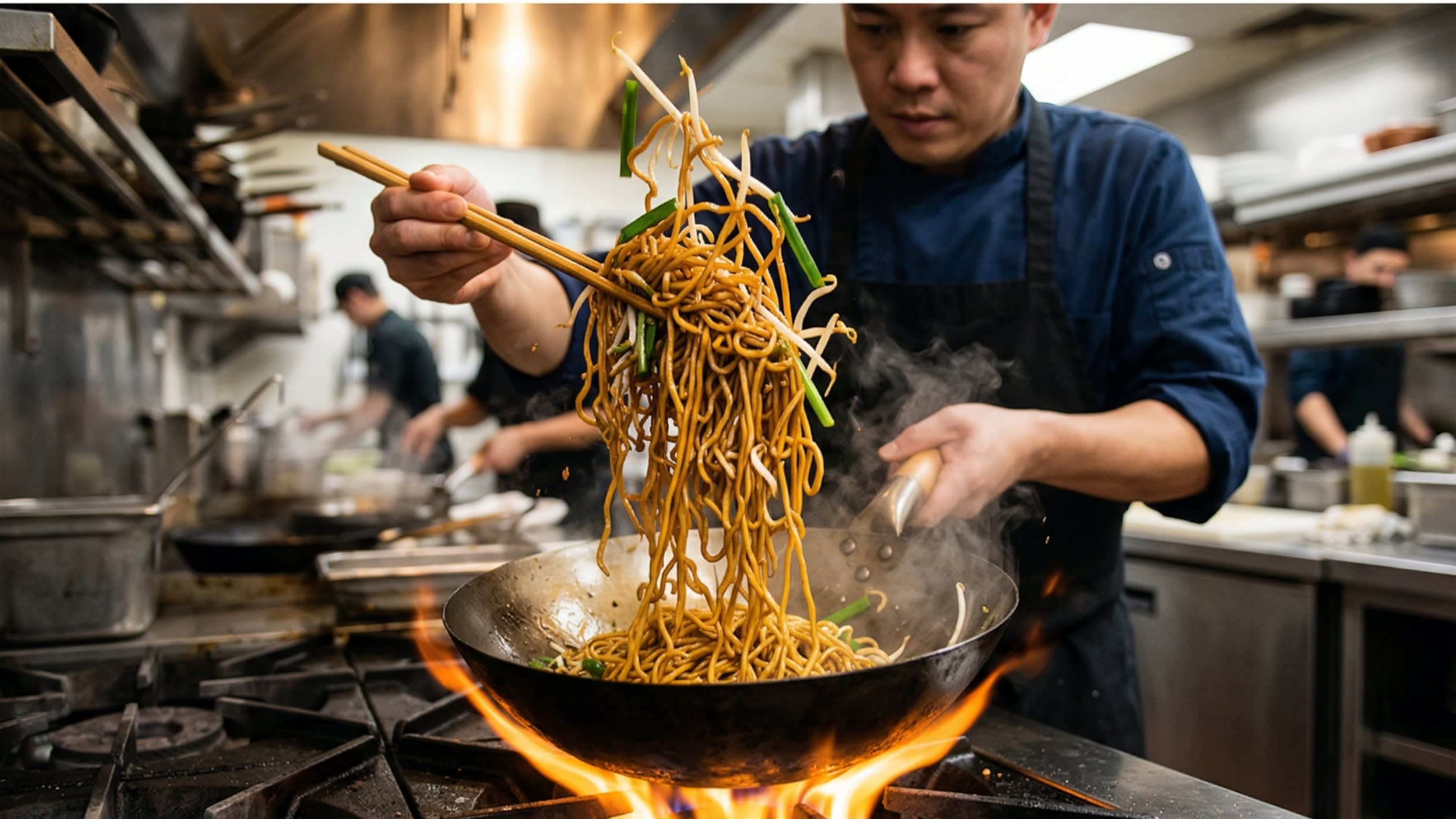
6. The Noodle Toss (The Critical Step): Add the cooked noodles to the wok. Do not stir them immediately! Let them sit flat against the hot metal for 15 to 20 seconds to develop a slight sear and a smoky flavor.
🚨 PRO TIP: Put Down the Spatula, Use Chopsticks! Do not use a flat spatula to stir the noodles; it will chop them into small, mushy pieces. Instead, use a pair of long cooking chopsticks (筷子 - Kuàizi) or kitchen tongs. Plunge them into the center of the noodles, lift them high into the air, and let them fall back into the wok. This prevents breaking and allows the steam to escape.
7. Glaze and Finish: Pour your prepared sauce evenly over the noodles. Add the cooked chicken back in, along with the mung bean sprouts (绿豆芽) and the green sections of the scallions. Toss everything together vigorously with your chopsticks for another 60 seconds. The sauce will caramelize onto the noodles, turning them a beautiful dark golden color. The bean sprouts should remain crisp and fresh.
8. Serve: Turn off the heat. Plate the noodles immediately. Grab a pair of chopsticks and enjoy the most satisfying, smoky, savory 15-minute meal you will ever make!
💡 Troubleshooting: Why Are My Noodles Mushy?
- Wet Vegetables: If you wash your cabbage and bean sprouts right before cooking, the residual water will pool in the bottom of your wok, essentially boiling your noodles instead of frying them. Always use a salad spinner or dry your vegetables thoroughly with a paper towel.
- Overboiling: Remember the rule of Duan Sheng. If the noodles are already fully soft when they go into the wok, the heat and sauce will turn them into paste. Always undercook them slightly in the boiling water.
- Not Enough Heat: Chinese stir-frying requires maximum heat. If your stove is weak, cook half the portion at a time. A crowded pan is the enemy of a good Chow Mein.
📦 Shop Authentic Kitchen Essentials
To achieve that legendary restaurant-quality flavor and texture, having the right traditional sauces and tools is an absolute must. (As an Amazon Associate, ChinaCurator earns from qualifying purchases.)
- Pearl River Bridge Dark Soy Sauce (老抽) - The secret ingredient that gives Chinese noodles their appetizing, dark caramel color.
- Lee Kum Kee Premium Oyster Sauce (蚝油) - Creates the thick, savory, umami-rich glaze that coats the noodles.
- Authentic Carbon Steel Wok - The only way to truly achieve the smoky "Wok Hei" flavor at home.
- Extra-Long Wooden Cooking Chopsticks - The professional Chinese chef's tool for tossing noodles without breaking them.