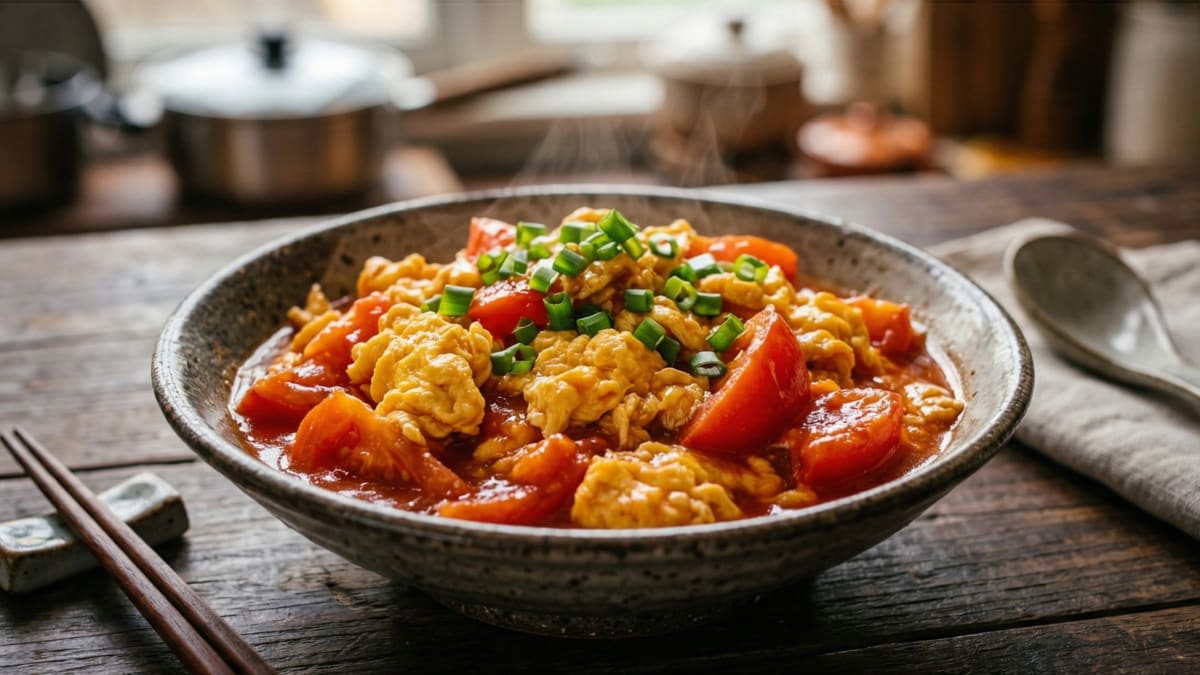
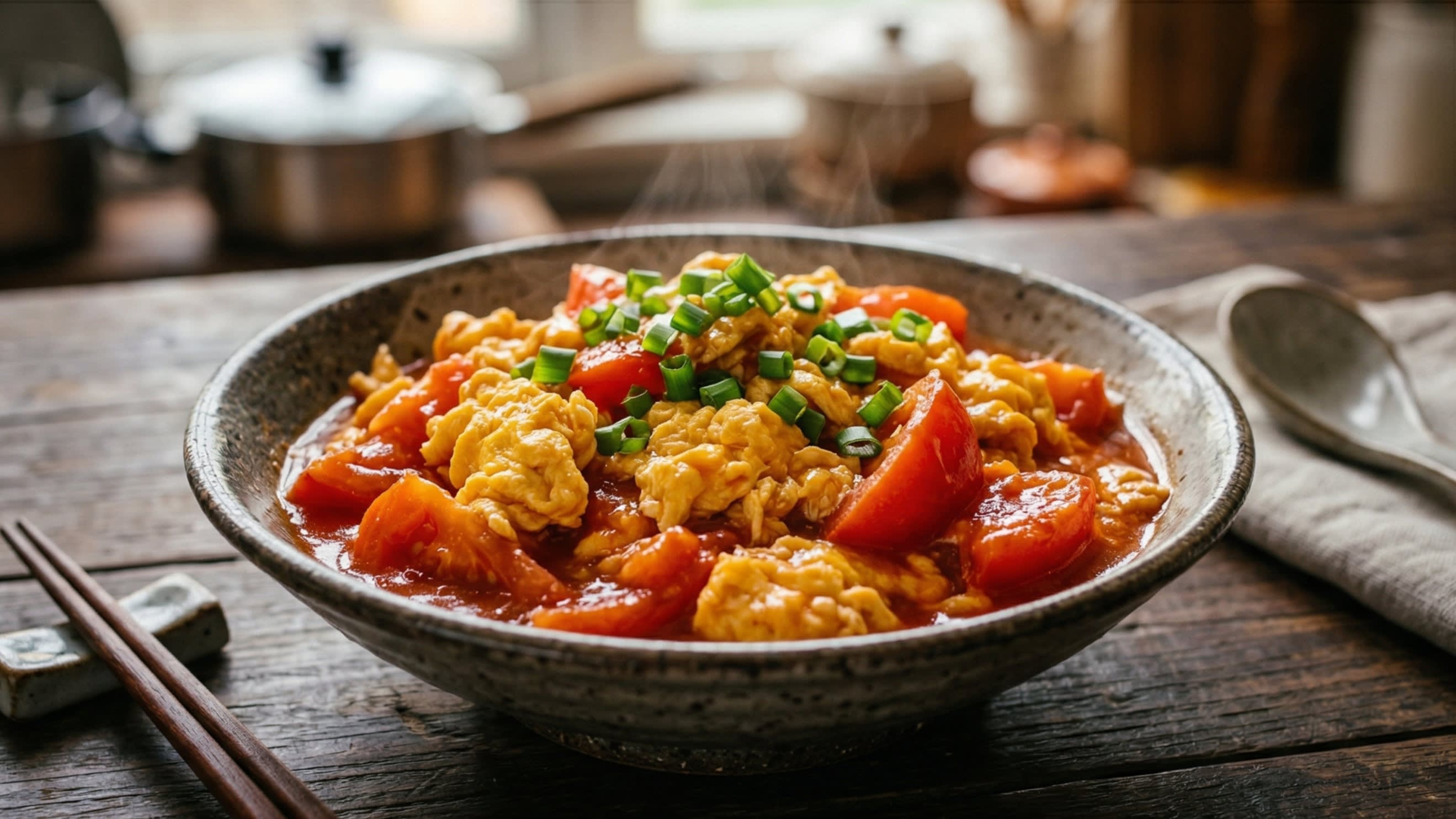
🍅 Introduction: The Taste of Home
If you ask a foreigner to name a famous Chinese dish, they will likely say Peking Duck, Kung Pao Chicken, or Dim Sum. But if you ask a native Chinese person what dish they eat the most, or what dish reminds them most of their childhood, the answer is overwhelmingly unanimous: Tomato and Egg Stir-fry (西红柿炒鸡蛋 - Xīhóngshì chǎo jīdān).
In southern parts of China, it is also commonly called Fānqié chǎo dàn (番茄炒蛋). It is the undisputed, unofficial national dish of China.
This dish is the ultimate Chinese comfort food. It is the very first recipe almost every Chinese child learns to cook before leaving for college. It requires no expensive ingredients, no complex marinating, and no advanced knife skills. Within 15 minutes, you can transform the humblest pantry staples into a vibrant, umami-rich masterpiece that pairs flawlessly with a steaming bowl of white rice.
When you scoop the luscious, sweet-and-savory tomato juice and fluffy eggs over rice, it creates a beloved meal known as Gàijiāofàn (盖浇饭)—rice covered with toppings. It is pure, unadulterated nostalgia in a bowl. Today, we are going to learn how to make it perfectly.
🔬 The Culinary Science: Why It Tastes So Good
You might be wondering: How can just tomatoes and eggs taste so extraordinary? The secret lies in food chemistry, specifically the powerful synergy of umami.
Tomatoes are naturally packed with glutamates, the same compounds that make MSG and soy sauce taste deeply savory. Eggs, on the other hand, are rich in specific amino acids. When you combine the glutamates from the tomatoes with the amino acids from the eggs in a hot wok, they create a flavor multiplier effect. The result is a dish that tastes profoundly rich and satisfying, entirely without the need for heavy meat or complicated broths.
The Great Chinese Culinary Debate: Sweet or Savory?
Before you start cooking, you must be aware of the greatest culinary debate in China. Should Tomato and Egg Stir-fry be sweet or salty?
- The Northern Style (Salty/Savory): In northern China, the dish is typically strictly savory. Cooks use garlic, scallions, salt, and sometimes a dash of light soy sauce to emphasize the natural acidity of the tomatoes.
- The Southern Style (Sweet): In regions like Shanghai and Guangdong, the dish leans noticeably sweet. A generous spoonful of sugar is added to the wok.
Which one is better? We highly recommend the southern approach (adding sugar). The sugar does not make it taste like a dessert; instead, it cuts through the sharp acidity of the tomatoes and enhances their natural fruitiness, creating an incredibly addictive, balanced sauce.
🛒 Ingredients List
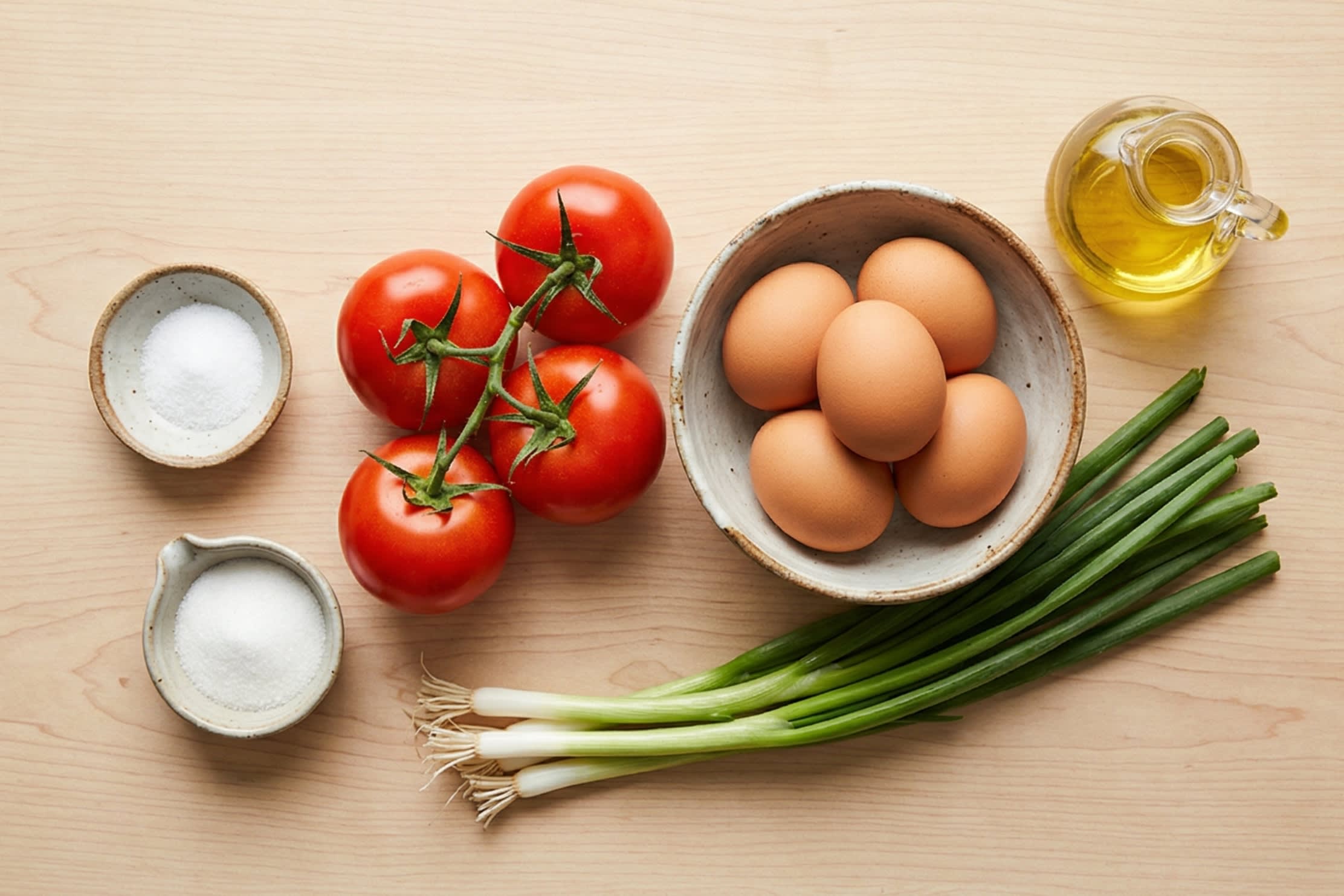
To make a truly exceptional Tomato and Egg Stir-fry, the quality of your ingredients is everything. You want the ripest, reddest, juiciest tomatoes you can find.
The Core Ingredients:
- 4 medium, very ripe Tomatoes (西红柿 - Xīhóngshì)
- 4 large Eggs (鸡蛋 - Jīdān)
- 2 stalks of Scallions / Green Onions (葱花 - Cōnghuā), finely chopped. Separate the white parts from the green parts!
- 3 tbsp high-heat Cooking Oil (vegetable, canola, or peanut oil)
The Seasonings:
- 1/2 tsp Salt (盐), divided
- 1 tbsp Granulated Sugar (糖) - Adjust to your preference, but don’t skip it!
- 1 tbsp Water (for the eggs)
- 1 tsp Ketchup (番茄酱 - Fānqiéjiàng) - Optional: Read the “Pro Tips” section below to see why restaurants use this secret ingredient!
- A few drops of Toasted Sesame Oil (芝麻油 - Zhīmayóu) for finishing
🍳 Step-by-Step Instructions
The biggest mistake beginners make is cracking the eggs directly into the cooking tomatoes. This results in an unappetizing, cloudy, mushy mess. To get distinct, fluffy golden egg curds contrasting with a rich red sauce, you must cook them separately!
1. Prepare the Ingredients: Wash the tomatoes and cut them into 1-inch thick wedges. (If you prefer a refined texture, you can peel the tomatoes first—see the Pro Tips below). In a mixing bowl, crack the 4 eggs. Add a pinch of salt and 1 tablespoon of cold water. Beat them vigorously with chopsticks or a fork until the yolks and whites are completely combined and slightly frothy.
2. Scramble the Eggs (The Fluffy Secret): Heat your wok or a large skillet over high heat until it is smoking slightly. Add 2 tablespoons of cooking oil. Pour in the beaten eggs. The oil must be hot enough that the eggs immediately puff up and bubble. Let them sit for 3 seconds, then use your spatula to quickly push the edges toward the center, allowing the raw egg to run to the edges. When the eggs are about 80% cooked but still slightly runny and glossy, turn off the heat and quickly remove them to a clean plate. Do not overcook the eggs!
3. Fry the Aromatics: In the same wok, add the remaining 1 tablespoon of oil over medium heat. Add the white parts of your chopped scallions. Stir-fry for 15 seconds until they release their wonderful oniony aroma.
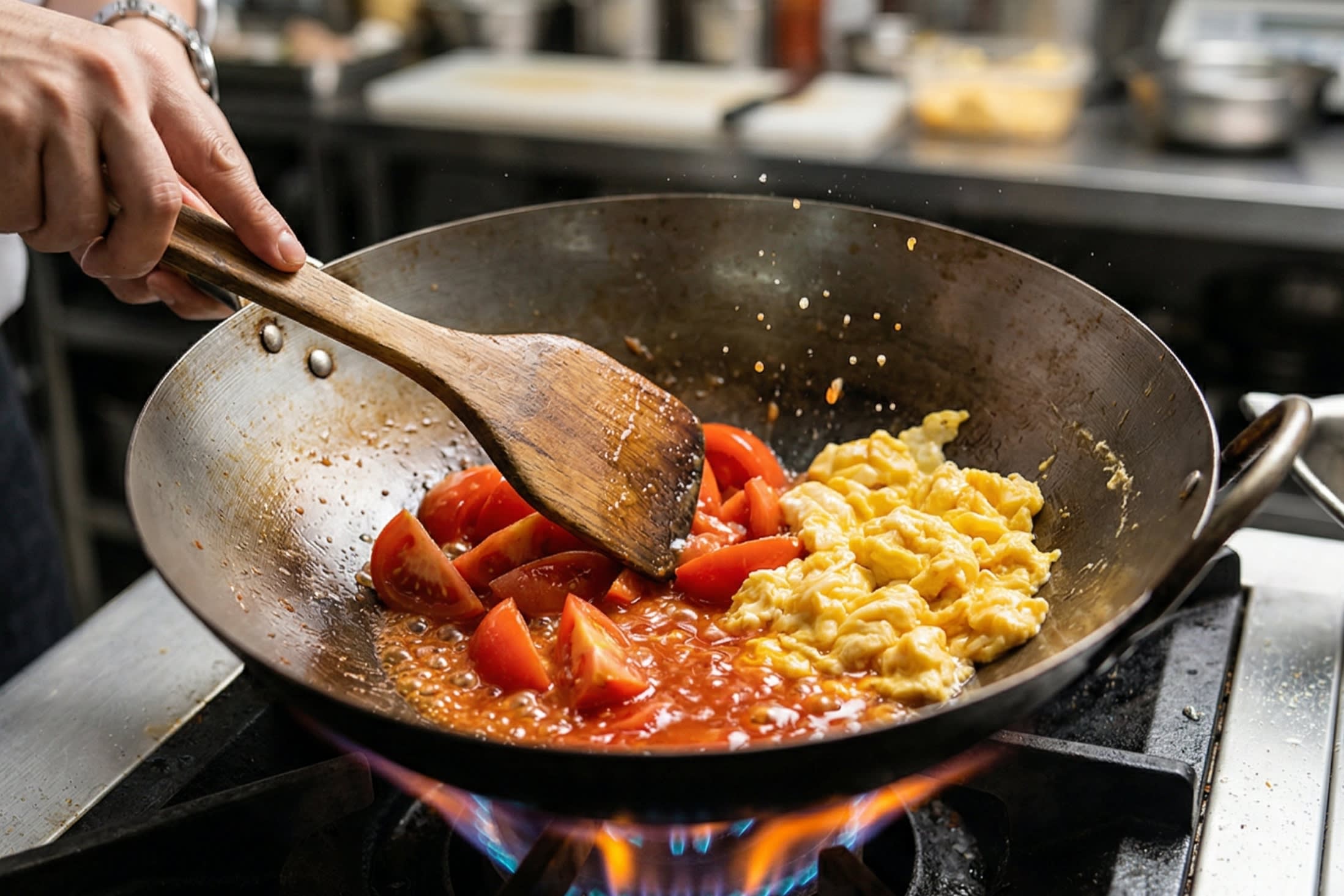
4. Break Down the Tomatoes: Turn the heat up to medium-high. Add the tomato wedges to the wok. Now, use the back of your spatula to gently press down on the tomatoes as you stir. You want to physically squeeze them so they begin to break down and release their natural red juices (汤汁 - Tāngzhī). Cook for about 3 to 4 minutes until the tomatoes soften and a natural, bubbling red sauce forms at the bottom of the wok.
5. Season the Sauce: Once the tomatoes have released their juices, sprinkle in the remaining salt, the sugar, and the secret teaspoon of ketchup (if using). Stir well. The sauce will instantly become thick, shiny, and vibrant.
6. The Reunion: Slide the partially cooked, fluffy eggs back into the wok with the simmering tomatoes. Gently fold everything together. You want the porous, fluffy eggs to absorb that sweet and savory tomato juice like a sponge. Let it simmer together for just 30 to 45 seconds.
7. Garnish and Serve: Turn off the heat. Drizzle with a few drops of toasted sesame oil. Toss in the green parts of your chopped scallions (葱花) for a pop of fresh color. Transfer to a deep plate and serve immediately with a massive bowl of steamed white rice!
💡 Troubleshooting and Pro Tips
- The Restaurant Secret (Ketchup): In the peak of summer, fresh heirloom tomatoes are perfectly sweet and tart. However, if you are cooking this dish in the winter using pale, supermarket tomatoes that lack flavor, do what Chinese restaurants do: add 1 teaspoon of tomato ketchup to the wok! It instantly restores the bright red color, acidity, and concentrated tomato flavor that winter tomatoes lack.
- Why add water to the raw eggs? Adding a single tablespoon of cold water to your beaten eggs creates steam when they hit the hot oil. This steam puffs the eggs up, making them incredibly soft, tender (软嫩 - Ruǎnnèn), and airy, rather than dense and rubbery.
- How to peel tomatoes easily: The skins of tomatoes can detach during cooking and roll up into tight, paper-like strips. If you want a truly elegant, restaurant-quality texture, peel your tomatoes! Cut a shallow “X” on the bottom of each tomato. Drop them into a pot of boiling water for exactly 30 seconds, then transfer them to an ice bath. The skins will peel off effortlessly with your fingers.
- Is the dish too watery? If your dish looks like tomato soup, your tomatoes had a very high water content, and you did not let the sauce reduce enough in Step 4. Just let it simmer for an extra minute before adding the eggs back in.
🌿 How to Serve It
While it is traditionally eaten as a main dish with steamed rice, Tomato and Egg is incredibly versatile. It makes a phenomenal topping for freshly boiled wheat noodles—a quick meal known as Dǎlǔmiàn (打卤面). You can even eat it for breakfast with a slice of toasted sourdough bread!
📦 Shop Essential Kitchen Tools
To master quick Chinese stir-fries, having the right tools makes all the difference. (As an Amazon Associate, ChinaCurator earns from qualifying purchases.)
- Kadoya 100% Pure Toasted Sesame Oil - The final few drops transform the aroma of the dish.
- Traditional Carbon Steel Wok - Essential for getting the oil hot enough to instantly puff up the eggs.
- Bamboo Wok Spatula - Perfect for pressing the tomatoes without scratching your pans.