🥣 Introduction: The Ultimate 10-Minute Comfort Food
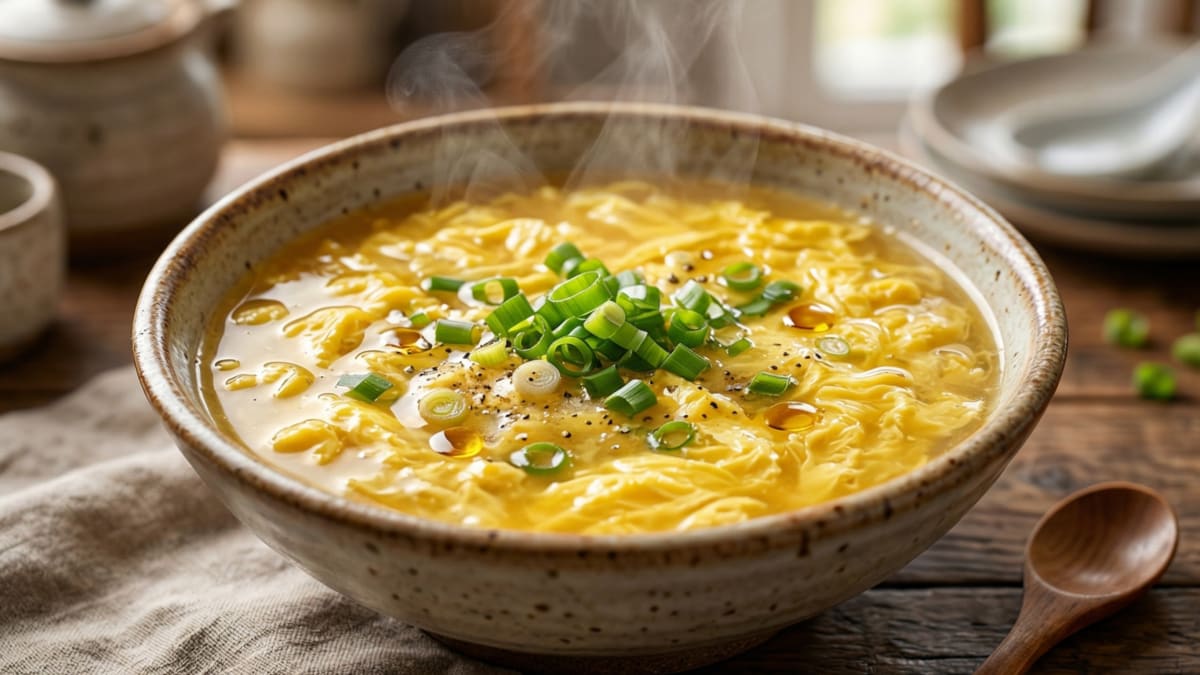
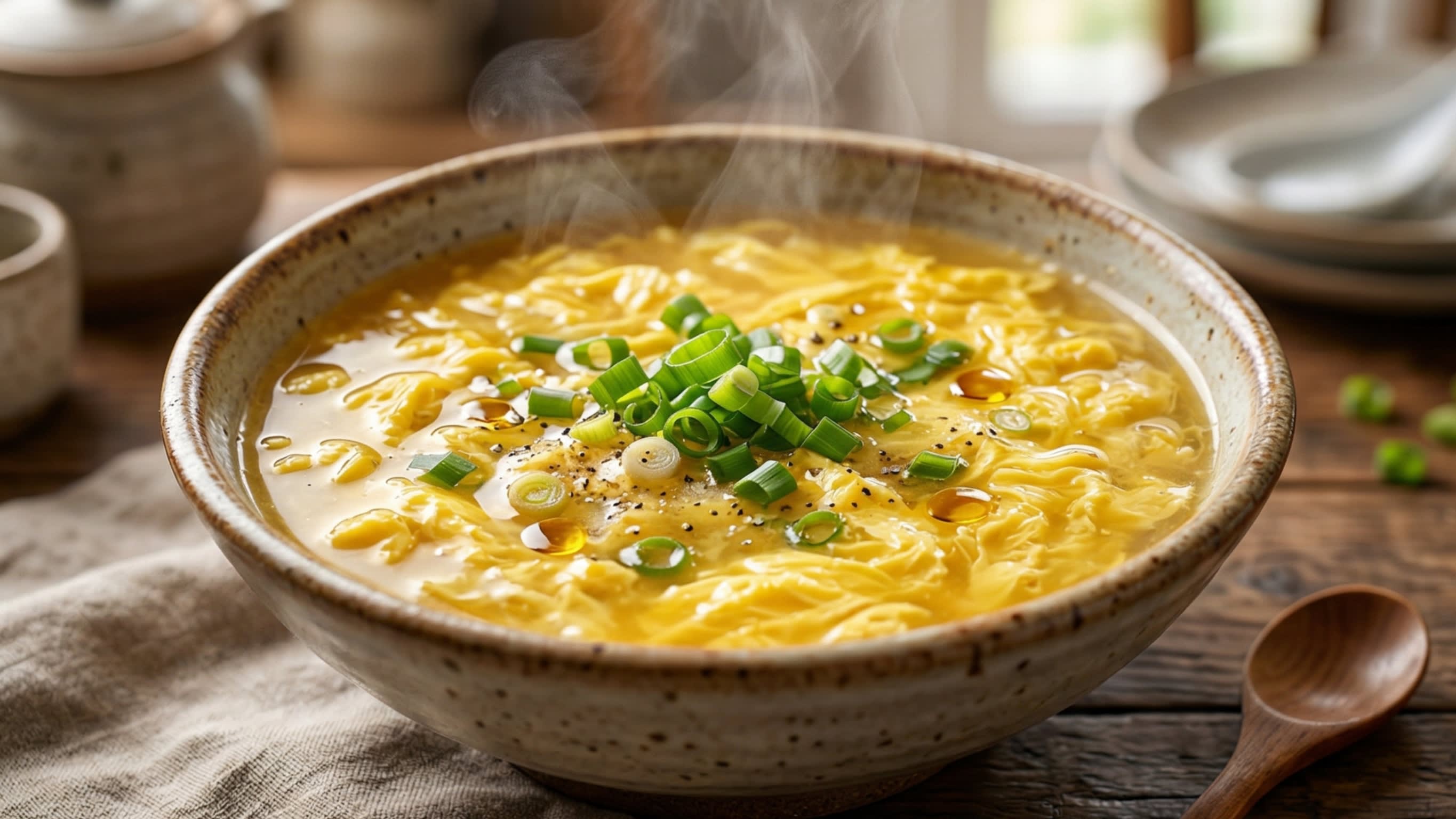
When it comes to Chinese takeout, Egg Drop Soup (蛋花汤 - Dànhuā Tāng) is an absolute institution. For millions of people, a comforting bowl of this warm, savory, and silky soup is the mandatory starting point for any Chinese meal.
In Chinese, the name Dànhuā Tāng literally translates to “Egg Flower Soup.” It is a beautifully poetic name that perfectly describes the visual aesthetic of the dish: delicate, blooming petals of cooked egg suspended in a rich, golden broth.
While Westerners largely view this as a restaurant appetizer, in China, Egg Drop Soup is the ultimate home-cooked comfort food. Because traditional Chinese meals consist of dry rice accompanied by heavily seasoned stir-fries, a light, hydrating soup is almost always served at the end of the meal to cleanse the palate and soothe the stomach.
The beauty of this soup lies in its sheer simplicity. You only need eggs, broth, and a thickening agent. However, this simplicity is a double-edged sword. With so few ingredients, technique is everything. If you have ever tried to make this at home and ended up with a pot of cloudy, rubbery, scrambled-egg water, you are not alone.
Today, we are going to dive deep into the culinary science behind the perfect Chinese restaurant Egg Drop Soup. You will learn the exact physical technique required to create those signature “silken ribbons,” and how to achieve that iconic golden restaurant color in under 10 minutes.
🔬 The Science of the Perfect “Egg Ribbon” (打蛋花)
The most common question home cooks ask is: “How do restaurants get the egg to look like beautiful, floating ribbons instead of tiny, cloudy clumps?” The answer lies in the mastery of three fundamental elements: Starch, Agitation, and Temperature.
1. The Suspension Matrix (勾芡 - Gōuqiàn)
You absolutely cannot pour raw eggs into plain, boiling broth. If you do, the eggs will simply sink to the bottom or shatter into a million microscopic pieces. You must first create a “suspension matrix.” In Chinese cooking, this is called Gōuqiàn (勾芡)—thickening the liquid with a cornstarch slurry.
By thickening the chicken broth before adding the eggs, you change the viscosity (thickness) of the liquid. The thickened broth physically holds the egg up, allowing it to float and gently bloom into large, beautiful sheets rather than sinking and scrambling.
2. The Temperature Control
Eggs cook in milliseconds when introduced to hot liquid. If you pour your eggs into a pot that is at a violent, rolling boil, the massive bubbles will violently tear your delicate egg ribbons apart as soon as they form. Before you pour the eggs, you must reduce the heat so the soup is at a very gentle, barely bubbling simmer.
3. The “Vortex” Pouring Technique
This is the physical secret to the “Egg Flower.” You must use a ladle to stir your thickened broth in a circle, creating a gentle whirlpool or vortex in the center of the pot. Then, you stop stirring. While the liquid is still spinning from its own momentum, you slowly drizzle the beaten eggs into the vortex in a thin, high stream. The spinning motion of the soup will naturally draw the egg out into long, continuous, silky ribbons.
💡 The Restaurant Secret to the “Golden Yellow” Color
Have you ever wondered why your homemade Egg Drop Soup looks pale and white, while the restaurant version glows with a vibrant, neon-yellow hue?
Here is the truth: In traditional Chinese home cooking, the soup is naturally pale, relying entirely on the color of high-quality, free-range egg yolks. However, Chinese-American restaurants often use a secret trick to achieve that trademark glowing color. They add a tiny pinch of Turmeric powder (姜黄粉) or a single drop of yellow food coloring.
If you want the 100% authentic visual experience of a Western Chinese takeout restaurant, adding a 1/8 teaspoon of turmeric to your broth will give you that iconic golden glow without altering the traditional flavor profile.
🛒 Ingredients List
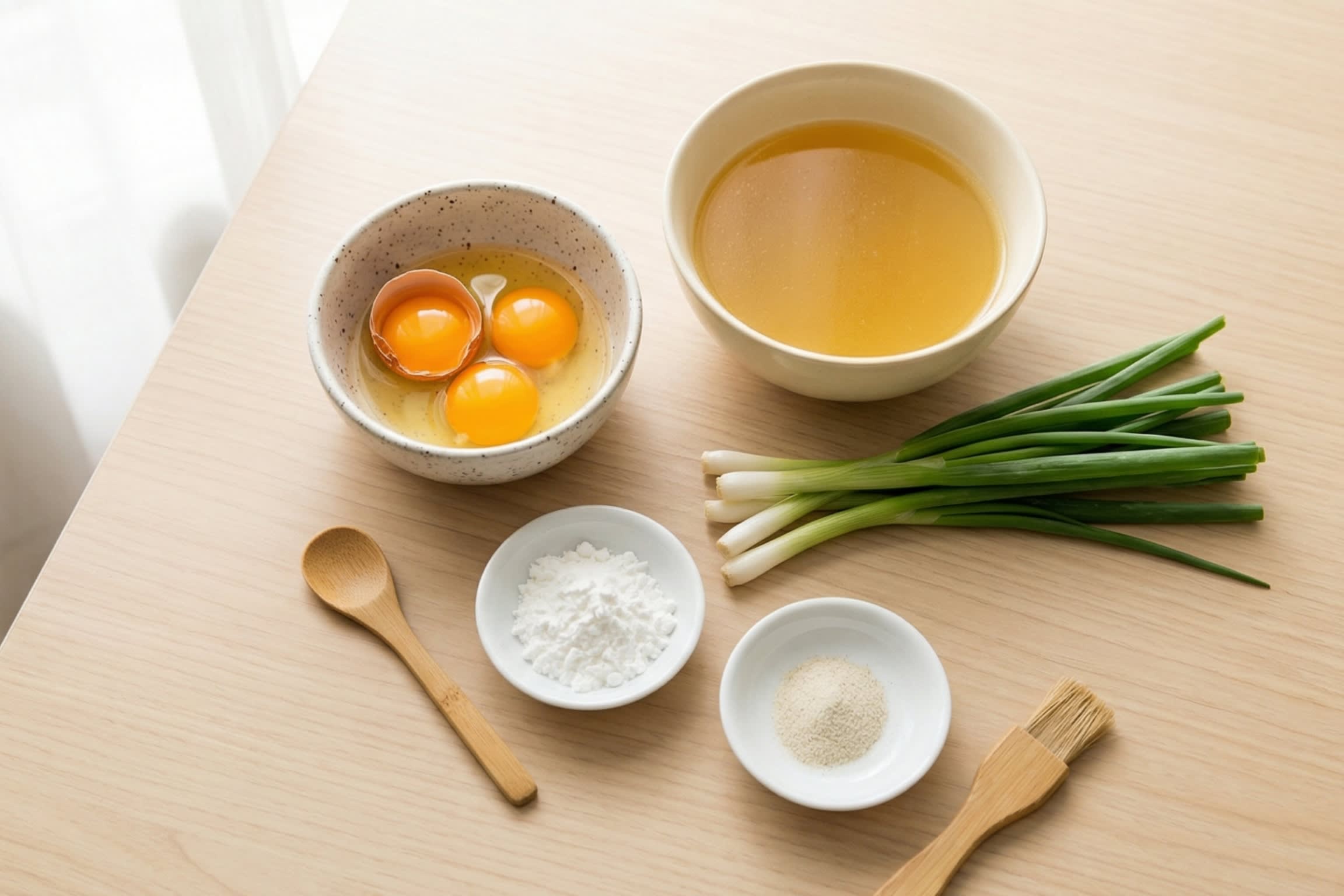
Because this soup has so few components, the quality of your broth is paramount. Do not use plain water; you must use a high-quality chicken or vegetable stock.
The Base:
- 4 cups high-quality Chicken Broth (高汤 - Gāotāng) or vegetable broth
- 3 large eggs (room temperature is best)
- 1/4 tsp salt (adjust to taste depending on the saltiness of your broth)
- 1/4 tsp sugar (just a pinch to balance the savory notes)
- 1/8 tsp Turmeric powder (optional - purely for that restaurant-style yellow color)
- 1/8 tsp White Pepper powder (白胡椒粉 - Bái hújiāo fěn) - Crucial for authentic flavor!
The Thickening Slurry:
- 3 tbsp Cornstarch (玉米淀粉) mixed thoroughly with 3 tbsp cold water
The Garnish:
- 2 scallions / green onions, finely chopped (葱花 - Cōnghuā)
- 1/2 tsp toasted Sesame Oil (香油 / 芝麻油 - Xiāngyóu / Zhīmayóu)
🍳 Step-by-Step Instructions
1. Prepare the Eggs: Crack the 3 large eggs into a spouted measuring cup or a small bowl. Use a fork or chopsticks to beat them thoroughly until the yolks and whites are completely combined. If you want ultra-smooth ribbons, you can pass the beaten eggs through a fine mesh strainer, though this is optional. Set aside.
2. Mix the Slurry: In a separate small bowl, combine the 3 tablespoons of cornstarch with 3 tablespoons of cold water. Stir until it forms a smooth, milky liquid. (Never add dry cornstarch directly to hot soup; it will instantly form hard, inedible lumps).
3. Season the Broth: Pour your chicken broth into a medium-sized soup pot or wok. Bring it to a boil over medium-high heat. Add your salt, a tiny pinch of sugar, the white pepper, and the turmeric (if using). Stir well to dissolve the seasonings. Taste the broth now—it should taste delicious and savory.
4. Thicken the Soup (The Crucial Step): Once the broth is boiling, give your cornstarch slurry a quick stir (the starch settles at the bottom quickly). While stirring the hot broth continuously with a ladle, slowly drizzle the slurry into the pot. Let it cook for about 30 to 45 seconds. The broth will change from watery to thick, glossy, and syrupy. Note: The soup must be visibly thick to hold the eggs!
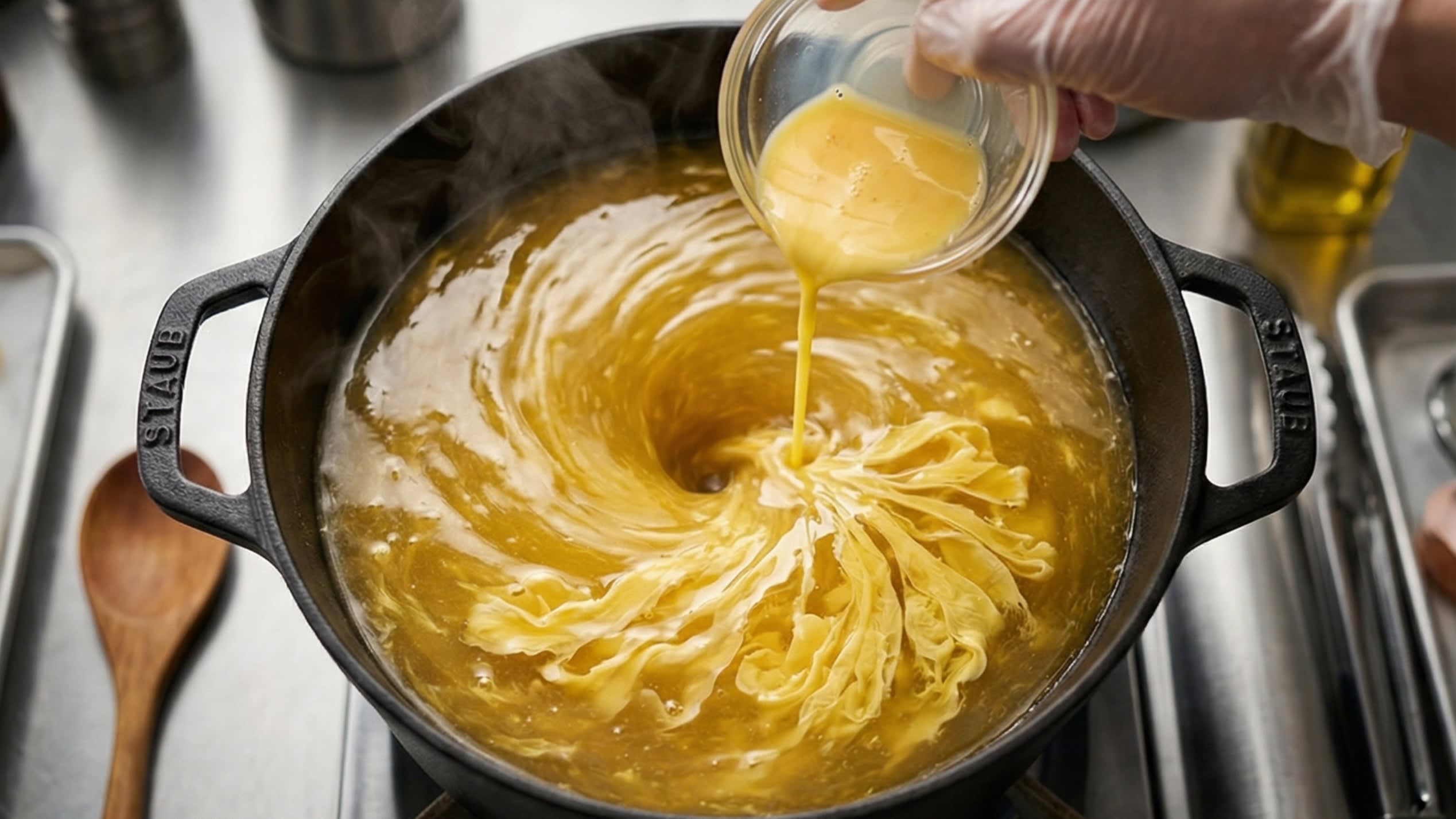
5. Create the Egg Vortex: Turn the heat down to low. You want the soup to be very calm, with only tiny bubbles breaking the surface—no violent boiling! Take your ladle and stir the soup in a large circle to create a gentle whirlpool (vortex).
6. Pour the “Egg Flowers”: Remove your ladle. While the soup is still spinning, hold your bowl of beaten eggs about 6 inches above the pot. Slowly pour the eggs in a very thin, steady stream directly into the swirling liquid.
7. Wait, Then Serve: Do not stir immediately! Let the eggs sit undisturbed for 3 to 5 seconds so they can cook and set into beautiful, large ribbons. Finally, turn off the heat entirely. Gently push the soup once or twice with your ladle to distribute the egg. Stir in the toasted sesame oil, ladle into serving bowls, and garnish generously with chopped scallions (葱花). Serve immediately!
🚨 Troubleshooting Common Mistakes
- Why is my soup cloudy and murky? You either stirred the soup too aggressively while pouring the eggs, or you stirred the eggs immediately before they had a chance to set. You must let the eggs cook for 3 seconds before touching them.
- Why did my eggs sink to the bottom and turn rubbery? Your broth was not thick enough. You did not use enough cornstarch slurry, or you poured the eggs into a watery broth. The starch suspension is what allows the delicate eggs to float.
- Why does it taste bland? Since eggs absorb salt, your broth needs to be slightly saltier than you think before you add the eggs. Also, ensure you are using White Pepper and Toasted Sesame Oil at the very end—these two ingredients are the defining aromatic signatures of Chinese soups.
🌿 Cultural Variations to Try at Home
Once you master this basic technique, you can explore authentic Chinese household variations:
- Tomato Egg Drop Soup (西红柿蛋花汤): Sauté freshly diced tomatoes in a little oil until they break down and release their red juices, then add your broth and follow the same egg-drop steps. This is the #1 most popular soup in Chinese home kitchens!
- Corn Egg Drop Soup (玉米蛋花汤): Add half a cup of sweet creamed corn to the broth before thickening. It adds a wonderful sweetness that kids absolutely love.
📦 Shop Authentic Pantry Staples
To achieve that unmistakable Chinese restaurant flavor, upgrade your pantry with these essentials. (As an Amazon Associate, ChinaCurator earns from qualifying purchases.)
- Premium White Pepper Powder (白胡椒粉) - The exact earthy, warming spice used in authentic Chinese soups. Black pepper will not work!
- Kadoya 100% Pure Toasted Sesame Oil (芝麻油) - A few drops at the end will transform the aroma of your kitchen.
- Lee Kum Kee Premium Chicken Bouillon (鸡粉) - The restaurant secret for creating an incredibly savory, umami-rich soup base in seconds.