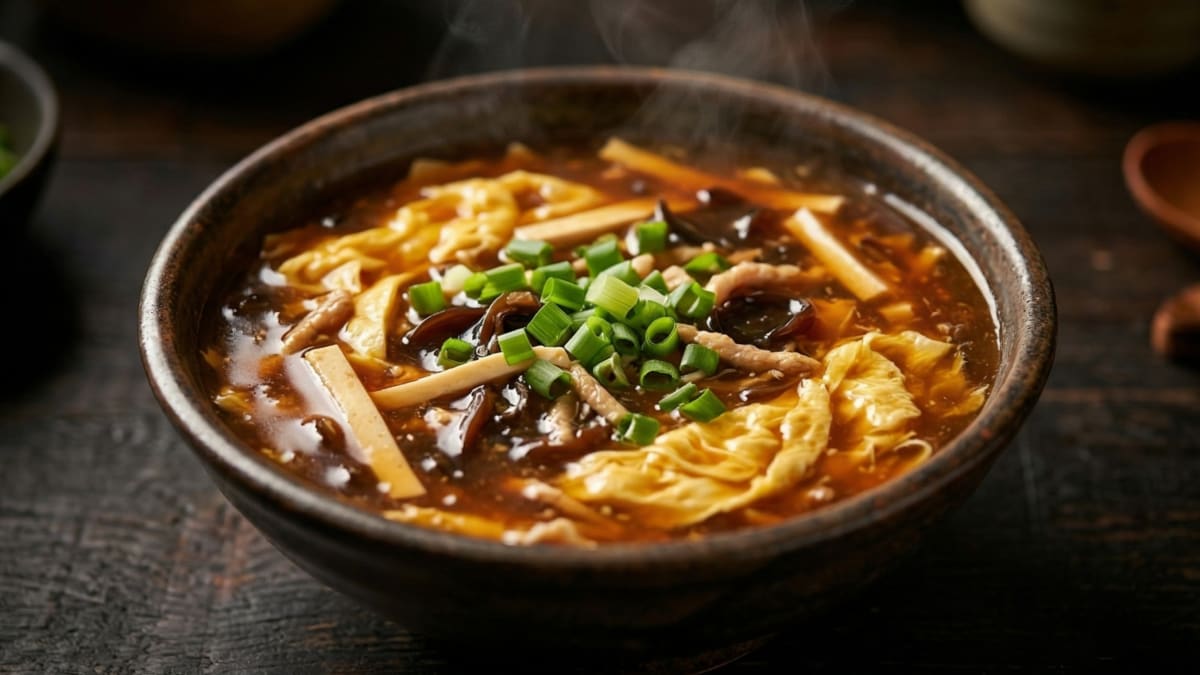
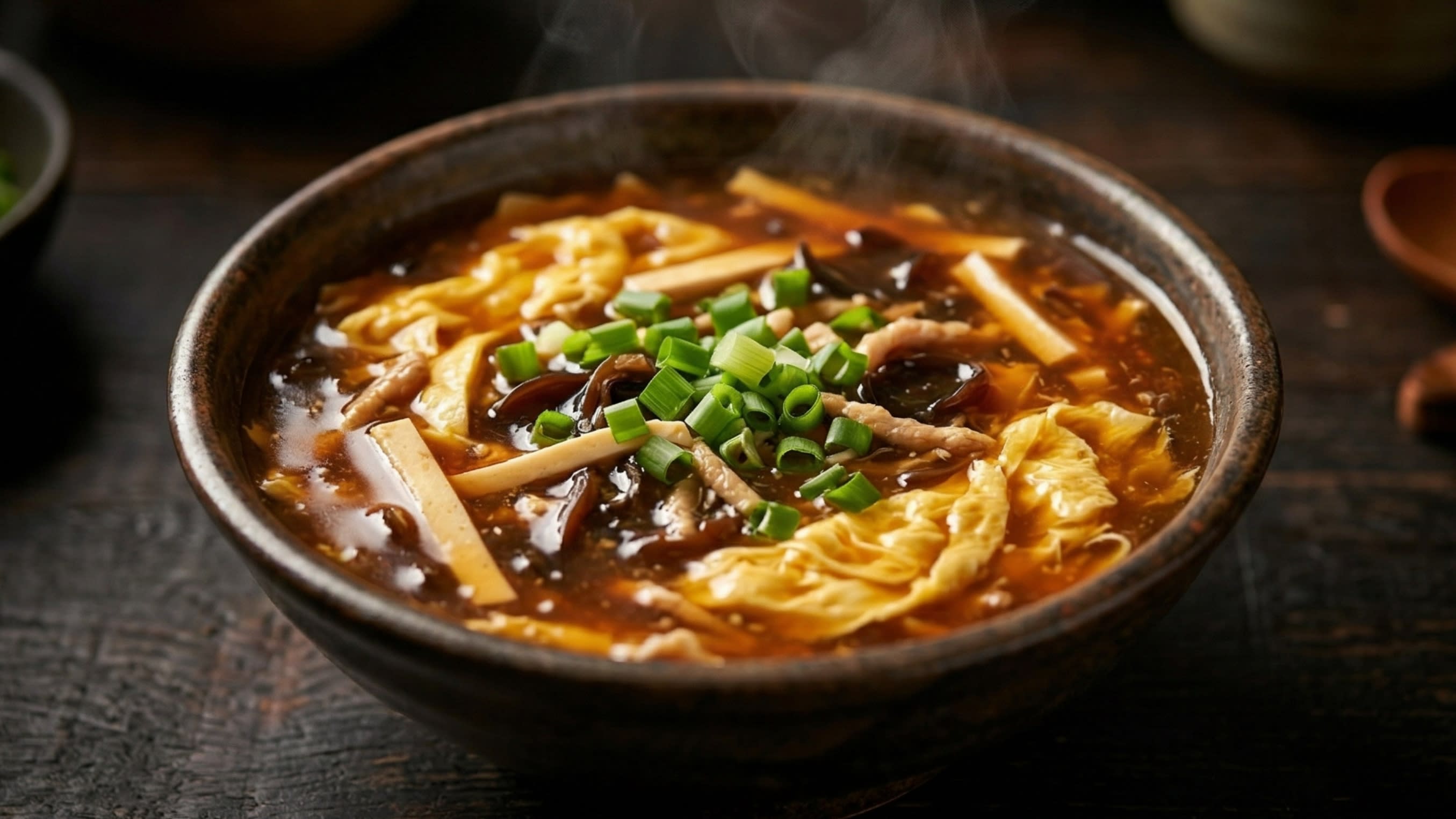
🥣 Introduction: The Ultimate Chinese Comfort Soup
Walk into any Chinese restaurant in the Western world, and you will inevitably be asked a familiar question: “Egg Drop or Hot and Sour?” For millions of people, Hot and Sour Soup (酸辣汤 - Suānlà Tāng) is the ultimate appetizer. It is a complex, deeply comforting bowl of contrasting flavors and textures: tangy, peppery, savory, silky, and crunchy all at once. A truly authentic bowl is a masterpiece of culinary balance that awakens the palate and warms the body from the inside out.
Historically, this soup originated in the Sichuan and northern regions of China. It was traditionally consumed during the bitter, freezing winters. The intense pepperiness was designed to make you sweat, theoretically driving the cold and sickness out of your body.
But here is the truth that surprises many home cooks: making restaurant-quality Hot and Sour Soup at home is actually incredibly fast and easy. The secret does not lie in hours of simmering; it lies in understanding the exact chemistry of the “Hot” and the “Sour,” and using a few specific traditional ingredients.
In this ultimate guide, we will deconstruct the secrets of authentic Chinese Hot and Sour Soup so you can recreate this iconic dish perfectly in your own kitchen in under 40 minutes.
🌶️ The Secret of the “Hot” and the “Sour”
If your homemade soup tastes like it is missing something, or if it tastes too much like harsh vinegar and chili sauce, it is because you are likely using the wrong seasonings. The soul of this dish relies on two specific pantry staples.
The “Hot” is NOT from Chilies
When people hear “hot,” they immediately reach for chili oil, sriracha, or red pepper flakes. Stop right there! In an authentic Suānlà Tāng, the heat comes entirely from White Pepper Powder (白胡椒粉 - Bái hújiāo fěn).
White pepper provides a sharp, earthy, and lingering heat that warms the back of your throat, rather than burning your tongue like red chilies do. If you use black pepper or chili sauce, your soup will immediately lose its authentic Chinese flavor profile. You must use finely ground white pepper, and you must use a generous amount of it.
The “Sour” MUST be Black Vinegar
Standard white distilled vinegar is far too harsh and one-dimensional for this soup. Authentic recipes demand Chinkiang Vinegar (镇江香醋 - Zhènjiāng xiāngcù), a traditional Chinese black rice vinegar. It is aged, complex, slightly sweet, and deeply malty—often compared to an Asian balsamic vinegar. This is what gives the soup its dark, rich color and its profound, mouth-watering tanginess.
🍄 Deconstructing the Traditional Ingredients
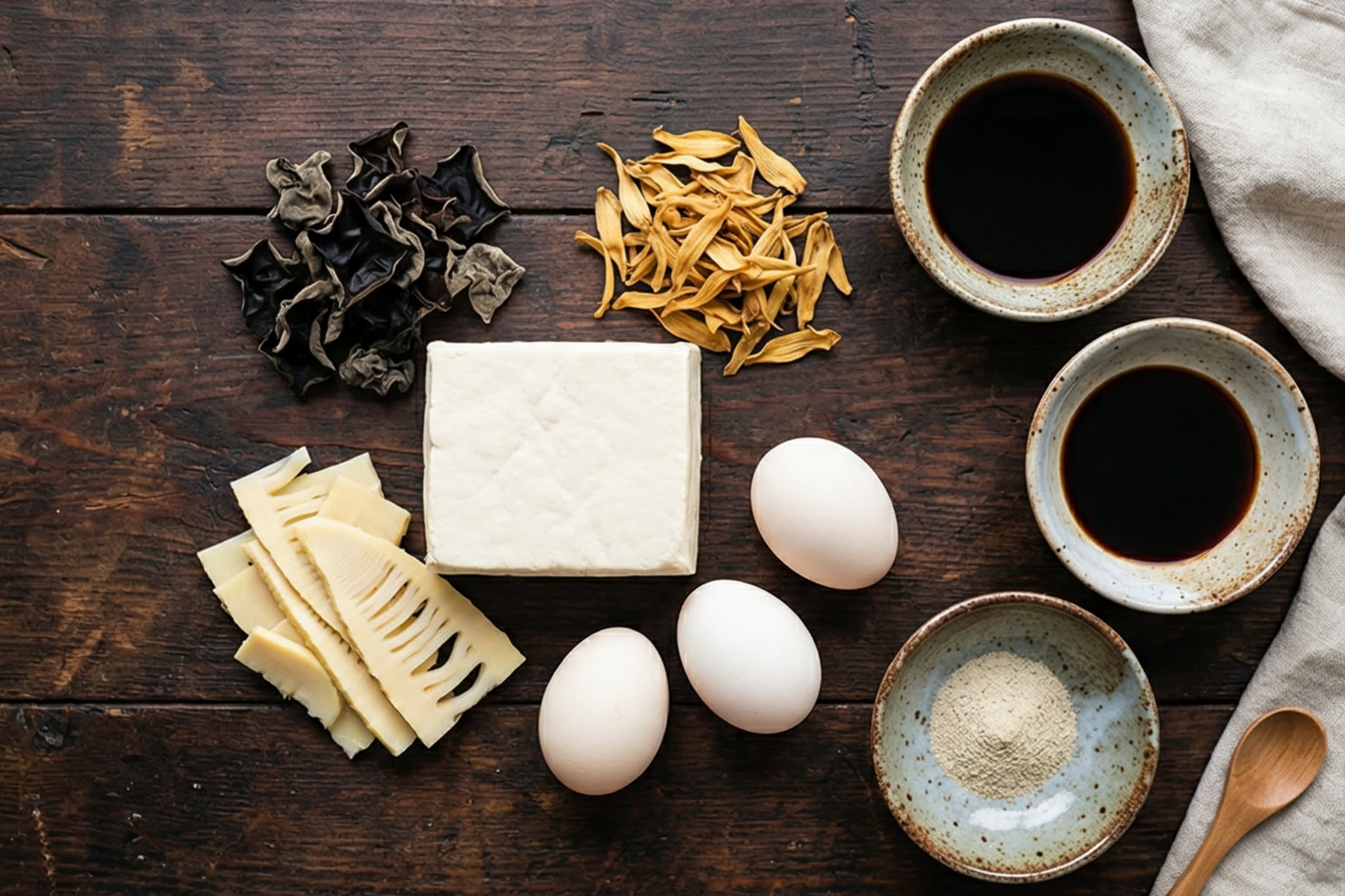
While Americanized takeout versions often just use tofu and generic mushrooms, a truly traditional Chinese Hot and Sour Soup is a treasure chest of unique textures. All ingredients must be painstakingly julienned (cut into thin matchsticks) so that every spoonful contains a perfect mix of everything. This cutting technique is called Qiēsī (切丝).
- Firm Tofu (老豆腐): You need firm or semi-firm tofu so it holds its shape when cut into thin strips. Silken tofu will simply disintegrate into the broth.
- Wood Ear Mushrooms (木耳 - Mù’ěr): These dried black fungi are essential. They don’t have a strong taste, but they provide a signature, snappy crunch that contrasts beautifully with the soft tofu.
- Dried Lily Flowers (黄花菜 - Huánghuācài): Also known as golden needles. They add a delicate, earthy, and slightly tart flavor to the broth.
- Bamboo Shoots (竹笋 - Zhúsǔn): These provide another layer of satisfying crunch. You can buy these pre-sliced in cans at any Asian grocery store.
- Pork Shreds (猪肉丝 - Zhūròu sī): A small amount of lean pork loin, marinated briefly, adds savory depth to the broth. (For a vegetarian version, simply omit this and use vegetable broth!).
🛒 Ingredients List
The Soup Base & Solids:
- 4 cups high-quality Chicken Broth (or vegetable broth)
- 100g (about 3.5 oz) lean pork loin, cut into thin matchsticks
- 1/2 block (about 200g) firm tofu, cut into thin matchsticks
- 1/4 cup dried Wood Ear mushrooms (木耳)
- 1/4 cup dried Lily Flowers (黄花菜)
- 1/2 cup canned bamboo shoots, julienned
- 3 fresh Shiitake mushrooms, stems removed and thinly sliced
- 2 large eggs, thoroughly beaten
The Marinade (for the pork):
- 1 tsp light soy sauce
- 1/2 tsp cornstarch
- 1/2 tsp cooking wine (Shaoxing)
The “Hot & Sour” Seasoning Bowl:
- 3 to 4 tbsp Chinkiang black vinegar (镇江香醋) - adjust to your preferred sourness
- 1 to 1.5 tsp White Pepper powder (白胡椒粉) - adjust to your preferred heat
- 2 tbsp light soy sauce (生抽)
- 1 tsp dark soy sauce (老抽 - mostly for that dark restaurant color)
- 1 tsp sesame oil (芝麻油)
The Slurry (Thickening Agent):
- 3 tbsp cornstarch (玉米淀粉) mixed with 3 tbsp cold water
Garnish:
- 2 scallions (green onions), finely chopped
- A few drops of pure sesame oil
🍳 Step-by-Step Instructions
1. Rehydrate the Dried Goods: Place the dried wood ear mushrooms and dried lily flowers in two separate bowls of warm water. Let them soak for 20 minutes until fully expanded and soft. Rinse them thoroughly. Cut the wood ear mushrooms into thin strips. For the lily flowers, snip off the hard woody ends and cut them in half.
2. Marinate the Pork: Place the thinly sliced pork shreds into a small bowl. Add the light soy sauce, Shaoxing wine, and cornstarch. Mix well and let it sit for 10 minutes. This velvetting process keeps the pork tender in the boiling soup.
3. Build the Broth: In a large soup pot or wok, bring the chicken broth to a boil over medium-high heat. Once boiling, add the marinated pork shreds. Stir immediately with chopsticks or a spoon to separate the meat so it doesn’t clump together. Skim off any white foam that rises to the top to keep your soup clean and clear.
4. Add the Treasure Box: Add the sliced shiitake mushrooms, bamboo shoots, rehydrated wood ear mushrooms, and lily flowers into the boiling broth. Let everything simmer gently for 3 to 4 minutes to allow the earthy flavors to infuse into the soup.
5. Add the Tofu and Seasoning: Gently slide the julienned tofu into the pot. Be gentle so you don’t break the fragile strips. Pour in your light soy sauce and dark soy sauce. (Notice we have NOT added the vinegar or white pepper yet!).
6. Thicken the Soup (勾芡 - Gōuqiàn): This is a crucial step. Give your cornstarch slurry a quick stir. While stirring the soup slowly in a circular motion, slowly drizzle the slurry into the pot. The soup will suddenly thicken and turn beautifully glossy. You must thicken the soup BEFORE adding the eggs. The thickened starch creates a suspension that holds the heavy ingredients up and allows the egg ribbons to float.
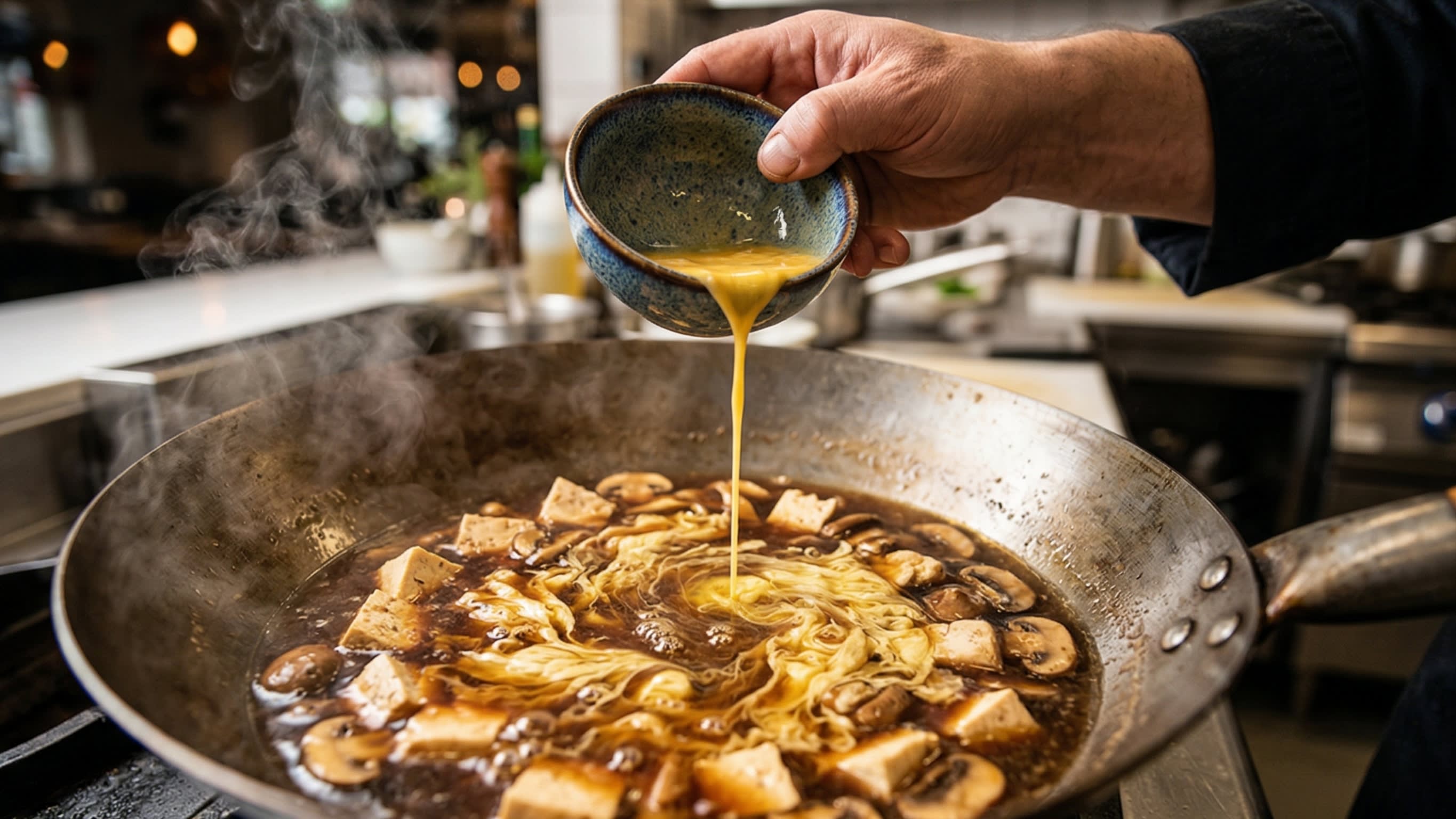
7. Create the Egg Ribbons (打蛋花 - Dǎ dànhuā): Turn the heat down to low so the soup is barely simmering. Take your beaten eggs and pour them in a very slow, thin stream in a circle around the pot. Wait 5 seconds before stirring! Letting it sit for a moment allows the egg to cook into beautiful, silky yellow ribbons. If you stir immediately, the egg will break into microscopic cloudy pieces and ruin the look of the soup. Gently push the soup with your ladle to move the ribbons.
8. The Magic Finish (Adding the Hot and Sour): Turn off the heat completely. Now, stir in your Chinkiang black vinegar, white pepper powder, and sesame oil.
9. Garnish and Serve: Ladle the steaming soup into bowls. Top with a generous sprinkle of chopped scallions and a final drop of sesame oil. Serve immediately!
💡 Pro Tips for the Perfect Bowl
- Never Boil the Vinegar: Acetic acid (which gives vinegar its tang) is highly volatile. If you add the black vinegar while the soup is rapidly boiling, the sour flavor will literally evaporate into the air. This is the #1 mistake home cooks make. Always add the vinegar and white pepper after you turn off the heat.
- The Cornstarch Rule: If your soup feels too thin, you can add more slurry. However, remember that once you add the vinegar, the acidity will slightly thin out the cornstarch over time. It is better to make the soup slightly thicker than you want it right before adding the vinegar.
- Customizing the Flavor: The beauty of making Hot and Sour Soup at home is that you are in control. Taste the soup right at the end. If you want it punchier, add another pinch of white pepper. If you want it sharper, add an extra splash of black vinegar.
📦 Shop Authentic Pantry Staples
To achieve that unmistakable Chinese restaurant flavor, you need the right tools. Skip the supermarket substitutions and get the real thing. (As an Amazon Associate, ChinaCurator earns from qualifying purchases.)
- Premium White Pepper Powder (白胡椒粉) - The absolute source of the soup's heat. Do not use black pepper!
- Chinkiang Black Rice Vinegar (镇江香醋) - This provides the deep, malty sourness that white vinegar cannot replicate.
- Dried Wood Ear Mushrooms (黑木耳) - Essential for the authentic, snappy crunch.
- Dried Lily Flowers / Golden Needles (黄花菜) - Gives the broth its traditional earthy aroma.