🥢 Introduction: The Beloved Cultural Bridge
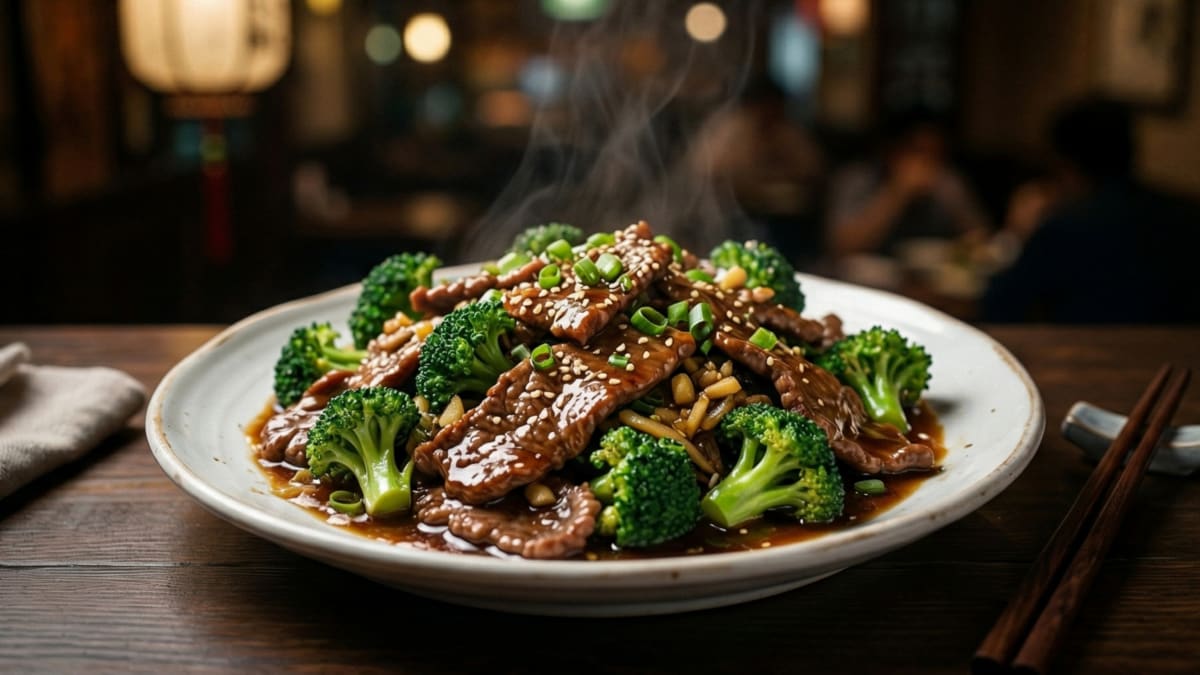
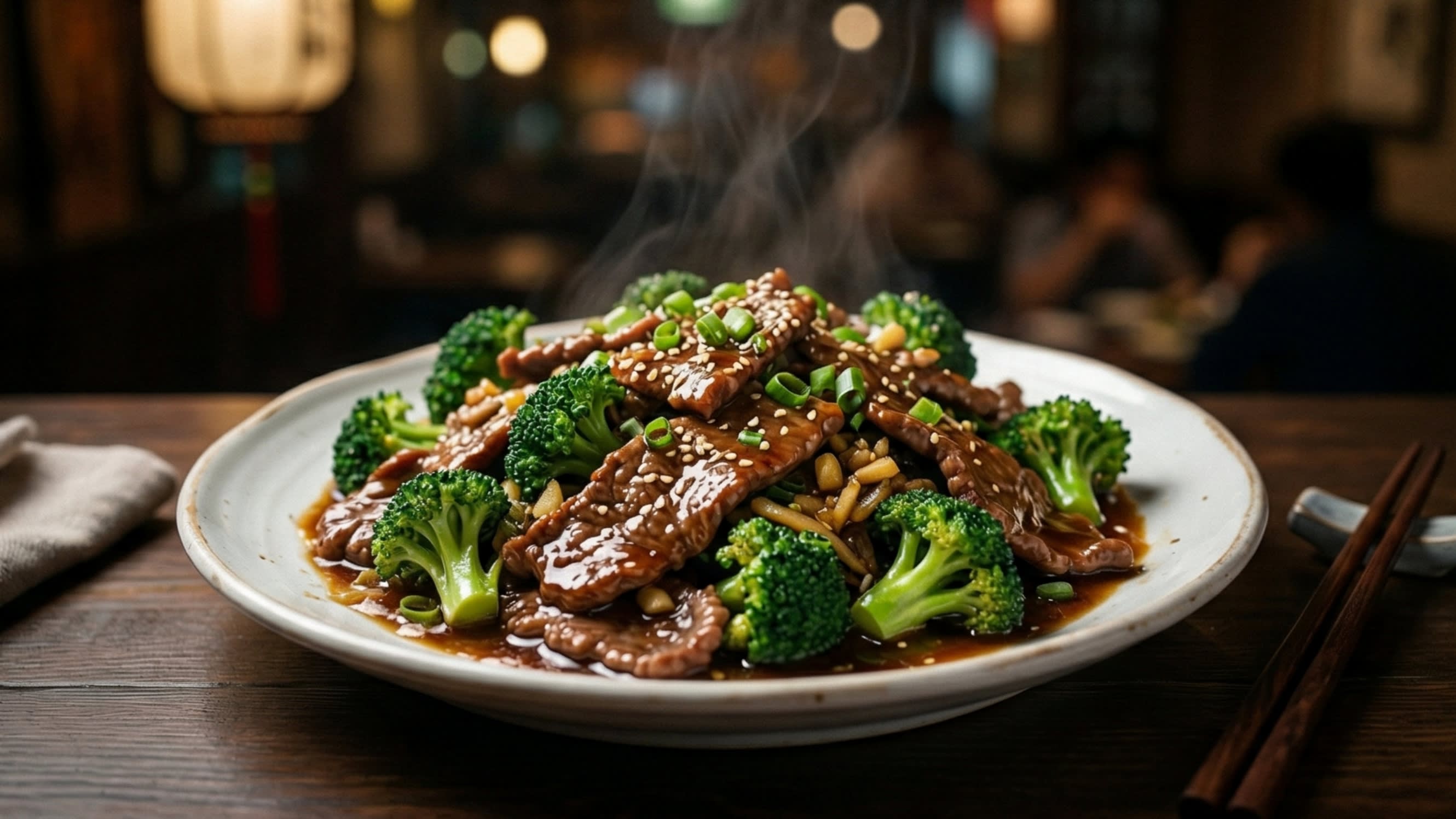
If you ask anyone outside of China to name a quintessential Chinese dish, Beef and Broccoli (西兰花炒牛肉 - Xīlánhuā chǎo niúròu) will almost certainly be in the top three. It is the undisputed king of takeout, a comforting mountain of tender meat and crisp vegetables smothered in a savory, umami-rich brown sauce.
But here is a fascinating fact: Beef and Broccoli, as you know it, does not actually exist in traditional, historical Chinese cuisine.
The broccoli we eat in the West (with the large, tree-like green heads) is not native to China. In authentic Cantonese cooking, chefs use Gai Lan (芥兰 - Jièlán), also known as Chinese broccoli, which has long leafy greens and thick, crunchy stems. When early Chinese immigrants arrived in the United States, they could not find Gai Lan. Ever resourceful, they adapted their traditional stir-fry techniques to the locally available Western broccoli. Thus, this iconic Chinese-American dish was born.
Today, this dish is universally loved. It is hearty, packed with protein, incredibly quick to make, and offers the perfect balance of savory and sweet. But the biggest question home cooks have is always this: “How do Chinese restaurants make their beef so unbelievably tender?”
The answer lies in an ancient Chinese culinary technique. Keep reading, because we are about to reveal the secret.
🥩 The Restaurant Secret: “Velveting” (上浆)
Have you ever cooked beef at home, only to find it tough, dry, and chewy? Meanwhile, the beef from your local Chinese takeout is as soft as butter. They do not use expensive cuts like filet mignon. They use cheap, tough cuts like flank steak. The magic happens during the preparation phase through a process called Velveting (上浆 - Shàngjiāng).
Velveting is the technique of coating the meat in a mixture of liquid, cornstarch, and sometimes a tiny pinch of baking soda before cooking. Here is the science behind why it works:
- The Baking Soda: A tiny amount of baking soda alters the pH level on the surface of the meat, relaxing the muscle fibers and physically preventing them from seizing up and becoming tough when they hit the hot wok.
- The Cornstarch Barrier: The cornstarch (玉米淀粉) creates a microscopic protective gel layer around the beef. When the meat touches the hot oil, this barrier locks the natural juices inside the meat, preventing it from drying out.
- The Oil Seal: Adding a splash of cold cooking oil at the very end of the marinade seals the entire mixture together, preventing the pieces of beef from sticking to each other in the pan.
If you master the art of Shàngjiāng, you can turn the cheapest cut of beef into a five-star dining experience.
🔪 How to Cut the Beef (逆纹切 - Nì wén qiē)
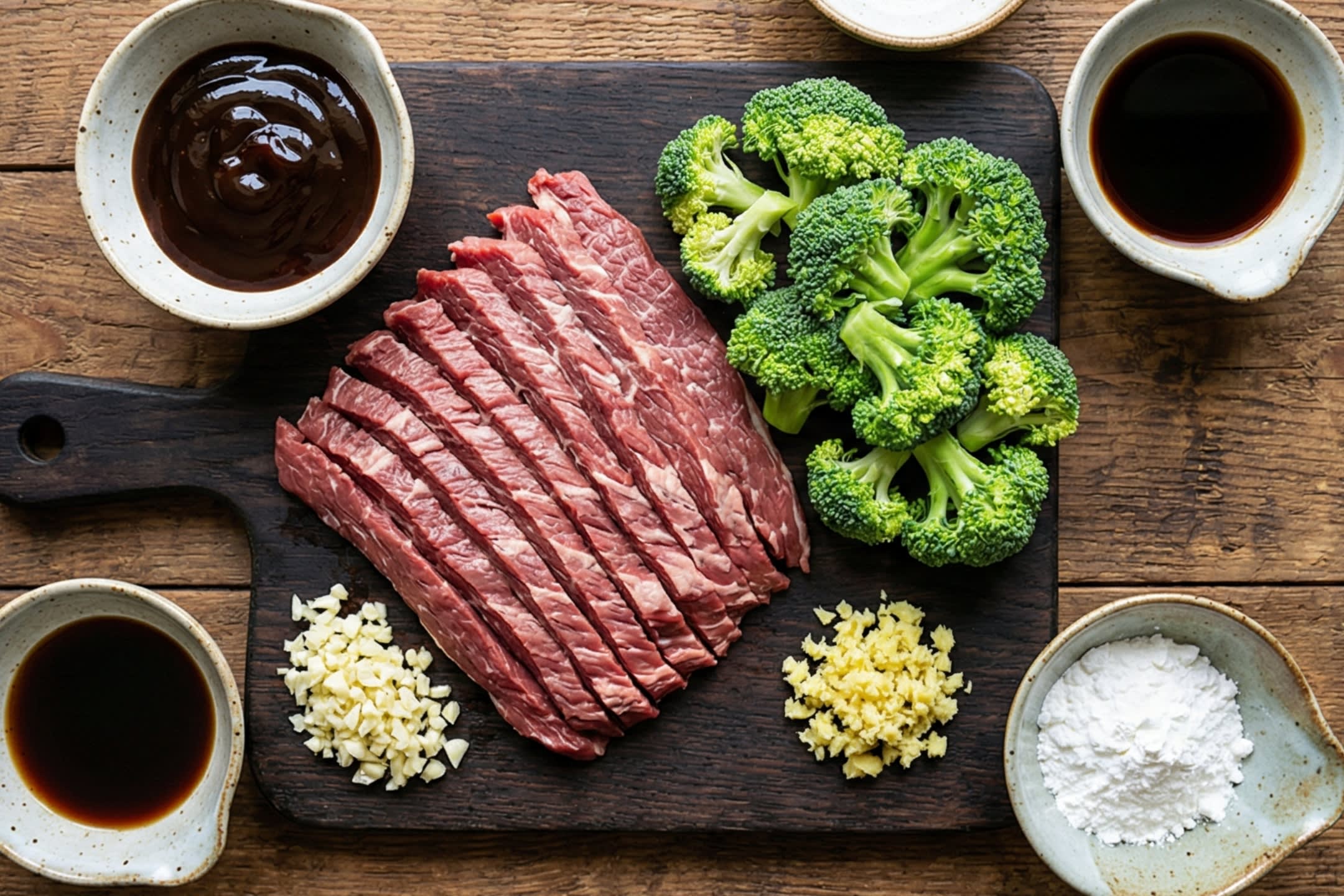
Even with velveting, how you slice the meat matters. You must practice Nì wén qiē (逆纹切), which translates to “cutting against the grain.” Look closely at your raw steak. You will see long muscle fibers running in a specific direction. You must slice perpendicular to those lines. By physically cutting the long muscle fibers into short segments, the meat immediately becomes easier to chew.
🛒 Ingredients
For the Beef & Velveting Marinade:
- 350g (about 12 oz) Flank steak (牛腹肉) or Skirt steak, sliced against the grain into 1/4-inch thick strips
- 1 tbsp light soy sauce
- 1 tbsp Shaoxing cooking wine (绍兴酒)
- 1 tsp cornstarch (玉米淀粉)
- 1/4 tsp baking soda (小苏打) - Do not use more, or the meat will taste metallic!
- 1 tbsp water
- 1 tbsp cooking oil (to seal the marinade)
For the Classic Brown Sauce:
- 3 tbsp Oyster sauce (蚝油 - Háoyóu) - This is the soul of the sauce!
- 1 tbsp light soy sauce (生抽)
- 1 tsp dark soy sauce (老抽 - for that deep, rich restaurant color)
- 1 tbsp brown sugar or granulated sugar
- 1/2 tsp sesame oil (芝麻油)
- 1/4 cup low-sodium chicken broth or water
- 1 tbsp cornstarch
The Vegetables & Aromatics:
- 1 large head of broccoli, cut into bite-sized florets (about 3 cups)
- 3 cloves garlic, finely minced (蒜末)
- 1 tsp fresh ginger, finely minced (姜末)
- 2 tbsp high-heat cooking oil (like peanut, canola, or vegetable oil)
🍳 Step-by-Step Instructions
1. Slice and Velvet the Beef: Slice the flank steak against the grain into thin strips. Place the beef in a mixing bowl. Add the water, light soy sauce, Shaoxing wine, baking soda, and cornstarch. Use your hands to massage the liquid into the meat vigorously for about 1 minute until all the liquid is absorbed. Finally, pour in the 1 tbsp of cooking oil to coat the beef. Let it sit on the counter for 15 to 20 minutes.
2. Blanch the Broccoli (焯水 - Cháoshuǐ): Bring a pot of water to a rolling boil. Add a pinch of salt and a few drops of oil to the water (this keeps the broccoli vibrant green). Drop the broccoli florets into the boiling water for exactly 60 seconds. You want them to turn bright green and slightly tender, but still retain their crunch. Drain immediately and set aside.
3. Prepare the Sauce: In a small bowl, whisk together the oyster sauce, light soy sauce, dark soy sauce, sugar, sesame oil, chicken broth, and cornstarch. Stir until the sugar and cornstarch are completely dissolved. Set this “liquid gold” near your stove.
4. Sear the Beef: Heat your wok or a large heavy-bottomed skillet over high heat until it starts to smoke slightly. Add 2 tbsp of cooking oil. Carefully add the marinated beef in a single layer. Do not touch it for 30 seconds! Let it sear to develop a beautiful brown crust. Then, use a spatula to quickly stir-fry the beef until it is about 80% cooked (still slightly pink in the center). This should take about 2 minutes.
5. Add the Aromatics: Push the beef to one side of the wok. In the empty space, add your minced garlic and ginger. Let them sizzle in the oil for 15 seconds until highly fragrant. Then, toss everything together.
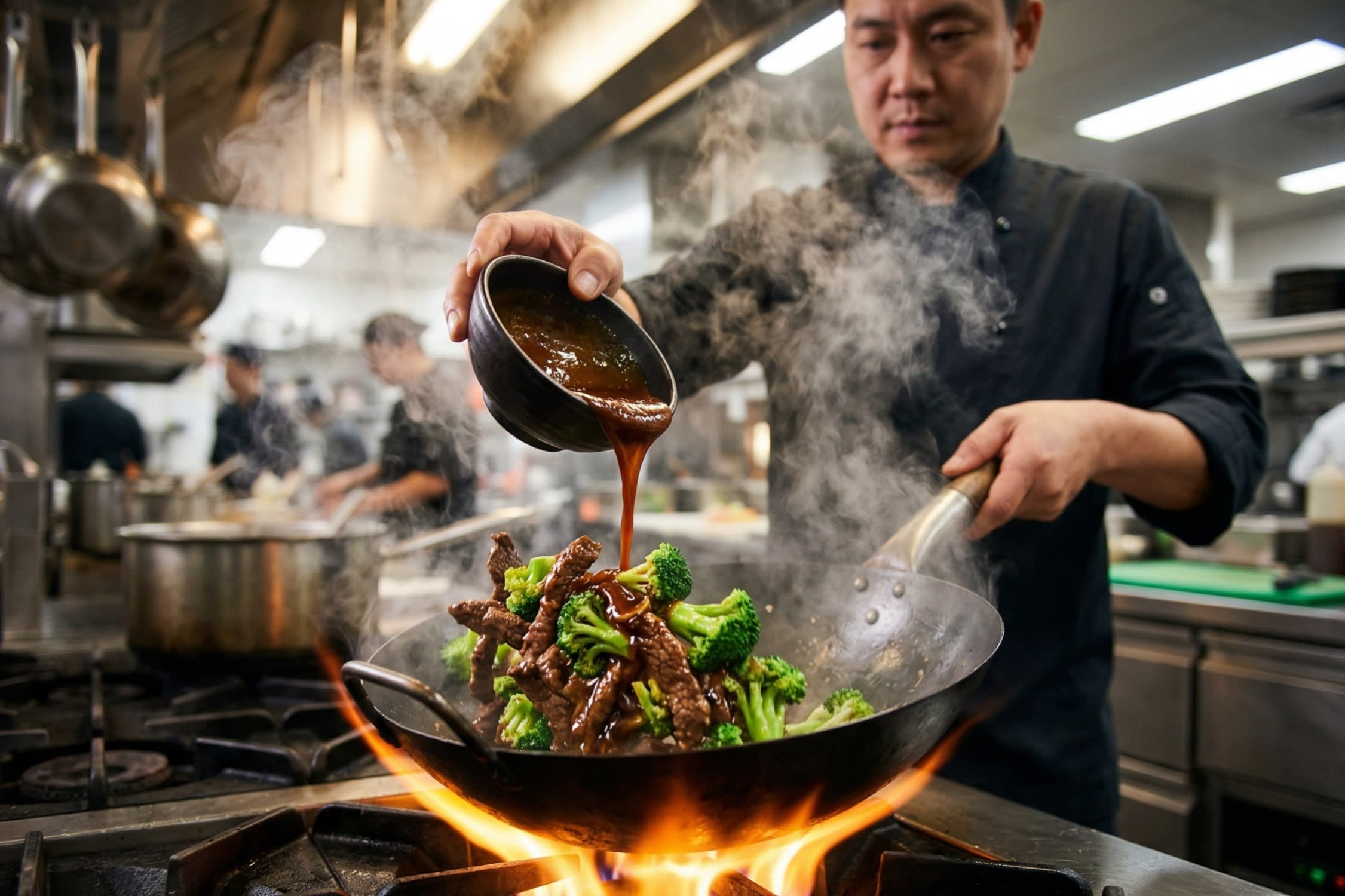
6. Combine and Glaze: Add the blanched broccoli back into the wok. Give your prepared sauce bowl a quick stir to lift the settled cornstarch, and pour it evenly over the beef and broccoli.
7. The Final Toss: Keep the heat on high. Stir the contents of the wok continuously. Within 30 to 45 seconds, the sauce will bubble, thicken rapidly, and transform into a glossy, sticky glaze that beautifully coats every piece of beef and every broccoli tree. Turn off the heat immediately.
8. Serve: Transfer to a serving plate and enjoy immediately with a large bowl of steaming hot Jasmine rice!
💡 Pro Tips for Beginners
- The Magic of Oyster Sauce: The authentic flavor of Beef and Broccoli comes entirely from Oyster Sauce (蚝油 - Háoyóu). It is a thick, syrupy condiment made from oyster extracts, sugar, and soy sauce. It provides a massive punch of savory umami that you simply cannot replicate with regular soy sauce. Never skip this ingredient.
- Why Blanching is Better than Stir-frying Raw Veggies: If you try to stir-fry raw broccoli directly in the wok, the outside will burn before the stems become tender. Blanching (焯水) ensures the vegetable is perfectly cooked from the inside out before it even hits the pan.
- Control Your Heat: Chinese stir-frying requires High Heat. Make sure your pan is very hot before adding the beef. If the pan is cold, the meat will boil in its own juices instead of searing, and you will lose that restaurant-quality flavor.
📦 Shop Authentic Ingredients
To get that authentic restaurant flavor at home, your pantry needs these Chinese cooking staples. (As an Amazon Associate, ChinaCurator earns from qualifying purchases.)
- Lee Kum Kee Premium Oyster Sauce (李锦记旧庄蚝油) - The absolute gold standard for oyster sauce.
- Pearl River Bridge Dark Soy Sauce (珠江桥牌老抽) - Essential for giving the beef that rich, dark, appetizing color.
- Shaoxing Cooking Wine (绍兴料酒) - The secret ingredient that removes the "raw" smell of meat.
- Kadoya Pure Sesame Oil (角屋芝麻油) - Just a few drops add a massive amount of roasted aroma.