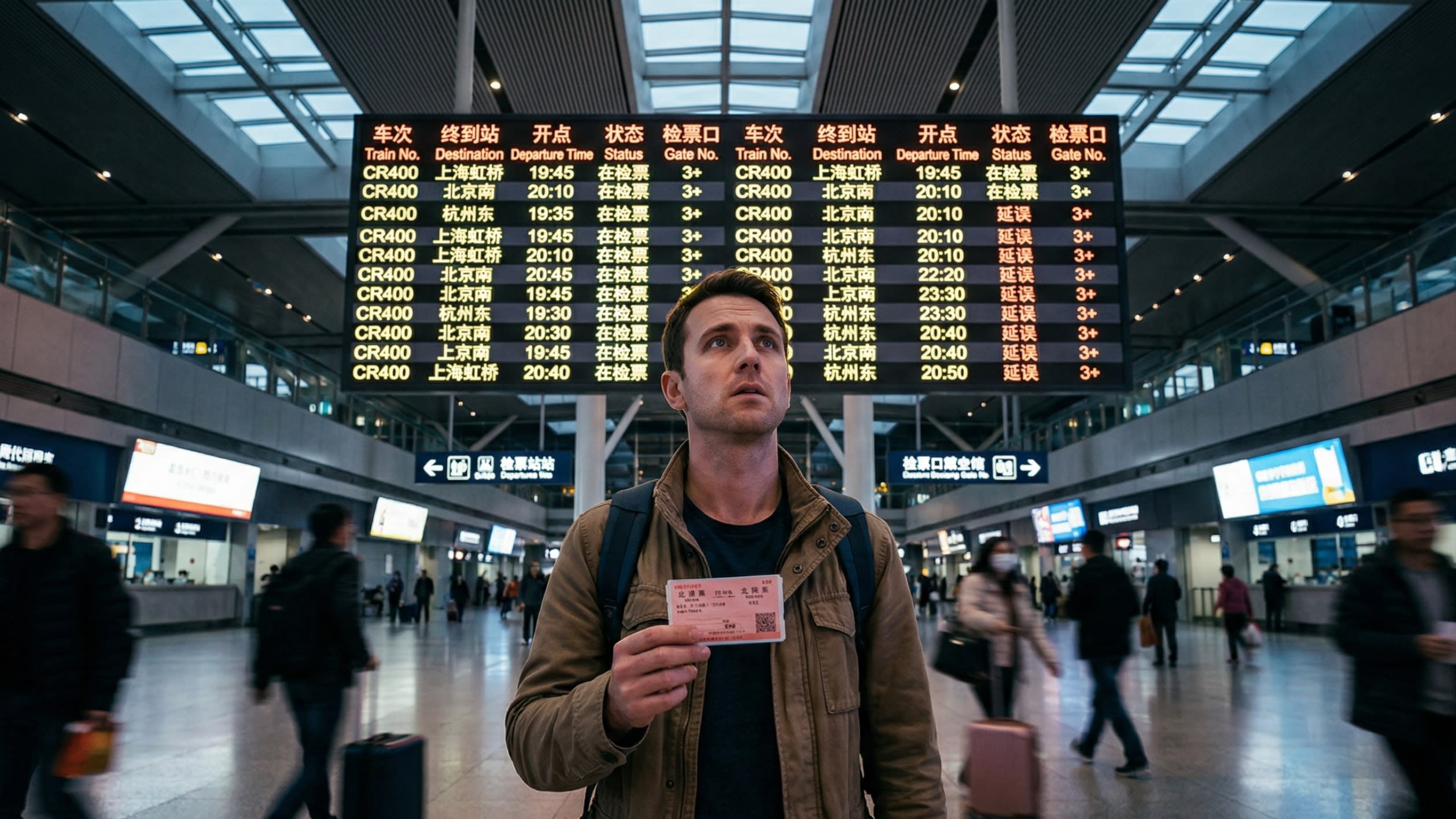
Imagine you are standing in a massive, hyper-modern Chinese high-speed railway station. Your train leaves at exactly 2:15 PM. Your Chinese friend texts you: “Let’s meet at the south gate at a quarter to two.” You look at your watch. You know your numbers from 1 to 10. But how do you actually translate “a quarter to two” or “2:15 PM” into natural, spoken Mandarin? Do you say “PM” first or the number first?
Time is the ultimate currency of daily life. Whether you are scheduling a business meeting in Shenzhen, booking a dinner date in Shanghai, or just trying not to miss your flight, mastering the clock is a non-negotiable survival skill.
The good news? The Chinese time-telling system is incredibly logical. It operates like a mathematical formula. However, the order in which you say the words is completely backward from English. If you want to stop translating in your head and start setting your watch like a native, here is your ultimate guide to telling time in Chinese.
1. The Core Vocabulary: Dots and Minutes
In English, we say “o’clock.” In Chinese, you use the word 点 (diǎn), which literally means “dot” or “point.” For minutes, you use the word 分 (fēn), which means “fraction” or “minute.”
The Basic Formula:
[Number] + 点 (diǎn) + [Number] + 分 (fēn)
- 8:00: 八点 (Bā diǎn) - Eight o’clock.
- 8:10: 八点十分 (Bā diǎn shí fēn) - Eight ten.
- 10:25: 十点二十五分 (Shí diǎn èrshíwǔ fēn) - Ten twenty-five.
Native Hack: In casual, fast-paced spoken Chinese, if the minute is larger than 9, natives often drop the word “分” (fēn) at the very end. They will just say “十点二十五” (Shí diǎn èrshíwǔ). It is the exact equivalent of saying “Ten twenty-five” instead of “Ten hours and twenty-five minutes.”
2. The Trap of “Two” and the Rule of “Zero”
Before you go any further, you must navigate two notoriously tricky numbers on the Chinese clock.
The 2 O’clock Trap (两 vs 二)
If you have read our previous guides, you know that the number 2 has a split personality in Chinese. When counting pure numbers, you use 二 (èr). But when counting the quantity of something (using a measure word), you must use 两 (liǎng).
Because “点” (o’clock) acts as a measure word for the hours, 2:00 is ALWAYS 两点 (Liǎng diǎn). You will never, ever say “二点” (Èr diǎn).
- 2:22: 两点二十二分 (Liǎng diǎn èrshí’èr fēn). Notice that only the hour takes “Liang.” The minutes are just a pure math sequence, so they use “Er.”
The “Zero” Rule (零 - Líng)
In English, if the time is 8:05, we say “Eight oh five.” Chinese does the exact same thing using the word for zero: 零 (líng). If the minute is between 01 and 09, you must pronounce the zero.
- 8:05: 八点零五分 (Bā diǎn líng wǔ fēn).
3. The “Big to Small” Cultural Philosophy (AM/PM)
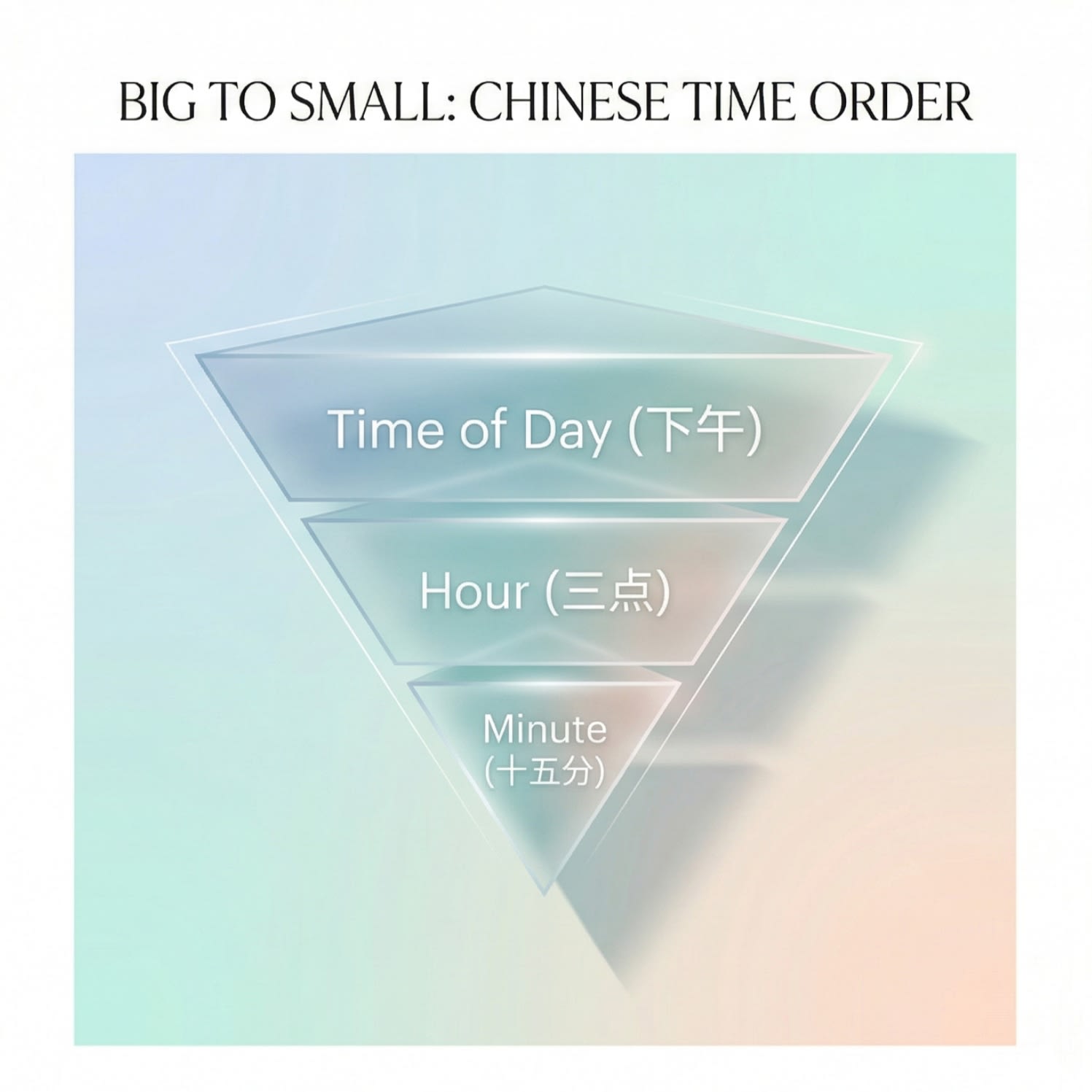
This is where the English brain completely breaks down. In English, we say the specific time first, and the broad category last: “3:00 PM”. We go from Small to Big.
Chinese culture operates on a strict Macro-to-Micro (Big to Small) philosophy. You must state the broad time of day before you state the specific hour.
The Time of Day Vocabulary:
- 凌晨 (Língchén): Before dawn / Early hours (Midnight - 6:00 AM)
- 早上 (Zǎoshang): Early Morning (6:00 AM - 9:00 AM)
- 上午 (Shàngwǔ): Late Morning (9:00 AM - 12:00 PM)
- 中午 (Zhōngwǔ): Noon (12:00 PM - 1:00 PM)
- 下午 (Xiàwǔ): Afternoon (1:00 PM - 6:00 PM)
- 晚上 (Wǎnshang): Evening/Night (6:00 PM - Midnight)
The AM/PM Formula:
[Time of Day] + [Hour] + 点 + [Minute] + 分
- 3:00 PM: 下午三点 (Xiàwǔ sān diǎn) - Literally: Afternoon 3 o’clock.
- 2:30 AM: 凌晨两点半 (Língchén liǎng diǎn bàn) - Literally: Early hours 2 o’clock half.
4. Shortcuts: Halves and Quarters
Just like in English, native Chinese speakers rarely say “thirty minutes” or “fifteen minutes.” They use convenient shortcuts.
半 (Bàn) - Half Past
To say “half past,” replace “三十分” (30 minutes) with the word 半 (bàn), which means “half.”
- 10:30: 十点半 (Shí diǎn bàn).
- 2:30 PM: 下午两点半 (Xiàwǔ liǎng diǎn bàn).
刻 (Kè) - A Quarter
A “quarter” (15 minutes) is called a 刻 (kè).
- 1:15: 一点一刻 (Yī diǎn yí kè) - A quarter past one.
- 3:45: 三点三刻 (Sān diǎn sān kè) - Three quarters past three. (Note: While grammatically correct, “三刻” is slightly old-fashioned. Most modern youth will just say “三点四十五” - 3:45).
5. The Pro Hack: Subtracting Time with 差 (Chā)
How do you say “Ten minutes to four”?
In Chinese, you use the word 差 (chā), which means “to lack” or “to fall short of.” You are literally saying, “Lacking 10 minutes, it is 4 o’clock.”
The Formula: 差 (Chā) + [Minutes lacking] + 分 (fēn) + [Next Hour] + 点 (diǎn)
- 3:50 (10 minutes to 4): 差十分四点 (Chā shí fēn sì diǎn).
- 8:55 (5 minutes to 9): 差五分九点 (Chā wǔ fēn jiǔ diǎn).
- 1:45 (A quarter to 2): 差一刻两点 (Chā yí kè liǎng diǎn).
6. How to Ask the Time
Now that you know how to answer, how do you ask? It is incredibly simple. You use the question word 几 (jǐ), which means “how many” or “which.”
-
“What time is it now?” 现在几点? (Xiànzài jǐ diǎn?) (Literal translation: Now how many dots?)
-
“What time are we meeting?” 我们几点见面? (Wǒmen jǐ diǎn jiànmiàn?)

7. The Ultimate Time-Telling Cheat Sheet
Save this matrix on your phone before your next date or business meeting!
| English Time | The Chinese Logic | Chinese Characters | Pinyin |
|---|---|---|---|
| 3:00 AM | Early hours 3 o'clock | 凌晨三点 | Língchén sān diǎn |
| 8:00 AM | Morning 8 o'clock | 早上八点 | Zǎoshang bā diǎn |
| 2:05 PM | Afternoon 'Liang' o'clock zero 5 | 下午两点零五分 | Xiàwǔ liǎng diǎn líng wǔ fēn |
| 7:30 PM | Evening 7 o'clock half | 晚上七点半 | Wǎnshang qī diǎn bàn |
| 9:50 AM | Morning lacking 10 min 10 o'clock | 上午差十分十点 | Shàngwǔ chā shí fēn shí diǎn |
Final Thoughts from Chen
At first glance, reading the clock in Mandarin feels like you are doing algebra. You are adding “dots,” calculating “fractions,” and subtracting minutes. But once you wrap your head around the “Macro-to-Micro” philosophy, it becomes incredibly satisfying.
By placing the broad time of day at the very beginning of the sentence (下午 - Afternoon), you instantly set the stage for the listener. They know exactly which half of the day you are talking about before you even get to the specific numbers. It is a beautiful reflection of the highly structured, logical nature of the Chinese language.