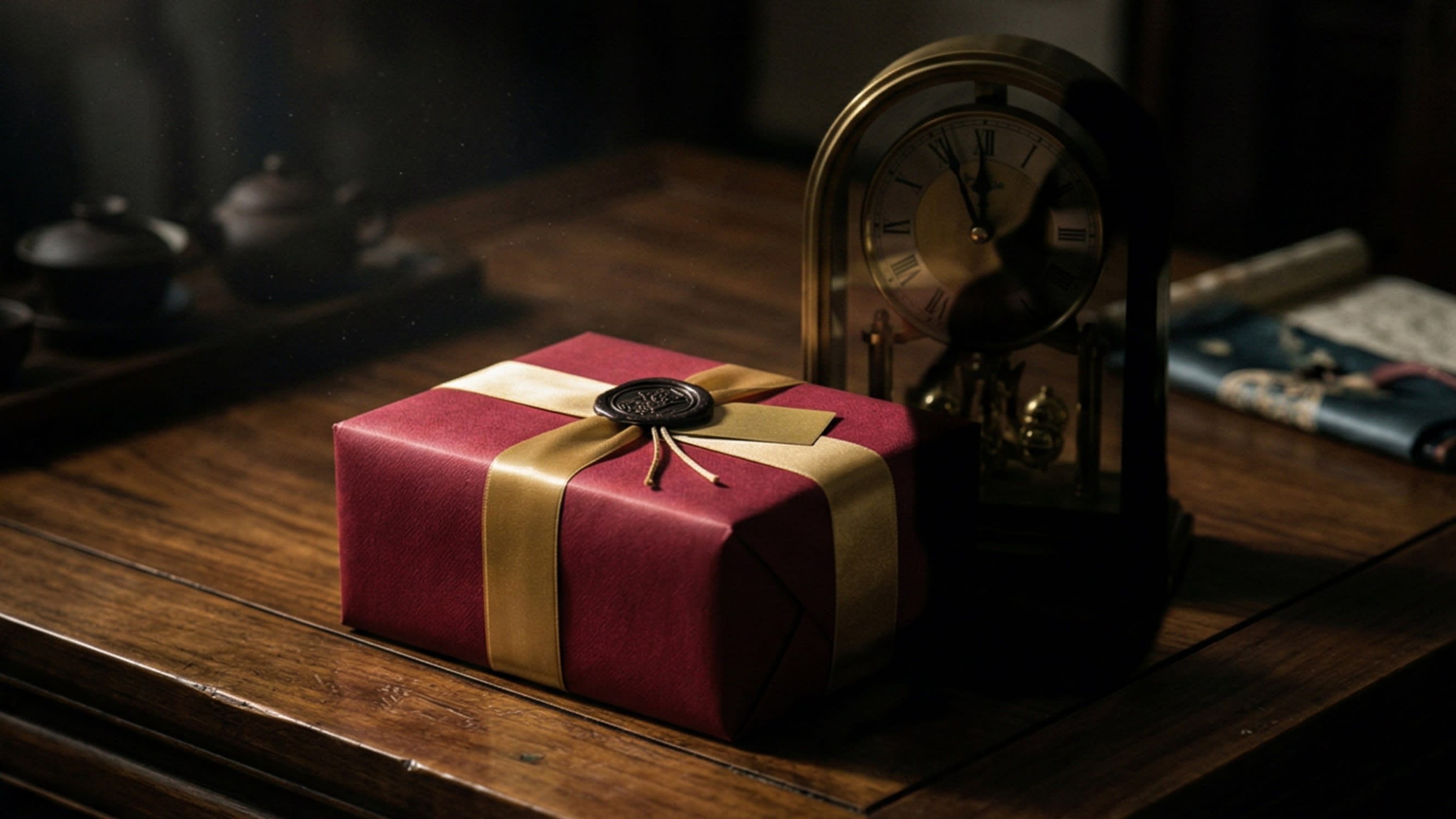
Imagine this: You have been invited to the home of your Chinese business partner or a new local friend for dinner. You want to make a fantastic impression, so you stop by a high-end boutique and purchase a beautiful, expensive mechanical desk clock. You wrap it in premium paper and present it to your host.
Your host opens the box. Their smile instantly freezes. The room goes completely silent. They politely thank you and quickly hide the box away, but the damage is done. You have just committed the ultimate cultural faux pas. In the eyes of your host, you didn’t just bring a bad gift—you essentially just cursed them to die.
Gift-giving in China is a complex social dance. It is the cornerstone of maintaining Guānxì (关系 - relationships) and giving Miànzi (面子 - face). But Chinese culture is deeply deeply intertwined with the concept of Xiéyīn (谐音 - homophones). Because the Chinese language has a limited number of syllables, many words sound exactly the same. If the name of your gift sounds like a word for death, separation, or infidelity, the actual physical object doesn’t matter. The curse is already spoken.
If you want to navigate social and business situations gracefully, here are the 5 gifts you must absolutely never give to a Chinese person—and exactly what you should bring instead.
1. Clocks: The Ultimate Curse (送钟)
Let’s start with the most famous and dangerous taboo of them all. Never, under any circumstances, give a clock to a Chinese person. This applies to wall clocks, desk clocks, and grandfather clocks.
The Cultural Logic: In Mandarin, the phrase “to give a clock” is Sòng zhōng (送钟). Unfortunately, this sounds exactly the same as Sòng zhōng (送终), which translates to “attending a funeral” or “bidding farewell to someone on their deathbed.”
By handing someone a clock, the homophonic message you are sending is: “I am counting down the seconds until you die.” It is considered incredibly terrible luck, especially if given to the elderly.
Exception: High-end wristwatches (手表 - shǒubiǎo) do not carry this curse and are actually highly prized luxury gifts. Just stay away from anything that sits on a desk or hangs on a wall.
2. Green Hats: The Symbol of Infidelity (绿帽子)
You are traveling through China in the winter, and you want to buy your male friend a nice, warm beanie. You find a stylish one in a dark forest green. Do not buy it. Do not wear it. Do not look at it.
The Cultural Logic: In Chinese slang, the phrase “to wear a green hat” is Dài lǜ màozi (戴绿帽子). This is a centuries-old idiom that means a man’s wife is cheating on him.
The origins date back to ancient times when the relatives of prostitutes were forced to wear green headwear to identify their social status. Today, it remains a universally understood symbol of being cuckolded. If you give a Chinese man a green hat, you are publicly suggesting that his partner is unfaithful. He will never wear it, and you will become the punchline of a very embarrassing joke.

3. Pears: The Fruit of Separation (梨)
Bringing fresh fruit to a host’s home is a standard and highly encouraged practice in China. But you must be incredibly careful about which fruit you bring, and how you eat it. Never gift a basket of pears, and never slice a pear in half to share with a friend.
The Cultural Logic: The word for pear is Lí (梨). It sounds identical to the word for separation or leaving, Lí (离).
If you give a pear, or worse, if you “divide a pear” (Fēn lí - 分梨), it sounds exactly like Fēn lí (分离), which means “to separate.” By sharing a pear with a friend or a romantic partner, you are symbolically prophesying that your relationship is going to end and you will part ways forever.
4. Umbrellas: Scattering the Friendship (伞)
It is pouring rain in Shanghai, and your friend forgot their umbrella. You kindly buy them a nice umbrella and tell them to keep it as a gift. While practical in the West, this is a major social blunder in China.
The Cultural Logic: The Chinese word for umbrella is Sǎn (伞). This sounds exactly like the word for scattering, breaking apart, or dispersing: Sàn (散).
When you gift an umbrella, the hidden meaning is that your friendship or relationship is going to fall apart and scatter to the wind. If a friend desperately needs an umbrella, do not “gift” it. Instead, sell it to them for a symbolic 1 RMB coin. By turning it into a commercial transaction, you break the curse!
5. Sharp Objects: Cutting Ties (刀剪)
A high-end set of German kitchen knives or a beautifully crafted Swiss Army knife might seem like a premium, practical gift for a cooking enthusiast. In China, keep them to yourself.
The Cultural Logic: There is a famous Chinese idiom: Yì dāo liǎng duàn (一刀两断), which literally means “One slash, two pieces.” It is used to describe severing a relationship completely.
Gifting scissors, knives, or any sharp tools carries the aggressive implication that you want to cut ties with the recipient. Just like the umbrella trick, if you accidentally bring a sharp object as a gift, demand a small coin in return so it becomes a “purchase.”
What You SHOULD Bring Instead
Now that you are thoroughly terrified of accidentally cursing your friends, let’s look at the gifts that will guarantee you a warm welcome, immense respect, and great Guanxi.
1. Premium Chinese Tea (茶叶)
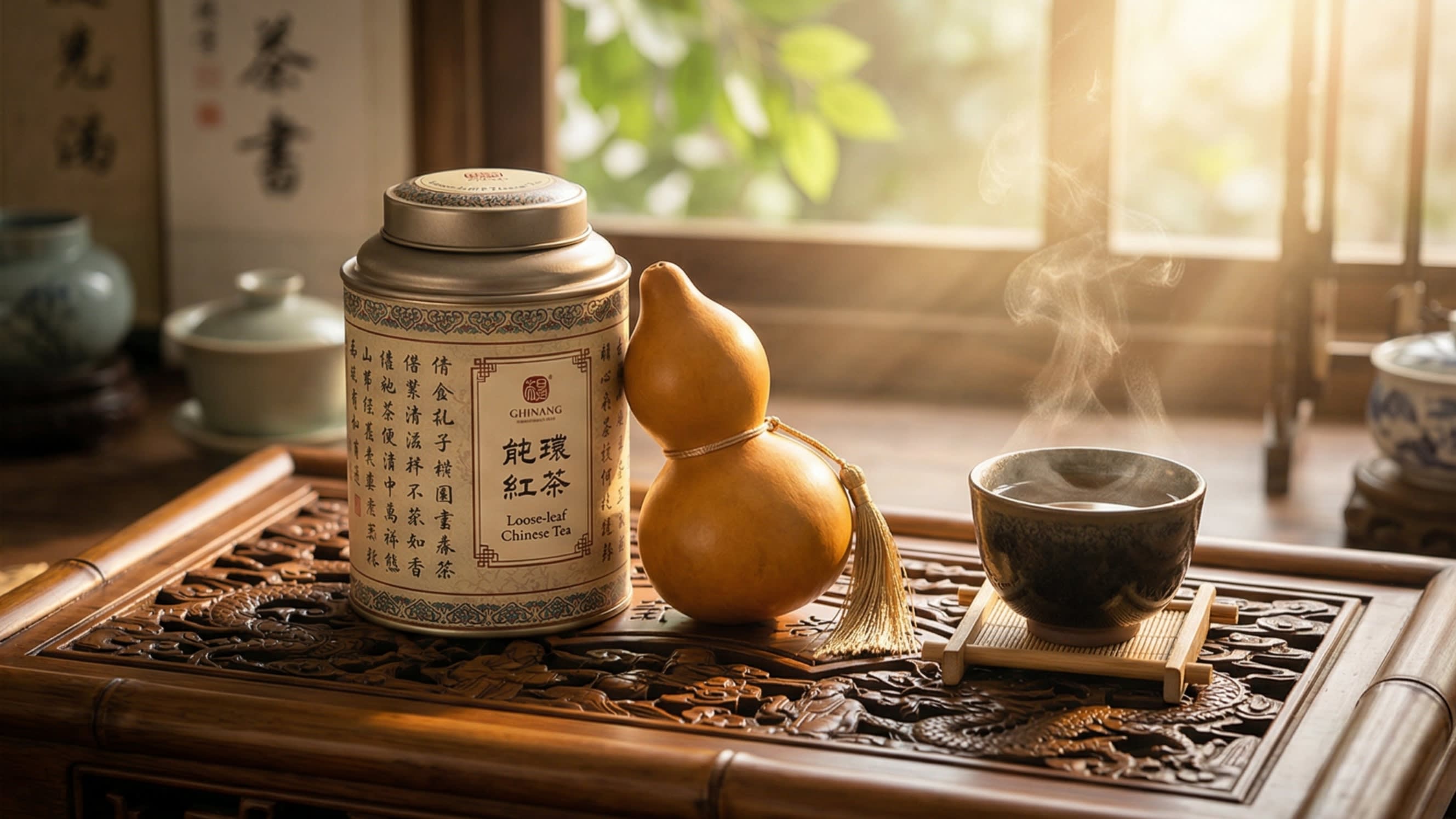
You can never, ever go wrong with high-quality tea. China is the undisputed birthplace of tea culture, and bringing a beautifully packaged tin of premium loose-leaf tea is the ultimate sign of refined respect. Whether it is a rich, fermented Pu’er from Yunnan or a fragrant Tieguanyin Oolong, tea symbolizes hospitality, health, and a long-lasting relationship.
2. Traditional Collectibles: Wenwan Gourds (文玩葫芦)
For an unforgettable, high-end gift—especially for an older male relative, boss, or business partner—traditional cultural collectibles are a brilliant choice. Items like Wénwán (文玩 - scholar’s playthings), particularly beautifully aged Wenwan gourds, are highly prized in Chinese collector circles.
The gourd (húlu 葫芦) sounds like Fúlù (福禄), which means happiness and wealth. Gifting a smooth, tactile Wenwan gourd shows that you have gone far beyond generic duty-free chocolates and deeply understand elite Chinese hobbies and auspicious symbolism.
3. “Safe” Fruits (Apples and Oranges)
If you are visiting a home for a casual dinner, fruit is mandatory. But instead of pears, bring Apples (苹果 - Píngguǒ), which sound like Peace (Píng’ān 平安), or Oranges (橘子 - Júzi), which represent Luck and Wealth (Jí 吉).
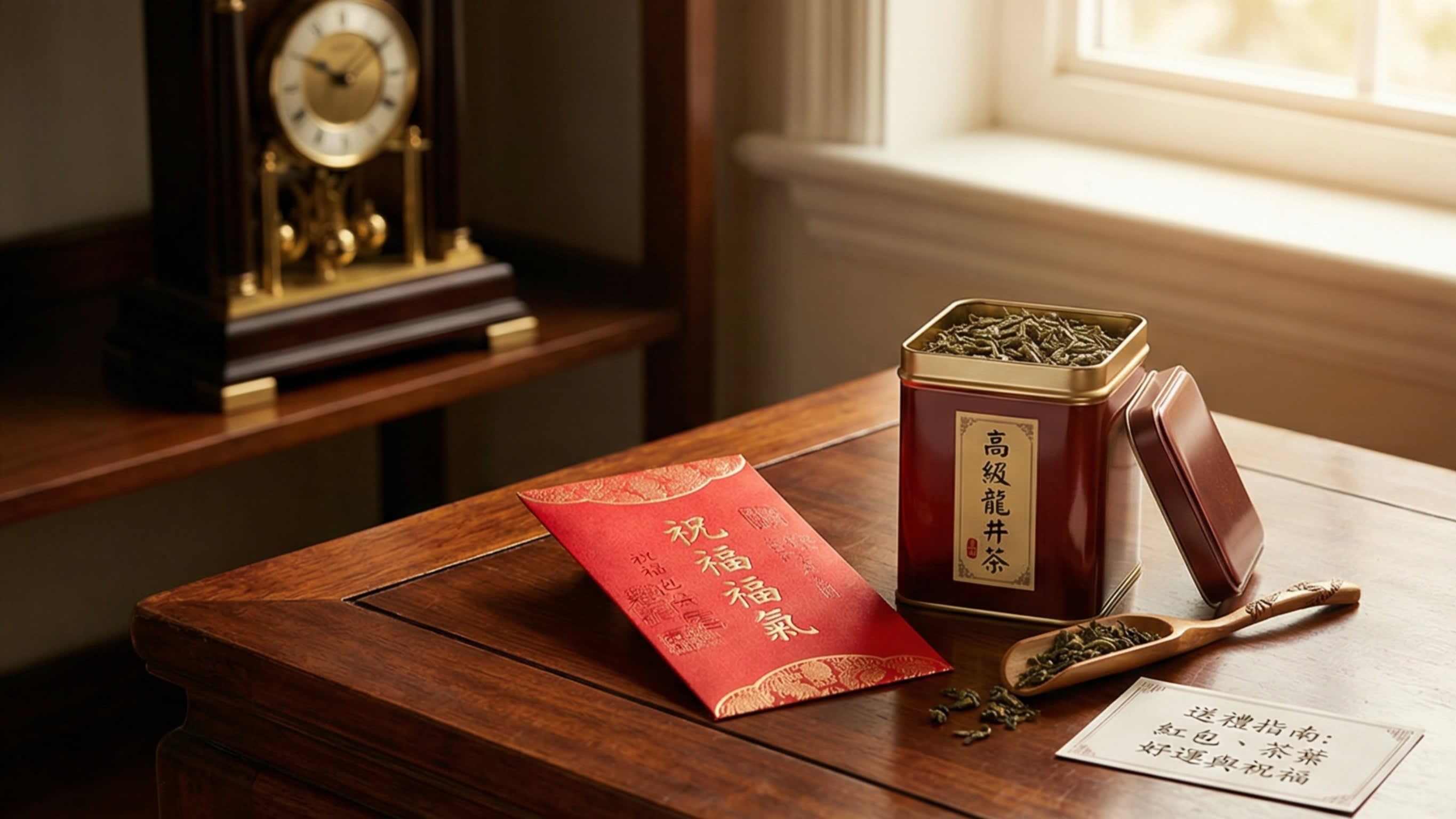
4. The Hongbao (红包 - Red Envelope)
When in doubt—especially for weddings, birthdays, or Lunar New Year—cash is king. Giving crisp, new banknotes inside a traditional Red Envelope (Hongbao) is the most practical and universally loved gift in Chinese culture. Just ensure the amount does not include the number 4 (which sounds like death), and try to give even numbers like 6 (smoothness) or 8 (wealth).
A Quick Note on Receiving Gifts
If you are on the receiving end of a gift in China, there is a specific etiquette you must follow to be a gracious host:
- Refuse it Three Times: When someone hands you a gift, it is polite to initially reject it out of modesty. Say, “Oh, you shouldn’t have!” or “It’s too expensive!” Allow them to insist before finally accepting it.
- Do Not Open It Immediately: In the West, we rip open presents in front of the giver to show our excitement. In China, opening a gift in front of the giver is considered greedy and risks causing a loss of face if the gift is deemed inadequate. Always set the gift aside and open it in private after the guests have left.
Final Thoughts from Hui
Gift-giving is a powerful language. In China, the physical object is only 50% of the gift; the other 50% is the hidden meaning, the homophone, and the cultural respect it carries.
By avoiding the deadly clocks, green hats, and separation pears, and instead leaning into auspicious items like premium tea, traditional gourds, and lucky fruits, you demonstrate a profound understanding of Chinese societal values. You aren’t just giving an item; you are giving good fortune.
So the next time you are invited to a Chinese dinner, leave the Swiss Army knife at home, grab a basket of apples, and enjoy the feast!
Want to master more insider social skills? Learn What to Call People in China (Shifu, Ayi, Laoban) or discover the Unspoken Rules of WeChat Slang & Emojis.

